First Aid for Nosebleeds: Causes, Treatment and When to Seek Help
September 25, 2026
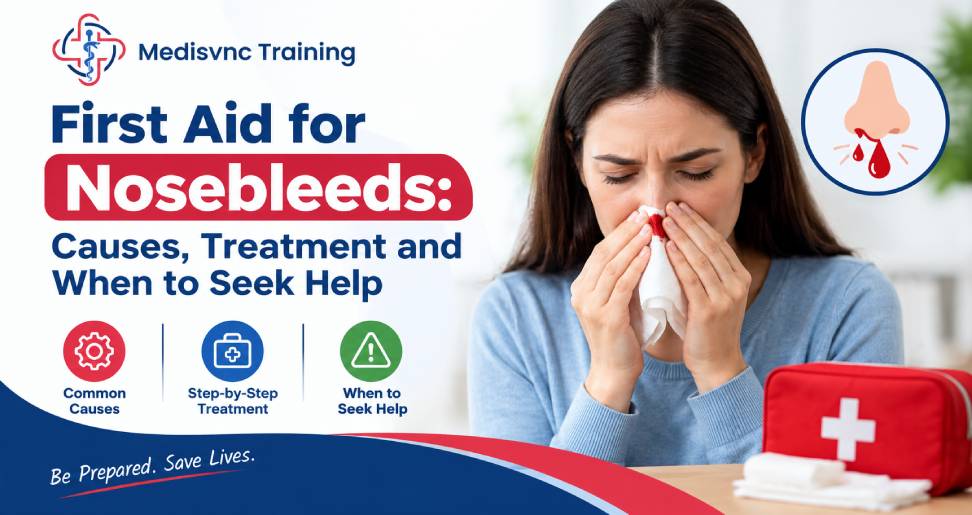
A nosebleed, medically known as epistaxis, can happen suddenly and may look more alarming than it actually is. In most cases, nosebleeds are minor and can be controlled with simple first aid. However, heavy, persistent or recurrent bleeding may require professional medical attention.
Knowing what to do when a nosebleed occurs is an important first aid skill. Staying calm, positioning the person correctly and applying continuous pressure can help control the bleeding and reduce the risk of complications.
What Causes a Nosebleed?
The inside of the nose contains many small blood vessels located close to the surface. These vessels can be easily irritated or damaged. Common causes include dry air, nose picking, forceful nose blowing, colds, allergies and minor injuries.
Environmental factors can also contribute. Dry weather or indoor heating can make the nasal lining dry and more vulnerable to bleeding. Some people may also experience nosebleeds after changes in altitude.
Certain medications and medical conditions can increase the risk or severity of bleeding. For example, anticoagulant or blood-thinning medicines may make it harder for bleeding to stop. Blood-clotting disorders can also contribute to recurrent or prolonged nosebleeds.
Other possible causes include:
- Injury to the nose or face
- Sinus infections
- Allergies
- Irritation from certain nasal sprays
- A deviated nasal septum
- Objects placed inside the nose
- Conditions affecting blood clotting
- Some medications
Occasional nosebleeds are usually not a cause for concern, but frequent episodes should be discussed with a healthcare professional.
What Should You Do During a Nosebleed?
The first few minutes are important. The goal of first aid is to help control the bleeding while keeping the person safe and comfortable.
1. Stay Calm and Sit Upright
Help the person sit upright rather than lying down. Ask them to lean slightly forward.
This position helps prevent blood from flowing backward into the throat, where it can be swallowed and potentially cause nausea or vomiting.
2. Pinch the Soft Part of the Nose
Using the thumb and index finger, firmly pinch the soft part of the nose just above the nostrils. The person should breathe through their mouth.
Maintain continuous pressure for around 10–15 minutes without repeatedly releasing the nose to check whether the bleeding has stopped.
If necessary, pressure may need to be continued for longer depending on the situation. Using a clock or timer can help ensure that pressure is maintained for the full period.
3. Encourage the Person to Breathe Through the Mouth
While the nose is being pinched, encourage slow, steady breathing through the mouth. Keep the person sitting upright and leaning forward.
Avoid tilting the head backward. Although this is a commonly seen response to a nosebleed, it can allow blood to run into the throat.
4. Avoid Putting Objects Inside the Nose
Do not push tissues, cotton wool or other objects deep into the nostrils in an attempt to stop the bleeding. Removing material later can disturb a developing clot and cause bleeding to restart.
What Should You Avoid After a Nosebleed?
Even after the bleeding stops, the blood vessels inside the nose may remain vulnerable for some time. To reduce the possibility of another episode, avoid picking or blowing the nose and strenuous physical activity for a period after the bleeding has stopped. NHS guidance also advises avoiding hot drinks and heavy lifting for 24 hours.
Keeping the nasal passages appropriately moisturised may also help people who experience nosebleeds related to dryness. Saline sprays, moisturising gels and humidifying dry indoor air can be useful options, depending on individual circumstances.
When Should You Seek Medical Help?
Most ordinary nosebleeds can be managed with basic first aid. However, certain situations require urgent medical assessment.
Seek emergency medical help when:
- The bleeding is heavy or appears to be gushing.
- The person is having difficulty breathing.
- The person feels faint, weak or very dizzy.
- The nosebleed follows a significant injury, fall or blow to the head or face.
- A large amount of blood is being swallowed.
- The bleeding continues despite appropriate first aid and pressure.
- The person has lost a significant amount of blood.
The exact time threshold for seeking emergency care varies between guidelines and depends on the severity of the bleeding. Persistent bleeding despite sustained pressure should not be ignored.
People who experience frequent nosebleeds should also consult a healthcare professional, particularly if the episodes occur regularly or are becoming more difficult to control. Those taking blood-thinning medication or living with a clotting disorder should seek medical advice if bleeding is difficult to stop.
Why First Aid Training Matters
A nosebleed may appear straightforward, but first aid is about more than knowing one technique. A trained first aider needs to assess the situation, recognise warning signs, stay calm and know when an emergency requires professional assistance.
These skills become even more important when dealing with different medical emergencies. For example, first aid training can help individuals understand how to respond appropriately to an agitated person, recognise potentially life-threatening situations involving opioid overdose and identify the warning signs of a diabetic emergency.
For more information, explore First Aid Management of The Agitated Person, First Aid Management of Suspected Opioid Overdose and First Aid Management of a Diabetic Emergency as part of a broader first aid learning programme.
Learn Practical First Aid Skills with Medisync Training
Understanding first aid can give people the confidence to respond appropriately when an emergency happens. However, reading about first aid is different from developing practical skills through structured training.
Medisync Training provides first aid training designed to help participants build practical knowledge and confidence for responding to emergency situations. Learning how to assess an emergency, provide appropriate initial care and recognise when professional medical assistance is required can be valuable in workplaces, community settings and everyday life.
Whether you are an individual looking to improve your emergency response skills or an organisation seeking training for a team, structured first aid education can help prepare people for unexpected situations.
Final Thoughts
A nosebleed can be frightening, but most episodes are manageable when the correct first aid steps are followed. Sit the person upright, lean them forward and apply firm, continuous pressure to the soft part of the nose for 10–15 minutes. Avoid tilting the head backward or placing objects deep inside the nose.
Most importantly, recognise when a nosebleed may be more serious. Heavy or persistent bleeding, breathing difficulties, significant blood loss, dizziness or bleeding following a serious injury require prompt medical attention.
Learning first aid before an emergency occurs can make it easier to remain calm and take appropriate action when someone needs help. Training through providers such as Medisync Training can help turn basic knowledge into practical emergency-response skills.
Popular Posts
-
First Aid for Amputations: Emergency Response Guide
October 21, 2026An amputation is a serious medical emergency that occurs when a body part, such as...
-
First Aid for Neck Injuries After an Accident: What You Should Do
October 16, 2026Neck injuries can occur unexpectedly after road accidents, workplace incidents, sports injuries, or accidental falls....
-
First Aid for Back and Spinal Injuries: What You Should Do in an Emergency
October 15, 2026Back and spinal injuries can occur unexpectedly at home, in the workplace, during sports activities,...
-
First Aid for Joint Injuries: Essential Steps to Reduce Pain and Prevent Further Damage
October 14, 2026Joint injuries can happen unexpectedly during sports, exercise, workplace activities, household tasks, or everyday movement....
-
First Aid for Dislocations: What to Do and What to Avoid
October 13, 2026A dislocation occurs when a bone is forced out of its normal position within a...