
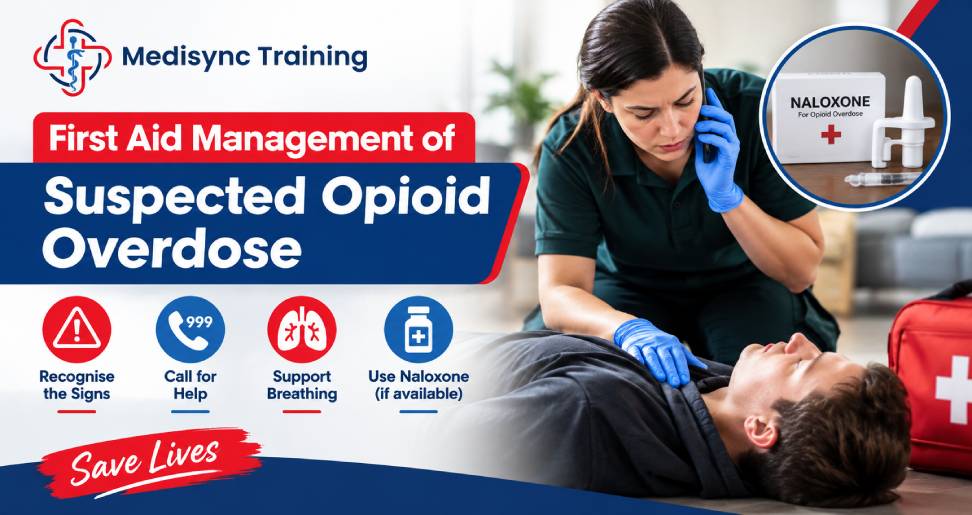
First Aid Management of Suspected Opioid Overdose
September 19, 2026
An opioid overdose is a serious medical emergency that can quickly become life-threatening because opioids can significantly slow or stop breathing. Recognising the warning signs and responding promptly can help keep a person alive until professional medical assistance arrives.
Opioids include medicines such as morphine, oxycodone and codeine, as well as other opioid substances. An overdose can occur accidentally, including when someone takes more than prescribed, combines opioids with other substances, or has reduced tolerance after a period without opioid use.
For people who may encounter medical emergencies at work, in childcare, healthcare, community settings or everyday life, appropriate [First Aid Training] can provide the knowledge and practical skills required to respond safely.
What Is an Opioid Overdose?
An opioid overdose occurs when the effects of an opioid become severe enough to impair essential body functions, particularly breathing. The person may become extremely drowsy, difficult to wake or unconscious.
A suspected overdose should always be treated seriously. You should not wait for every possible symptom to appear before seeking emergency assistance.
Common warning signs include:
- Very slow, shallow or irregular breathing
- Difficulty waking or responding
- Loss of consciousness
- Very small or pinpoint pupils
- Gurgling, choking or unusual breathing sounds
- Vomiting
- Pale, clammy or bluish skin or lips
Australian health guidance identifies slowed or difficult breathing, reduced consciousness, vomiting and gurgling or choking sounds among the warning signs associated with opioid overdose.
Why Immediate First Aid Matters
The most immediate danger during an opioid overdose is inadequate oxygen reaching the brain and other vital organs. If breathing stops, permanent injury or death can occur without rapid intervention.
First aid does not replace professional medical treatment. Instead, its purpose is to maintain safety, support breathing and circulation, and provide appropriate assistance while waiting for an ambulance.
People undertaking [CPR Training] can develop practical skills for recognising when CPR is required and responding to a person who is not breathing normally.
First Aid Management of Suspected Opioid Overdose
1. Check for Danger
Before approaching the person, make sure the surrounding environment is safe. Look for hazards such as traffic, needles, spilled substances, chemicals or other dangers.
Do not place yourself at risk while attempting to help someone else.
2. Check for a Response
Try to get a response by speaking loudly to the person and gently touching or squeezing their shoulder.
If they do not respond, treat the situation as an emergency.
Do not assume an unconscious or difficult-to-wake person is simply sleeping. An overdose can cause a person to become unresponsive.
3. Call 000
Call 000 for an ambulance immediately if you suspect an opioid overdose.
If another person is present, ask them to make the call while you remain with the affected person. Follow the emergency operator’s instructions carefully.
Early activation of emergency medical services is essential because naloxone provides temporary reversal and the overdose may return after its effects wear off.
4. Assess Breathing
Check whether the person is breathing normally.
Look for movement of the chest and listen for normal breathing. Slow, irregular, shallow or absent breathing should be treated as a medical emergency.
If the person is not breathing normally, begin CPR according to your level of training and follow the instructions provided by the emergency operator.
A recognised Australian first-aid approach is the DRSABCD action plan: Danger, Response, Send for help, Airway, Breathing, CPR and Defibrillation.
5. Administer Naloxone If Available
Naloxone is an opioid antagonist that can temporarily reverse the effects of an opioid overdose. It can restore breathing by blocking opioids from acting on opioid receptors.
Naloxone may be available as a nasal spray or injection. Members of the public can administer naloxone when appropriate, following the instructions supplied with the product.
If naloxone is available:
- Administer it according to the product instructions.
- Call or confirm that 000 has been contacted.
- Continue monitoring the person.
- Be prepared to provide CPR if they are not breathing normally.
- Record the time naloxone was given and tell paramedics when they arrive.
Naloxone does not replace emergency medical care. Its effects are temporary, and opioid effects can last longer, meaning breathing problems can return.
6. Maintain the Airway and Recovery Position
If the person is unconscious but breathing normally, place them in the recovery position and continue monitoring their breathing.
The position helps keep the airway open and can reduce the risk of choking if the person vomits.
If breathing becomes abnormal or stops, move to CPR according to your training and emergency-service instructions.
7. Stay With the Person
Do not leave the affected person alone while waiting for emergency services.
Continue observing their responsiveness and breathing. If possible, provide paramedics with useful information, including what substance may have been taken, approximately how much was taken and when it may have been taken.
You should not delay calling an ambulance simply because you do not know exactly what substance was involved.
What You Should Not Do
When managing a suspected opioid overdose, avoid actions that could make the situation worse.
Do not:
- Force the person to vomit
- Give them food or drink
- Leave them alone
- Assume they will simply sleep it off
- Delay calling an ambulance while trying to identify the substance
- Put yourself in danger
- Give medication other than appropriate naloxone unless directed by a qualified professional
Australian health guidance specifically advises not making an overdose patient vomit and not giving food or drink while waiting for emergency assistance.
Prevention Through First Aid Education
Although opioid overdose is often associated with illicit substances, prescription opioids can also cause serious breathing problems and overdose. The risk can increase in situations involving higher doses or combinations with other substances.
Effective first aid education helps people understand how to recognise emergencies and respond appropriately rather than relying on assumptions or outdated advice.
Medisync Training supports practical emergency preparedness through structured [First Aid Courses] designed to help participants build confidence in responding to a range of first-aid situations. Appropriate [CPR Certification] can also help individuals understand how to respond when a person’s breathing or circulation is compromised.
For organisations, workplaces and care environments, regular [Workplace First Aid Training] can form an important part of emergency preparedness. Training can help staff understand how to assess an emergency, activate emergency services and provide appropriate first aid within their level of training.
Naloxone and Take-Home Access in Australia
Australia’s Take Home Naloxone program makes naloxone available to people who may experience or witness an opioid overdose. Under the national program, participating pharmacies can provide naloxone free of charge and without a prescription. It is also available through various health and community services.
Knowing where naloxone can be obtained and understanding how to use it can add another important layer of preparedness for people who may encounter opioid-related emergencies.
Conclusion
Suspected opioid overdose requires immediate action. Recognising signs such as unresponsiveness, very slow or shallow breathing, pinpoint pupils and gurgling sounds should prompt an emergency response.
The key priorities are to ensure the area is safe, check the person’s response and breathing, call 000, provide CPR when required, administer naloxone if available and appropriate, place a normally breathing unconscious person in the recovery position, and continue monitoring until professional help arrives.
Practical education can make a significant difference during those critical first minutes. Through comprehensive first-aid and CPR education, Medisync Training helps individuals and organisations develop the knowledge and confidence needed to respond to emergencies responsibly and effectively.
Popular Posts
-
First Aid for Muscle Injuries: Strains, Tears and Immediate Care
October 9, 2026Muscle injuries can happen during sports, exercise, physical work, or everyday activities. A sudden movement,...
-
First Aid for Soft Tissue Injuries: Essential Steps for Safe and Effective Care
October 7, 2026Soft tissue injuries are common in workplaces, homes, sports activities, and everyday situations. A sudden...
-
First Aid for Mouth and Tongue Injuries: What You Should Do
October 5, 2026Mouth and tongue injuries can happen unexpectedly during sports, falls, accidents, biting incidents, or everyday...
-
First Aid for Ear Injuries and Foreign Objects
October 2, 2026Ear injuries can happen unexpectedly at home, at work, during sports, or while travelling. A...
-
Chemical Eye Injury: Immediate First Aid Steps
September 30, 2026A chemical splash to the eye can happen unexpectedly at home, in a workplace, laboratory,...