
First Aid for Back and Spinal Injuries: What You Should Do in an Emergency
October 15, 2026
Back and spinal injuries can occur unexpectedly at home, in the workplace, during sports activities, or following road accidents. While some injuries cause mild discomfort, others can damage the spinal cord and lead to permanent complications. Knowing how to provide first aid for back and spinal injuries is essential because the actions taken immediately after an accident can significantly affect the injured person’s safety and recovery.
In Australia, workplace employees, parents, carers, sports coaches, and members of the public can all benefit from understanding how to recognise a possible spinal injury and respond appropriately. The most important principle is to avoid unnecessary movement, seek emergency medical assistance, and monitor the person’s condition until professional help arrives.
What Are Back and Spinal Injuries?
Back injuries affect the muscles, ligaments, bones, discs, or other structures supporting the back. They may develop because of heavy lifting, sudden twisting, falls, or direct impacts.
Spinal injuries can involve the vertebrae, spinal ligaments, or spinal cord. The spinal cord carries messages between the brain and the rest of the body, so damage to this structure can affect movement, sensation, and other essential functions.
Common causes include:
- Falls from ladders, stairs, or elevated surfaces.
- Road traffic and cycling accidents.
- Contact sports and recreational injuries.
- Heavy lifting or sudden twisting movements.
- Workplace incidents involving machinery or falling objects.
- Diving into shallow water or striking the head and neck.
A person may have a serious spinal injury even when there are no obvious external wounds. Therefore, anyone involved in a significant accident should be assessed carefully.
Signs and Symptoms of a Possible Spinal Injury
Recognising the warning signs is the first step towards providing appropriate first aid. Symptoms vary depending on the location and severity of the injury.
Look for the following signs:
- Severe pain or tenderness in the neck or back.
- Tingling, numbness, or weakness in the arms or legs.
- Difficulty moving or controlling the limbs.
- Loss of sensation below the injured area.
- Unusual positioning of the head, neck, or back.
- Loss of bladder or bowel control following an injury.
- Difficulty breathing or reduced consciousness.
- Visible deformity or swelling around the spine.
Do not assume that a person is uninjured simply because they can speak or move. If a spinal injury is suspected, treat it as serious and arrange emergency medical assessment.
First Aid for Back and Spinal Injuries: Step-by-Step
Providing first aid requires a calm, cautious approach. The priority is to prevent further injury while ensuring the person receives professional medical attention.
1. Check the Scene for Safety
Before approaching the injured person, assess the surroundings. Look for traffic, electrical hazards, unstable structures, fire, or other dangers.
Do not put yourself or others at risk. If the area is unsafe, move to a safe location and contact emergency services for guidance.
2. Call Emergency Services
In Australia, call 000 for an ambulance when a serious spinal injury is suspected. Explain what happened, describe the person’s condition, and follow the emergency call-taker’s instructions.
Avoid moving the person unless there is an immediate danger, such as fire or an unsafe environment, or movement is necessary to provide life-saving care.
3. Keep the Person Still
Ask the injured person not to move their head, neck, or back. Encourage them to remain in the position in which they were found, provided they are breathing normally and there is no immediate danger.
If possible, reassure them and discourage attempts to sit up, stand, or walk. Do not pull on their arms or legs or try to straighten their spine.
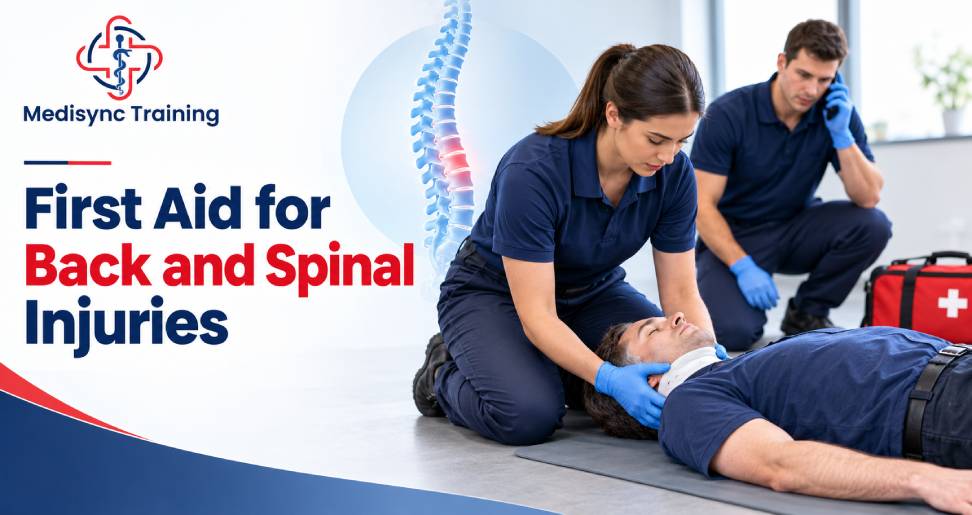
4. Support the Head and Neck Without Forcing Movement
If you can do so safely, help the person keep their head and neck still in a comfortable, neutral position. Do not force the head into alignment if it is twisted, painful, or held in an unusual position.
Avoid unnecessary handling. Untrained rescuers should not attempt complex spinal stabilisation techniques or apply improvised neck braces.
5. Check Breathing and Responsiveness
Monitor whether the person responds when spoken to and whether they are breathing normally. Keep watching for changes while waiting for the ambulance.
If the person becomes unresponsive and is not breathing normally, begin CPR and use an automated external defibrillator (AED) if available, following the emergency call-taker’s instructions. Life-saving resuscitation takes priority over concerns about spinal movement.
If the person is unconscious but breathing normally, maintain their airway and follow the ambulance call-taker’s guidance. If vomiting or airway obstruction makes movement necessary, move them only as required to protect breathing, ideally with trained assistance.
6. Control Bleeding and Prevent Heat Loss
If there is external bleeding, apply pressure to the wound where this can be done safely without pressing directly on a suspected spinal injury or embedded object.
Cover the person with a blanket or clothing to help maintain body warmth. Do not give food, drinks, or medication, particularly if surgery or an emergency procedure may be required.
7. Continue Monitoring Until Help Arrives
Stay with the person and continue observing their breathing, responsiveness, and symptoms. Reassure them that help is coming.
Tell emergency responders how the injury occurred, what symptoms appeared, and whether the person’s condition changed. This information can help medical professionals determine the next steps.
What Not to Do When Someone Has a Spinal Injury
Incorrect first aid can increase the risk of further harm. Avoid these common mistakes:
- Do not ask the injured person to stand or walk to test their mobility.
- Do not twist, bend, massage, or stretch the neck or back.
- Do not attempt to push bones or vertebrae back into position.
- Do not move the person unnecessarily or drag them by their limbs.
- Do not remove a helmet unless necessary to manage an airway or provide resuscitation, and follow professional guidance whenever possible.
- Do not leave the person alone while waiting for emergency assistance.
Even if the pain appears minor, seek medical advice after a significant accident, especially when symptoms suggest possible spinal damage.
Preventing Back and Spinal Injuries in the Workplace
Prevention is an important part of workplace health and safety. Australian businesses can reduce risks by identifying hazards and educating employees about safe work practices.
Practical prevention measures include using correct manual-handling techniques, maintaining clear walkways, wearing appropriate protective equipment, following safe driving procedures, and providing suitable training for higher-risk activities.
Employers should also ensure that workers know how to report incidents and access first aid assistance. Regular training helps employees recognise emergencies and respond calmly instead of relying on guesswork.
Why First Aid Training Matters
Reading about emergency procedures is useful, but practical training helps people develop the confidence to act under pressure. A structured course can teach participants how to assess a scene, recognise serious injuries, contact emergency services, monitor breathing, and provide appropriate first aid within their level of training.
Medisync Training supports first aid education for people who want to improve their emergency response knowledge and practical skills. Individuals and workplaces can explore relevant options, including a First Aid Certificate course and other first aid training services, to learn more about available training.
For childcare professionals and people working with children, a Childcare First Aid Course may also be relevant, depending on their role and training requirements. Choosing appropriate training helps participants understand how to respond to emergencies involving children and adults.
Before enrolling, check the course details, delivery format, practical assessment requirements, and whether the qualification meets your workplace or industry needs.
Conclusion
First aid for back and spinal injuries focuses on preventing further harm, recognising danger signs, and obtaining prompt medical assistance. If you suspect a spinal injury, keep the person as still as possible, call 000 in Australia, monitor breathing and responsiveness, and follow the emergency call-taker’s instructions.
Never attempt to straighten an injured spine or move someone unnecessarily. If the person stops breathing normally, start CPR and follow emergency guidance immediately.
Learning through appropriate first aid training can help individuals and workplaces prepare for unexpected emergencies. Explore Medisync Training’s first aid courses and training services to build practical knowledge and develop the confidence to respond safely when it matters most.
Popular Posts
-
First Aid for Amputations: Emergency Response Guide
October 21, 2026An amputation is a serious medical emergency that occurs when a body part, such as...
-
First Aid for Neck Injuries After an Accident: What You Should Do
October 16, 2026Neck injuries can occur unexpectedly after road accidents, workplace incidents, sports injuries, or accidental falls....
-
First Aid for Back and Spinal Injuries: What You Should Do in an Emergency
October 15, 2026Back and spinal injuries can occur unexpectedly at home, in the workplace, during sports activities,...
-
First Aid for Joint Injuries: Essential Steps to Reduce Pain and Prevent Further Damage
October 14, 2026Joint injuries can happen unexpectedly during sports, exercise, workplace activities, household tasks, or everyday movement....
-
First Aid for Dislocations: What to Do and What to Avoid
October 13, 2026A dislocation occurs when a bone is forced out of its normal position within a...