
First Aid for Amputations: Emergency Response Guide
October 21, 2026
An amputation is a serious medical emergency that occurs when a body part, such as a finger, toe, hand, arm, or leg, is partially or completely separated from the body. It can happen suddenly due to workplace accidents, machinery injuries, road traffic collisions, sharp tools, or other traumatic incidents. Knowing how to provide first aid for amputations can help control bleeding, reduce the risk of further injury, and improve the chances of successful medical treatment.
In an emergency, every second matters. Understanding the correct response, protecting the injured person, and handling the amputated part safely can make a significant difference while waiting for professional medical assistance.
What Is an Amputation?
An amputation involves the partial or complete loss of a body part following an injury or medical procedure. Traumatic amputations happen unexpectedly and often involve severe bleeding, tissue damage, and shock.
There are two main types:
- Complete amputation: A body part is entirely separated from the body.
- Partial amputation: A body part remains attached by some skin, tissue, or other structures.
Both situations require urgent medical attention. Even if the bleeding appears manageable, internal damage, contamination, and the risk of shock can make the injury life-threatening.
Common Causes of Traumatic Amputations
Amputations may occur in different environments and circumstances. Common causes include:
- Industrial accidents involving heavy machinery.
- Road traffic accidents involving cars, motorcycles, or other vehicles.
- Injuries caused by power tools, saws, or sharp equipment.
- Agricultural accidents involving mechanical equipment.
- Serious crush injuries or explosions.
- Accidents involving doors, metal equipment, or heavy objects.
Workplace safety measures, appropriate protective equipment, and first aid awareness can help reduce the risk of severe injuries.
First Aid for Amputations: Immediate Steps
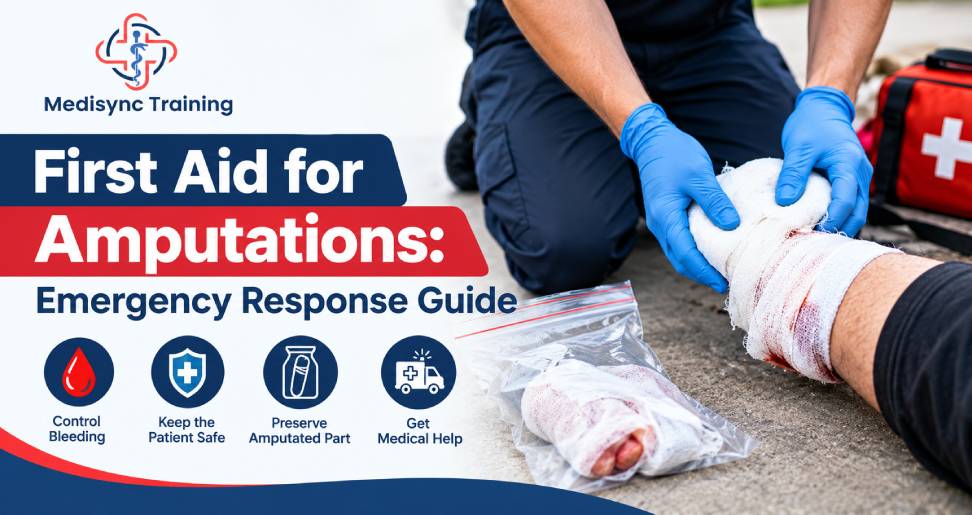
The primary goals of first aid are to control bleeding, protect the injured person, preserve the amputated part where possible, and arrange emergency medical care.
1. Ensure the Scene Is Safe
Before approaching the injured person, check for hazards such as moving machinery, traffic, electricity, fire, or broken equipment. Do not enter an unsafe area.
If the incident occurred at work, alert the appropriate emergency or safety personnel. Use disposable gloves if available to protect yourself from blood and bodily fluids.
2. Call Emergency Services Immediately
Contact emergency services as soon as possible. In Australia, call Triple Zero (000). Provide the exact location, the nature of the injury, the number of injured people, and details about severe bleeding or reduced consciousness.
Follow the emergency operator’s instructions and arrange urgent transport to an appropriate medical facility.
3. Control Severe Bleeding
Heavy blood loss is one of the most immediate dangers associated with traumatic amputation.
- Apply firm, direct pressure to the wound using sterile gauze or a clean cloth.
- If blood soaks through the dressing, add more material without removing the original dressing.
- If bleeding is life-threatening and cannot be controlled with direct pressure, use a commercially manufactured tourniquet on an injured limb when appropriate and if trained to do so.
- Follow emergency dispatcher instructions regarding bleeding control.
For a traumatic amputation of an arm or leg, a tourniquet may be necessary when severe bleeding continues. Place it above the injury, avoiding the joint, and tighten it until the bleeding stops. Note the application time and do not loosen or remove it yourself.
Never apply a tourniquet around the neck or torso. Do not delay emergency assistance while searching for first aid equipment.
4. Watch for Signs of Shock
Severe bleeding can lead to shock, a life-threatening condition in which the body does not receive enough blood flow to its vital organs.
Possible warning signs include:
- Pale, cold, or clammy skin.
- Rapid or weak breathing.
- Dizziness, confusion, or weakness.
- Rapid pulse.
- Nausea or restlessness.
Help the person lie down if this does not worsen their injury or breathing. Keep them warm with a blanket or clothing, reassure them, and monitor their breathing and responsiveness. Do not give food or drink.
If the person becomes unresponsive and is not breathing normally, follow the emergency operator’s instructions and begin CPR if appropriate.
How to Preserve an Amputated Body Part
When a body part has been completely severed, correct handling may help preserve the possibility of surgical reattachment. However, controlling the injured person’s bleeding and arranging emergency care must always come first.
Follow these steps:
- If it is safe to do so, gently pick up the amputated part without unnecessary handling.
- Wrap it in sterile gauze or a clean cloth lightly moistened with sterile saline if available.
- Place the wrapped part inside a clean, sealed, waterproof plastic bag or container.
- Place that bag in a second container containing ice and water, or over a cold pack with a barrier.
- Ensure the amputated part does not come into direct contact with ice or water.
Label the container if possible and send it with the injured person to the hospital.
Important: Never place an amputated part directly on ice, freeze it, immerse it in water, or apply chemicals or disinfectants. Do not scrub the tissue or attempt to remove embedded objects.
For a partially amputated body part, do not attempt to detach it. Cover the wound with a clean dressing, control bleeding, and support the injured area in the position found while waiting for medical assistance.
What Not to Do During an Amputation Emergency
Incorrect first aid can worsen tissue damage or delay essential treatment. Avoid these common mistakes:
- Do not delay calling emergency services.
- Do not attempt to push exposed tissue back into the wound.
- Do not remove deeply embedded objects.
- Do not apply powders, ointments, or household remedies.
- Do not give the injured person food, water, or medication unless directed by a medical professional.
- Do not loosen a tourniquet once applied for life-threatening bleeding.
- Do not leave the injured person alone if you can safely remain with them.
Continue monitoring the person’s condition until professional help arrives.
The Importance of First Aid Training
Amputation emergencies are stressful, and untrained bystanders may struggle to respond effectively. Practical first aid education helps people recognise life-threatening bleeding, apply appropriate wound pressure, understand tourniquet use, identify signs of shock, and communicate clearly with emergency services.
Employers should ensure that workplace first aid arrangements are appropriate for the hazards present, particularly in construction, manufacturing, transport, and other high-risk industries.
Medisync Training supports first aid education that helps individuals and organisations develop practical emergency response skills. Explore First Aid Training Services to learn more about training options and how appropriate preparation can support safer workplaces and communities.
Regular training and refresher sessions can help people maintain their confidence and respond more effectively when emergencies occur.
Conclusion
A traumatic amputation requires immediate emergency assistance, rapid bleeding control, careful monitoring, and appropriate handling of the amputated body part. The most important priority is to protect the injured person’s life and prevent further harm while professional medical care is arranged.
By understanding the correct first aid steps and receiving suitable practical training, individuals can be better prepared to respond calmly and safely during a serious injury. Preparation cannot eliminate every risk, but it can help people take informed action when it matters most.
Learn essential emergency response skills with Medisync Training. Visit our services page to explore available training options and build your confidence in responding to workplace and everyday emergencies.
Popular Posts
-
First Aid for Amputations: Emergency Response Guide
October 21, 2026An amputation is a serious medical emergency that occurs when a body part, such as...
-
First Aid for Neck Injuries After an Accident: What You Should Do
October 16, 2026Neck injuries can occur unexpectedly after road accidents, workplace incidents, sports injuries, or accidental falls....
-
First Aid for Back and Spinal Injuries: What You Should Do in an Emergency
October 15, 2026Back and spinal injuries can occur unexpectedly at home, in the workplace, during sports activities,...
-
First Aid for Joint Injuries: Essential Steps to Reduce Pain and Prevent Further Damage
October 14, 2026Joint injuries can happen unexpectedly during sports, exercise, workplace activities, household tasks, or everyday movement....
-
First Aid for Dislocations: What to Do and What to Avoid
October 13, 2026A dislocation occurs when a bone is forced out of its normal position within a...