
First Aid Management of a Diabetic Emergency
September 17, 2026
A diabetic emergency can develop quickly and may become life-threatening if appropriate first aid is delayed. People living with diabetes can experience hypoglycaemia (low blood glucose) or hyperglycaemia (high blood glucose), and the symptoms of a serious episode may include confusion, altered behaviour, seizures or loss of consciousness. Understanding how to recognise these signs and respond appropriately can help protect the person until professional medical assistance arrives.
For workplaces, schools, community organisations and individuals, practical first aid knowledge is particularly valuable because a diabetic emergency can happen unexpectedly.
What Is a Diabetic Emergency?
A diabetic emergency generally occurs when blood glucose becomes dangerously low or high.
Hypoglycaemia occurs when blood glucose falls below approximately 4.0 mmol/L. It can happen because of insulin or certain diabetes medications, missed meals, insufficient carbohydrate intake, unexpected physical activity, strenuous exercise or alcohol.
Hyperglycaemia occurs when blood glucose is too high. It can be associated with insufficient insulin or medication, illness, infection, stress, reduced physical activity or dietary factors. Severe hyperglycaemia can contribute to serious conditions such as diabetic ketoacidosis (DKA) and hyperosmolar hyperglycaemic state (HHS).
Knowing the difference between these emergencies is useful, but first aiders should focus primarily on the person’s symptoms, responsiveness and ability to swallow.
Recognising Hypoglycaemia
Hypoglycaemia often develops relatively quickly. Common signs can include:
- Shaking or trembling
- Sweating
- Weakness
- Hunger
- Dizziness or light-headedness
- Headache
- Difficulty concentrating
- Irritability or unusual behaviour
- Numbness around the lips or fingers
If untreated, a severe hypo can progress to confusion, slurred speech, seizures or unconsciousness.
A person experiencing hypoglycaemia may sometimes appear confused or behave unusually. Therefore, it is important not to dismiss sudden changes in behaviour without considering a possible medical emergency.
First Aid for a Conscious Person With Hypoglycaemia
If the person is conscious, responsive and able to swallow safely, quick-acting glucose should be provided.
Depending on the person’s diabetes management plan and available resources, this may include glucose tablets, glucose gel, regular fruit juice, or another suitable source of fast-acting carbohydrate. Diabetes Australia recommends treating a hypo promptly with quick-acting glucose and checking again after approximately 15 minutes.
A basic first aid approach is:
- Keep the person safe and seated.
- Reassure them and remain with them.
- Give an appropriate quick-acting source of glucose if they are conscious and can swallow.
- Allow around 15 minutes and reassess their condition.
- If symptoms or low blood glucose persist, follow the person’s diabetes management plan and repeat appropriate treatment.
- Once recovered, a longer-acting carbohydrate snack or meal may be appropriate.
The person should not be left alone immediately after an episode, particularly if their symptoms were severe.
What If the Person Is Unconscious or Unable to Swallow?
This is a medical emergency.
Never give food, drink, glucose or other substances by mouth to someone who is unconscious, severely drowsy or unable to swallow, because they may choke or aspirate it. Healthdirect recommends placing the person in the recovery position, calling 000 and requesting an ambulance. If prescribed glucagon is available and the first aider is trained to administer it, it may be given according to the person’s emergency plan.
Continue monitoring the person’s breathing. If they are not breathing normally, follow the appropriate emergency response procedure and begin CPR when indicated. The Australian DRSABCD approach includes checking for danger and response, calling for help, assessing the airway and breathing, performing CPR when required, and using an AED when available.
Recognising Hyperglycaemia
Hyperglycaemia can develop more gradually than hypoglycaemia. Possible symptoms include:
- Excessive thirst
- Frequent urination
- Tiredness or lethargy
- Blurred vision
- Difficulty concentrating
- Behavioural changes
- Dry mouth or skin
More serious symptoms can occur when hyperglycaemia progresses towards diabetic ketoacidosis. These may include nausea, vomiting, abdominal pain, weakness, shortness of breath and fruity-smelling breath.
Severe or deteriorating symptoms require medical assessment rather than simply waiting for blood glucose to return to normal.
First Aid for Hyperglycaemia
If the person is conscious and experiencing symptoms of high blood glucose:
- Help them remain calm and comfortable.
- Encourage them to follow their existing diabetes management plan.
- Encourage water or appropriate fluids when they can safely drink.
- Do not administer another person’s insulin or diabetes medication.
- Seek medical assistance if symptoms become severe or the person is deteriorating.
Diabetes Australia advises seeking emergency medical assistance when a person is becoming unable to manage their diabetes, cannot keep food or fluids down, or has persistently high blood glucose with ketones.
What If You Are Unsure Whether It Is High or Low Blood Sugar?
This situation can be challenging for a first aider because some symptoms can overlap.
If the person is conscious and able to swallow, St John Ambulance Australia advises that, when you are unsure whether the person has low or high blood sugar, giving a sugary drink rather than a diet drink can be appropriate because glucose may be lifesaving in hypoglycaemia.
However, never give anything by mouth to an unconscious, severely drowsy or swallowing-impaired person. Instead, call emergency services and maintain the airway according to first aid procedures.
Why First Aid Training Matters
Knowing the theory of diabetic emergencies is useful, but practical training can help people develop the confidence to respond appropriately under pressure. First aid training can cover emergency assessment, recognition of medical conditions, appropriate communication, recovery positioning and emergency response procedures.
For organisations looking to improve workplace emergency preparedness, Medisync Training can be included as an internal resource for first aid and workplace safety training.
Training should complement—not replace—the individual’s diabetes management plan or professional medical advice.
Preparing for a Diabetic Emergency
Preparation can make a significant difference. People with diabetes may benefit from having appropriate emergency supplies available and ensuring family members, colleagues, teachers or other support people know what to do during a hypo. Diabetes Australia also recommends having an emergency plan and monitoring blood glucose during stressful situations or emergencies.
For workplaces, it is useful to ensure trained first aiders know where emergency equipment is located and understand how to respond to medical emergencies.
Final Thoughts
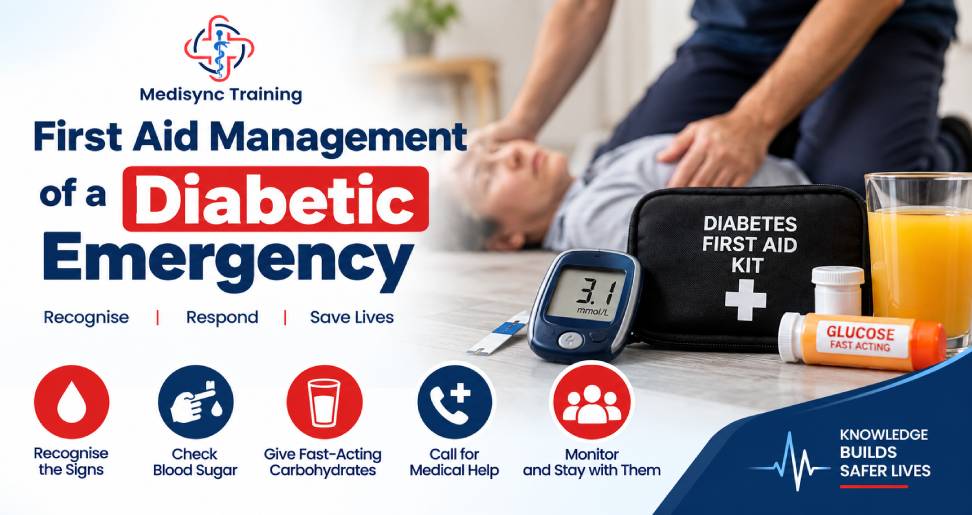
A diabetic emergency requires a calm, prompt and structured response. Recognising the signs of hypoglycaemia, providing appropriate glucose when the person is conscious and able to swallow, avoiding oral food or drink when consciousness is impaired, and contacting emergency services when necessary are key first aid principles.
Most importantly, first aiders should understand their level of training and follow established emergency procedures. Formal first aid training can provide the practical skills needed to respond confidently when a diabetic emergency occurs.
This article is for general educational purposes and does not replace professional medical advice or accredited first aid training. In Australia, call Triple Zero (000) for a medical emergency.
Popular Posts
-
First Aid for Muscle Injuries: Strains, Tears and Immediate Care
October 9, 2026Muscle injuries can happen during sports, exercise, physical work, or everyday activities. A sudden movement,...
-
First Aid for Soft Tissue Injuries: Essential Steps for Safe and Effective Care
October 7, 2026Soft tissue injuries are common in workplaces, homes, sports activities, and everyday situations. A sudden...
-
First Aid for Mouth and Tongue Injuries: What You Should Do
October 5, 2026Mouth and tongue injuries can happen unexpectedly during sports, falls, accidents, biting incidents, or everyday...
-
First Aid for Ear Injuries and Foreign Objects
October 2, 2026Ear injuries can happen unexpectedly at home, at work, during sports, or while travelling. A...
-
Chemical Eye Injury: Immediate First Aid Steps
September 30, 2026A chemical splash to the eye can happen unexpectedly at home, in a workplace, laboratory,...