
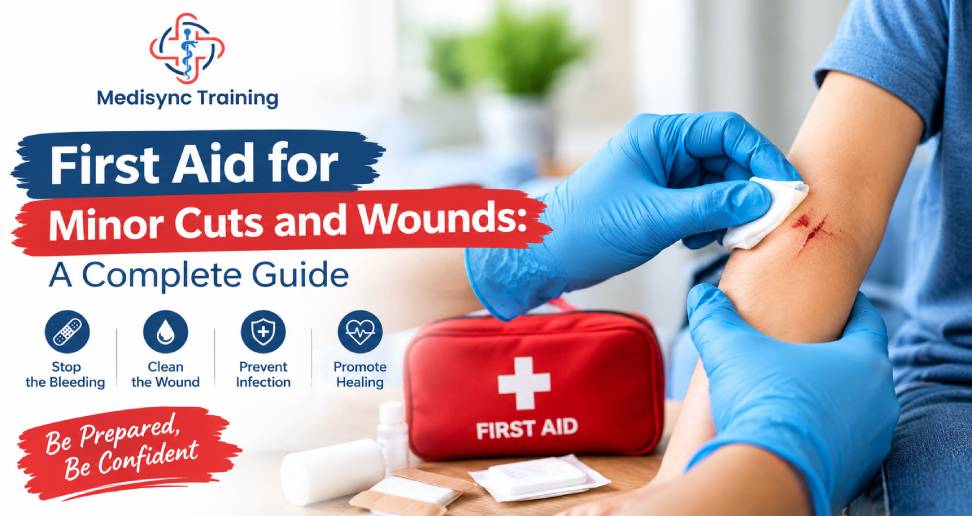
First Aid for Minor Cuts and Wounds: A Complete Guide
September 25, 2026
Minor cuts and wounds are among the most common injuries people experience at home, at work, while playing sports, or during everyday activities. A small cut from a kitchen knife, a scrape after a fall, or a minor wound from a sharp object may not appear serious, but appropriate first aid is important to control bleeding, reduce contamination, and support the healing process.
Knowing first aid for minor cuts and wounds can help you respond calmly and effectively when an injury occurs. This guide explains the basic steps for managing minor wounds, common mistakes to avoid, signs that medical attention may be needed, and the value of practical first aid training.
What Are Minor Cuts and Wounds?
A cut occurs when the skin is broken by a sharp or rough object. Minor wounds usually affect the outer layers of the skin and can generally be managed with basic first aid.
Common types of minor wounds include:
- Cuts: Breaks in the skin caused by sharp objects such as knives, glass, or metal.
- Scrapes or abrasions: Surface injuries caused when the skin rubs against a rough surface.
- Small puncture wounds: Injuries caused by a pointed object penetrating the skin.
- Minor skin tears: Small areas where the skin becomes partially separated due to friction or trauma.
Although these injuries are often manageable, it is important to assess each wound carefully before providing first aid.
Step-by-Step First Aid for Minor Cuts and Wounds
1. Make Sure the Area Is Safe
Before helping someone, check that there are no ongoing hazards. Broken glass, sharp equipment, traffic, electrical hazards, or other risks should be considered before approaching the injured person.
If possible, use disposable gloves or another suitable barrier when there is a possibility of contact with blood.
2. Control the Bleeding
For a minor cut, apply gentle but firm pressure using clean gauze, a clean dressing, or another suitable clean material. Maintain continuous pressure until the bleeding slows or stops.
Avoid repeatedly lifting the dressing to check the wound, as this may disturb clot formation and cause bleeding to restart.
If blood soaks through the initial dressing, additional dressing material may be placed over it while maintaining pressure.
3. Clean the Wound
Once the bleeding is controlled, cleaning the wound helps remove dirt and debris.
Wash your hands before touching the area. Gently rinse the wound with clean running water. The skin around the wound can be cleaned carefully with soap and water, while avoiding unnecessary irritation inside the wound.
If small, loose particles of dirt remain, they may sometimes be carefully removed with clean tweezers. Do not attempt to remove deeply embedded objects. Seek professional medical assistance instead.
4. Protect the Cut
After cleaning, gently dry the surrounding skin and cover the wound with a sterile or clean dressing.
A small adhesive bandage may be suitable for a minor cut, while a larger sterile dressing may be required for a bigger abrasion.
Covering the wound can help protect it from dirt, friction, and further injury.
5. Change the Dressing When Necessary
Keep the dressing clean and dry. Replace it if it becomes wet, dirty, loose, or contaminated.
When changing the dressing, check the wound for changes such as increasing redness, swelling, discharge, worsening pain, or unusual warmth around the affected area.
Signs of Possible Infection
Even a minor injury can sometimes become infected. Monitoring the wound during the healing process is therefore important.
Possible warning signs include:
- Increasing redness around the wound
- Swelling or warmth
- Increasing or persistent pain
- Pus or unusual discharge
- Unpleasant smell
- Fever or feeling generally unwell
- Red streaking spreading from the wound
If these symptoms develop, seek advice from an appropriate healthcare professional.
When Should You Seek Medical Attention?
Not every wound should be managed at home. Professional medical assessment may be necessary when:
- Bleeding is severe or does not stop with appropriate pressure.
- The wound is deep, large, or has widely separated edges.
- An object is embedded in the wound.
- The injury was caused by an animal or human bite.
- There is loss of sensation or difficulty moving the affected area.
- The wound contains material that cannot be removed safely.
- Signs of infection develop.
- The wound involves the face, eye, hand, joint, or another sensitive area.
- There are concerns about tetanus vaccination status after a contaminated or puncture wound.
For severe bleeding or a life-threatening injury, contact emergency medical services promptly.
Common Mistakes to Avoid
Good first aid is not only about knowing what to do—it is also about avoiding actions that could make the situation worse.
Do not touch an open wound unnecessarily with unwashed hands. Avoid attempting to pull out deeply embedded objects, and do not ignore persistent bleeding.
It is also important not to assume that a small wound will always heal without complications. Continue monitoring the area until healing is well underway.
Why First Aid Knowledge Matters
Cuts and wounds are only one type of emergency people may encounter. First aid knowledge prepares individuals to respond to a much broader range of situations.
For example, knowing First Aid Management of The Agitated Person can help responders understand how to approach situations where someone is distressed, confused, or behaving unpredictably while prioritising safety.
Understanding First Aid Management of Suspected Opioid Overdose is also important because an opioid-related emergency can quickly become life-threatening and requires an appropriate response and urgent medical assistance.
Similarly, learning First Aid Management of a Diabetic Emergency can help people recognise potential warning signs and understand what action may be required when someone with diabetes becomes suddenly unwell.
These areas demonstrate why comprehensive first aid education can be valuable in workplaces, community environments, and everyday life.
Build Practical First Aid Skills with Medisync Training
Reading about first aid is a useful starting point, but practical training helps people develop the confidence and skills needed to respond appropriately in real situations.
Medisync Training provides first aid training designed to help participants build practical knowledge for managing injuries and emergencies. Training can help learners understand how to assess an incident, respond safely, provide appropriate initial care, and recognise when professional medical assistance is required.
Whether you are an individual looking to improve your emergency preparedness or an organisation seeking training for staff, Medisync Training can help develop practical first aid capabilities that may prove valuable when an unexpected incident occurs.
How Can Minor Cuts Be Prevented?
Many minor injuries can be reduced through simple safety practices. Store knives and sharp objects safely, use appropriate protective equipment when working with tools, maintain clean and uncluttered workspaces, and pay attention when handling potentially hazardous materials.
Workplaces should also maintain accessible first aid supplies and ensure relevant staff understand how to respond to common injuries.
Final Thoughts
Knowing first aid for minor cuts and wounds is a practical skill that can be useful almost anywhere. The basic approach involves making sure the environment is safe, controlling bleeding, cleaning the wound, protecting it with an appropriate dressing, and monitoring the injury as it heals.
Just as importantly, first aiders should recognise the limits of basic wound care and know when an injury requires professional medical attention.
Developing broader first aid knowledge—including First Aid Management of The Agitated Person, First Aid Management of Suspected Opioid Overdose, and First Aid Management of a Diabetic Emergency—can further improve preparedness for unexpected situations.
With practical education from Medisync Training, individuals and workplaces can strengthen their first aid knowledge and develop greater confidence in responding when help is needed.
Popular Posts
-
First Aid for Muscle Injuries: Strains, Tears and Immediate Care
October 9, 2026Muscle injuries can happen during sports, exercise, physical work, or everyday activities. A sudden movement,...
-
First Aid for Soft Tissue Injuries: Essential Steps for Safe and Effective Care
October 7, 2026Soft tissue injuries are common in workplaces, homes, sports activities, and everyday situations. A sudden...
-
First Aid for Mouth and Tongue Injuries: What You Should Do
October 5, 2026Mouth and tongue injuries can happen unexpectedly during sports, falls, accidents, biting incidents, or everyday...
-
First Aid for Ear Injuries and Foreign Objects
October 2, 2026Ear injuries can happen unexpectedly at home, at work, during sports, or while travelling. A...
-
Chemical Eye Injury: Immediate First Aid Steps
September 30, 2026A chemical splash to the eye can happen unexpectedly at home, in a workplace, laboratory,...