
How to Treat a Deep Cut Before Medical Help Arrives
September 25, 2026
A deep cut can happen suddenly at home, at work, outdoors, or during an accident. While a small cut may only require basic first aid, a deep wound can cause significant blood loss and may damage muscles, nerves, blood vessels, or other tissues. Knowing what to do in the first few minutes can help control bleeding and protect the injured person until professional medical assistance arrives.
This guide explains the essential first-aid steps for managing a deep cut safely. It is important to remember that first aid is not a replacement for professional medical treatment. Deep or serious wounds should be assessed by a qualified healthcare professional.
When Is a Cut Considered Deep?
A wound may require urgent medical attention if it is deep, large, gaping, contaminated, or continues to bleed despite applying firm pressure. Medical assessment is particularly important when you can see deeper tissue, such as fat or muscle, or if the wound is located on the face, hand, foot, over a joint, or near an important blood vessel.
Seek emergency help immediately if the bleeding is heavy, spurting, rapidly soaking through dressings, or accompanied by signs of shock such as pale or clammy skin, weakness, dizziness, confusion, or loss of consciousness.
1. Make Sure the Area Is Safe
Before helping, check your surroundings. The object that caused the injury may still be dangerous, such as broken glass, machinery, a sharp tool, or exposed electrical equipment.
If the environment is unsafe, move away from the hazard if possible and contact emergency services. Avoid putting yourself at risk while trying to help someone else.
Once the area is safe, reassure the injured person and encourage them to remain as still and calm as possible.
2. Call for Medical Assistance
A deep cut may require stitches, wound closure, antibiotics, treatment for damaged tissues, or a tetanus vaccination depending on the circumstances.
Call your local emergency medical service if the wound is severe or bleeding cannot be controlled. If another person is present, ask them to make the call while you begin first aid.
Do not delay professional help simply because the bleeding temporarily appears to slow down.
3. Control the Bleeding With Direct Pressure
The most important first-aid priority for a serious bleeding wound is to control blood loss.
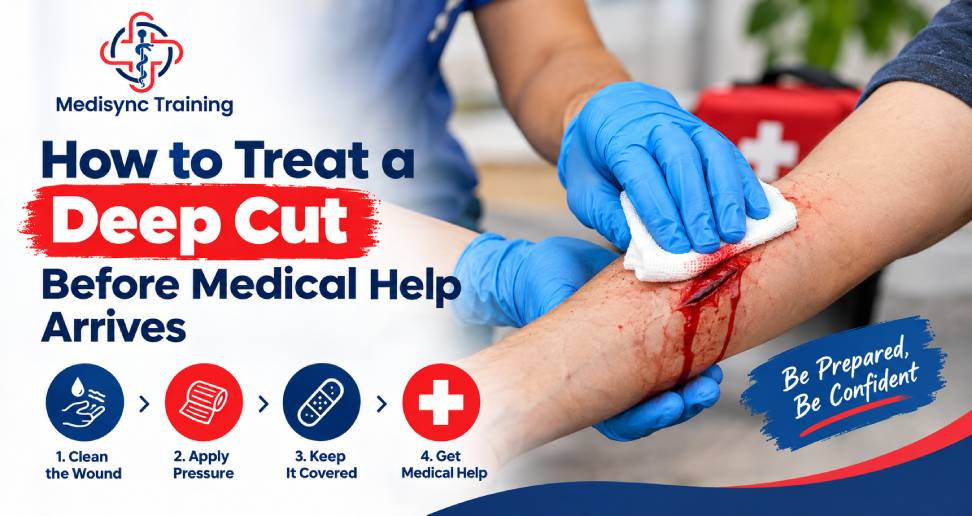
If possible, put on disposable gloves or another suitable barrier to reduce contact with blood. Place sterile gauze or a clean cloth over the wound and apply firm, steady pressure with your hand.
Maintain pressure continuously. Avoid repeatedly lifting the dressing to check whether the bleeding has stopped because this can disturb developing clots.
If blood soaks through the dressing, place another clean dressing or cloth over the first one and continue applying pressure. Do not remove the original dressing.
For life-threatening bleeding from a limb that cannot be controlled with direct pressure, follow emergency-dispatcher instructions. A commercial tourniquet may be appropriate in some circumstances when used correctly.
4. Do Not Remove Embedded Objects
If glass, metal, wood, or another object is deeply embedded in the wound, do not pull it out.
Removing an embedded object can cause additional bleeding or tissue damage. Instead, apply pressure around the object rather than directly on it, if possible, and seek urgent medical care.
Try to keep the object as stable as possible until professional help arrives.
5. Keep the Injured Person Comfortable
Serious blood loss can lead to shock. While waiting for medical help, keep the person as comfortable and still as possible.
If there is no suspected injury that makes movement unsafe, have them lie down. Keep them warm with a blanket or clothing, but avoid overheating them.
Do not give food or drink to someone with a serious injury because they may require a medical procedure or anaesthesia.
Monitor their breathing, responsiveness, and general condition while waiting for emergency services. If they become unresponsive and are not breathing normally, follow emergency-dispatcher instructions and begin CPR if you are trained to do so.
6. Avoid Common First-Aid Mistakes
Several actions can make a deep wound worse. Avoid:
- Pouring harsh chemicals or strong antiseptics into a deep wound.
- Scrubbing deeply into the wound.
- Pulling out embedded objects.
- Removing blood-soaked dressings repeatedly.
- Trying to close a deep or contaminated wound yourself.
- Applying household powders or unverified substances to the wound.
- Delaying professional care because the bleeding has slowed.
The priority is to control bleeding, protect the wound, and get appropriate medical assistance.
7. Consider the Risk of Infection
Deep wounds can become infected, especially when caused by dirty, rusty, contaminated, or animal-related objects. Infection may cause increasing redness, swelling, warmth, pain, discharge, or fever.
A healthcare professional may need to clean the wound thoroughly and determine whether stitches, other wound closure, antibiotics, or a tetanus vaccination are appropriate.
Do not assume that a wound is safe simply because it looks clean from the outside.
8. Watch for Signs of Shock
Major bleeding can cause a potentially life-threatening condition known as shock. Warning signs may include:
- Pale, cool, or clammy skin
- Rapid breathing
- Weakness or dizziness
- Confusion or unusual behaviour
- Nausea
- Extreme thirst
- Increasing drowsiness or loss of consciousness
If these symptoms occur, treat the situation as an emergency and follow instructions from emergency medical services.
Understanding how to respond to other emergencies can also strengthen overall first-aid knowledge. For example, learning about First Aid Management of The Agitated Person can help people respond more safely when an injured or distressed person becomes agitated. Similarly, knowledge of First Aid Management of Suspected Opioid Overdose is valuable when someone becomes unresponsive following suspected opioid use.
9. Take Extra Care With People With Diabetes
People with diabetes may require additional consideration during an emergency. An injury, stress, infection, or difficulty eating can affect their blood glucose levels.
If the injured person has diabetes, tell emergency responders. If they are conscious and able to communicate, ask whether they have any relevant medical information or medication with them.
First-aid knowledge should cover a range of emergencies rather than focusing only on physical injuries. Understanding First Aid Management of a Diabetic Emergency can help responders recognise and appropriately manage potentially serious blood-glucose-related emergencies.
Why First-Aid Training Matters
Knowing basic first aid can make a significant difference during the period between an accident and professional medical treatment. However, effective first aid requires more than simply memorising individual steps. Training helps people practise assessing emergencies, controlling bleeding, communicating with emergency services, and responding appropriately under pressure.
Medisync Training provides first-aid training designed to build practical knowledge and confidence for responding to emergencies. Structured training can help individuals and organisations develop the skills needed to respond appropriately when an unexpected incident occurs.
Whether you are learning first aid for the workplace, community, family, or personal development, practical training can help you feel more prepared to act when it matters.
Final Thoughts
A deep cut should always be taken seriously, particularly when there is heavy bleeding, visible deeper tissue, an embedded object, significant contamination, or signs of shock. The immediate priorities are to make the area safe, call for appropriate medical assistance, apply firm direct pressure, avoid disturbing embedded objects, and monitor the injured person’s condition.
First aid can help stabilise a situation, but it does not replace professional medical treatment. When in doubt, seek urgent medical assistance and follow the instructions provided by emergency professionals.
Learning first aid before an emergency occurs is one of the best ways to prepare for unexpected injuries. With appropriate education and hands-on training from providers such as Medisync Training, individuals can develop practical skills that may help them respond calmly and effectively when immediate assistance is needed.
Popular Posts
-
First Aid for Amputations: Emergency Response Guide
October 21, 2026An amputation is a serious medical emergency that occurs when a body part, such as...
-
First Aid for Neck Injuries After an Accident: What You Should Do
October 16, 2026Neck injuries can occur unexpectedly after road accidents, workplace incidents, sports injuries, or accidental falls....
-
First Aid for Back and Spinal Injuries: What You Should Do in an Emergency
October 15, 2026Back and spinal injuries can occur unexpectedly at home, in the workplace, during sports activities,...
-
First Aid for Joint Injuries: Essential Steps to Reduce Pain and Prevent Further Damage
October 14, 2026Joint injuries can happen unexpectedly during sports, exercise, workplace activities, household tasks, or everyday movement....
-
First Aid for Dislocations: What to Do and What to Avoid
October 13, 2026A dislocation occurs when a bone is forced out of its normal position within a...