

How to Perform CPR: A Step-by-Step Guide for Bystanders
May 29, 2026
Emergencies can happen without warning. A person may suddenly collapse at home, at work, during sport, or even while walking through a shopping centre. In those critical first few minutes, knowing CPR can mean the difference between life and death.
In Australia, ambulance response times can vary depending on location and traffic conditions. That’s why bystander CPR plays such an important role in improving survival outcomes. Even basic CPR knowledge can help keep oxygen flowing through the body until paramedics arrive.
This guide explains how to perform CPR step by step, the correct hand placement for chest compressions, and the proper CPR techniques for adults and children.
What Is CPR?
CPR stands for Cardiopulmonary Resuscitation. It is an emergency lifesaving technique used when someone has stopped breathing normally or their heart has stopped beating effectively.
The purpose of CPR is to:
- Maintain blood circulation
- Keep oxygen moving to the brain
- Increase survival chances until medical help arrives
Many Australians choose to complete accredited CPR training to feel more confident in emergencies. Providers such as Medisync Training offer practical, nationally recognised courses designed to prepare everyday people for real-life situations.
When Should You Start CPR?
You should begin CPR immediately if a person:
- Is unconscious
- Is not responding
- Is not breathing normally
- Is gasping or barely breathing
Quick action matters. Waiting too long can significantly reduce the person’s chance of survival.
How to Perform CPR: A Step-by-Step Guide for Bystanders
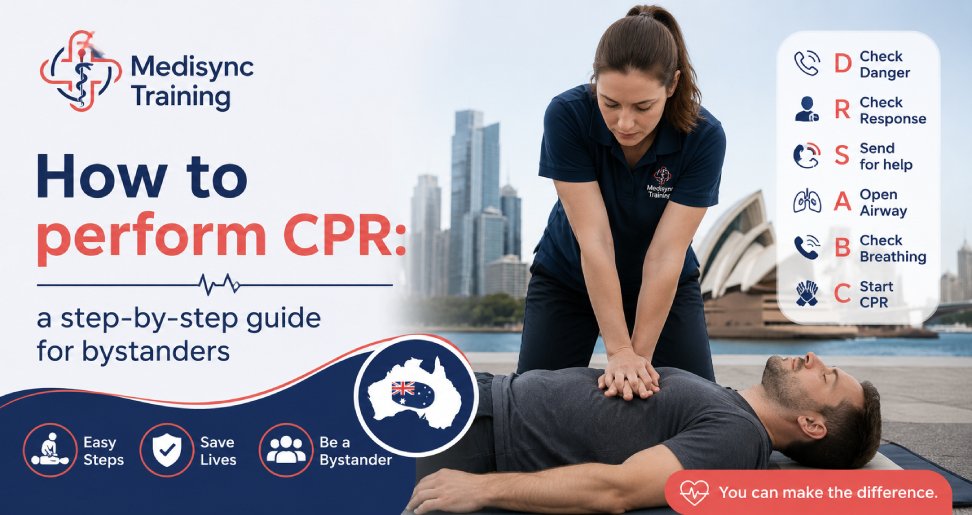
If you’ve searched online for “how to do CPR step by step with pictures,” you’ve probably noticed that most CPR guides follow a simple emergency response process. While visual training is best learned in a practical course, these steps can help you understand the basics.
Step 1: Check for Danger
Before helping anyone, check the surrounding area for hazards such as:
- Traffic
- Electrical wires
- Fire
- Water dangers
- Unsafe environments
You should never put yourself at risk while assisting someone else.
Step 2: Check for a Response
Gently tap the person and speak loudly:
“Can you hear me?”
If there’s no response, move to the next step immediately.
Step 3: Call Triple Zero (000)
Call 000 for emergency assistance. If other people are nearby, ask someone specifically to:
- Call an ambulance
- Locate an AED (Automated External Defibrillator)
AEDs are commonly available in Australian shopping centres, schools, airports, gyms, and sporting facilities.
Step 4: Open the Airway
Carefully tilt the person’s head back slightly and lift their chin. This helps open the airway and allows you to check for breathing.
Step 5: Check Breathing
Look for chest movement, listen for breathing sounds, and feel for air for up to 10 seconds.
If the person is not breathing normally, start CPR immediately.
What Is the Correct Hand Position and Compression Point When Performing CPR?
One of the most important parts of CPR is proper hand placement.
If you’re asking:
“What is the correct hand position and compression point when performing CPR?”
here’s the answer.
Correct Hand Position for Adult CPR
- Place the heel of one hand in the centre of the chest
- Position your second hand on top
- Interlock your fingers
- Keep your elbows straight
- Position your shoulders directly above your hands
Correct Compression Point
The compression point is located on the lower half of the breastbone, in the middle of the chest.
Push hard and fast at a steady rhythm of:
- 100–120 compressions per minute
- Around one-third of the chest depth
Many CPR trainers use the rhythm of “Stayin’ Alive” by the Bee Gees to help people maintain the correct pace.
How to Perform CPR on an Adult
Adult CPR follows the standard 30:2 method.
Step-by-Step Adult CPR
- Give 30 chest compressions
- Provide 2 rescue breaths
- Repeat continuously until help arrives
Rescue Breaths
To provide rescue breaths:
- Pinch the nose closed
- Seal your mouth over theirs
- Give two gentle breaths
- Watch for chest rise
If you’re uncomfortable giving breaths, hands-only CPR is still recommended and can still save lives.
What Is the Correct Technique for Providing CPR on a Child or Adult?
The CPR process is similar for adults and children, but the amount of pressure used differs.
CPR for Adults
- Use two hands
- Push firmly and deeply
- Maintain consistent compressions
CPR for Children
If you’re wondering:
“What is the correct technique for providing CPR on a child or adult?”
the main difference for children is gentler pressure.
For children:
- Use one or two hands depending on their size
- Compress one-third of the chest depth
- Deliver smaller rescue breaths
CPR for Infants
For babies under 12 months:
- Use only two fingers for compressions
- Apply gentle pressure
- Use soft rescue breaths
Child and infant CPR can feel stressful without practical training, which is why many Australian parents, teachers, and childcare workers enrol in certified CPR courses.
Using an AED During CPR
An AED is a portable defibrillator designed to help restart the heart during cardiac arrest.
Modern AEDs provide spoken instructions that guide bystanders through the process.
When using an AED:
- Turn it on immediately
- Follow voice prompts
- Continue CPR when instructed
AEDs are designed for public use and can be safely operated by people without medical backgrounds.
Common CPR Mistakes
Even with good intentions, mistakes can happen during emergencies.
Some common CPR errors include:
- Incorrect hand placement
- Pressing too softly
- Stopping compressions too often
- Delaying emergency calls
- Panicking during the situation
The good news is that proper CPR training helps build muscle memory and confidence.
Why CPR Training Is Worth It
Reading about CPR online is useful, but practical training gives you real-world experience.
Accredited CPR courses teach:
- Emergency response procedures
- Adult, child, and infant CPR
- AED operation
- Realistic emergency scenarios
- Australian first aid guidelines
Training providers such as Medisync Training deliver nationally recognised CPR courses that combine hands-on learning with experienced instruction. Their practical approach helps Australians feel more prepared to respond calmly during emergencies.
Final Thoughts
Knowing how to perform CPR is one of the most valuable life skills anyone can learn. In an emergency, immediate action from a bystander can dramatically improve someone’s chance of survival before paramedics arrive.
By understanding the correct hand position, compression point, and CPR techniques for adults and children, you can step in with confidence when every second matters.
If you’ve never completed a CPR course before, now is a great time to start. Learning through trusted Australian providers like Medisync Training can help you gain the practical skills needed to respond effectively in real-life emergencies.
Popular Posts
-
Warning Signs of Heart Attack: An Essential Action Plan
September 7, 2026A heart attack can happen suddenly, and recognising the warning signs early can make a...
-
How Proper Medication Training Reduces Risks for Vulnerable Adults
September 2, 2026Vulnerable adults may rely on careers and support workers to help them manage their medicines...
-
Burns First Aid Treatment Steps Australia: What to Do When a Burn Happens
August 12, 2026Burn injuries can happen unexpectedly at home, at work, in childcare settings, or while cooking....
-
Common CPR Mistakes That Reduce Survival Rates
July 3, 2026When someone suffers a sudden cardiac arrest, every second counts. Immediate, high-quality CPR can significantly...
-
How to Calm Someone Having a Panic Attack: A Practical Guide for Australians
June 5, 2026Panic attacks can happen unexpectedly and often leave both the person experiencing them and those...