
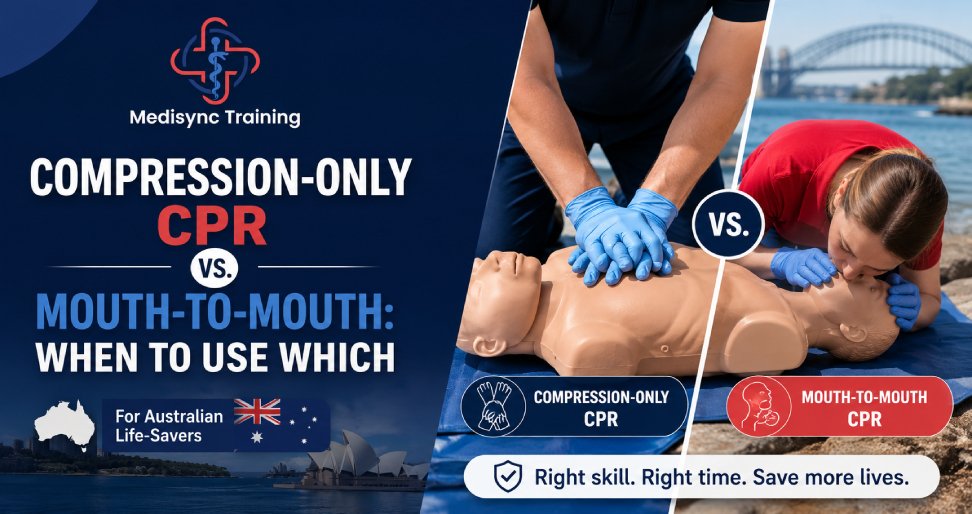
Compression-Only CPR vs. Mouth-to-Mouth: When to Use Which
June 3, 2026
When someone suddenly collapses from cardiac arrest, every second matters. Knowing how to perform CPR correctly can dramatically improve survival chances before paramedics arrive. Across Australia, more workplaces, schools, sporting clubs, and families are recognising the importance of CPR training because emergencies can happen anywhere — at home, on the beach, at work, or even during weekend footy.
One of the most common questions people ask during first aid training is: should you use compression-only CPR or mouth-to-mouth CPR? Understanding the difference could help save a life.
What Is CPR and Why Is It Important?
Cardiopulmonary resuscitation (CPR) is an emergency lifesaving technique used when a person stops breathing normally or their heart stops beating effectively. CPR keeps oxygen-rich blood moving through the body until professional medical help arrives.
According to Australian first aid guidelines, immediate CPR combined with an Automated External Defibrillator (AED) significantly increases survival rates. However, many Australians still hesitate to act because they are unsure about the correct procedure.
That’s why proper training through providers such as Medisync Training is so valuable. Hands-on practice builds confidence and helps people respond quickly in real-life emergencies.
What Is Compression-Only CPR?
Compression-only CPR focuses solely on chest compressions without rescue breaths. This method is commonly recommended for adult cardiac arrest victims when the rescuer is untrained or uncomfortable providing mouth-to-mouth ventilation.
The technique involves:
- Calling Triple Zero (000)
- Pushing hard and fast in the centre of the chest
- Continuing compressions until emergency services arrive or an AED is available
Compression-only CPR helps maintain blood circulation to vital organs like the brain and heart.
When Should You Use Compression-Only CPR?
Compression-only CPR is generally suitable when:
- The casualty is an adult
- The collapse is sudden and cardiac-related
- You are untrained in rescue breaths
- There are concerns about infection transmission
- You cannot safely provide mouth-to-mouth
Australian Resuscitation Council guidelines recognise that chest compressions alone are far better than doing nothing at all. In many adult cardiac arrest cases, there is still oxygen remaining in the bloodstream during the first few minutes.
What Is Mouth-to-Mouth CPR?
Mouth-to-mouth CPR combines chest compressions with rescue breaths. The standard ratio for adults is 30 compressions followed by 2 breaths.
This method becomes particularly important when the cardiac arrest is caused by a lack of oxygen rather than a heart problem.
When Should You Use Mouth-to-Mouth CPR?
Rescue breaths are especially recommended for:
- Children and infants
- Drowning victims
- Drug overdoses
- Choking incidents
- Respiratory emergencies
In these situations, oxygen deprivation is often the primary issue, so providing breaths alongside compressions is critical.
What Is the Correct Technique for Providing CPR on a Child or Adult?
One of the most searched questions Australians ask is: “what is the correct technique for providing CPR on a child or adult?”
While the basic principles remain similar, there are important differences between adult and child CPR.
CPR for Adults
For adults:
- Check for danger and ensure the scene is safe
- Check responsiveness
- Call Triple Zero (000)
- Begin chest compressions
- Use 30 compressions and 2 breaths if trained
- Apply an AED as soon as possible
Compression depth should be around one-third of the chest depth, usually about 5 cm.
CPR for Children
For children:
- Use gentler compressions
- Compress approximately one-third of the chest depth
- Use one or two hands depending on the child’s size
- Rescue breaths are strongly recommended
Children are more likely to suffer cardiac arrest from breathing-related emergencies, which is why mouth-to-mouth CPR is often more beneficial for them.
What Is the Correct Hand Position and Compression Point When Performing CPR?
Another frequently asked question is: “what is the correct hand position and compression point when performing CPR?”
Correct hand placement is essential for effective CPR.
Adult Hand Position
For adults:
- Place the heel of one hand in the centre of the chest
- Position the second hand on top
- Interlock your fingers
- Keep your arms straight
- Push hard and fast at a rate of 100–120 compressions per minute
The compression point is on the lower half of the breastbone (sternum).
Child Hand Position
For children:
- Use one hand if needed
- Compress the centre of the chest carefully
- Maintain steady rhythm and depth
Correct hand positioning improves circulation and reduces the risk of injury.
How to Do CPR Step by Step With Pictures
Many Australians search online for “how to do CPR step by step with pictures” because visual learning helps build confidence during emergencies.
While images and diagrams are useful, nothing replaces practical hands-on training. Accredited CPR courses allow participants to practise on manikins under professional guidance.
Here is a simple step-by-step overview:
Step 1: Check for Danger
Ensure the area is safe for yourself and the casualty.
Step 2: Check Responsiveness
Talk loudly and gently shake the person.
Step 3: Call for Help
Call Triple Zero (000) immediately or ask someone nearby to call.
Step 4: Open the Airway
Tilt the head back slightly and check for normal breathing.
Step 5: Begin Chest Compressions
Place your hands correctly in the centre of the chest and start compressions.
Step 6: Give Rescue Breaths (If Trained)
Provide 2 breaths after every 30 compressions.
Step 7: Continue Until Help Arrives
Do not stop unless the person recovers, emergency services take over, or you become physically unable to continue.
Why CPR Training Matters in Australia
Australia has strong first aid awareness, but many people still lack confidence in emergencies. CPR skills can fade quickly without regular refreshers.
That’s why nationally recognised training providers such as Medisync Training play an important role in community safety. Their practical, Australian-standard CPR courses help everyday Australians learn how to respond calmly and effectively during life-threatening situations.
Whether you work in childcare, healthcare, hospitality, construction, education, or simply want to protect your family, CPR certification provides valuable lifesaving knowledge.
Final Thoughts
Understanding the difference between compression-only CPR and mouth-to-mouth CPR could make all the difference in an emergency.
For most adult sudden cardiac arrests, compression-only CPR is highly effective and encouraged if you are untrained or hesitant. However, mouth-to-mouth CPR remains extremely important for children, drowning victims, and breathing-related emergencies.
The best way to feel prepared is through professional hands-on training. Learning CPR properly gives you the confidence to step in when every second counts.
Because in a real emergency, doing something is almost always better than doing nothing.
Popular Posts
-
Warning Signs of Heart Attack: An Essential Action Plan
September 7, 2026A heart attack can happen suddenly, and recognising the warning signs early can make a...
-
How Proper Medication Training Reduces Risks for Vulnerable Adults
September 2, 2026Vulnerable adults may rely on careers and support workers to help them manage their medicines...
-
Burns First Aid Treatment Steps Australia: What to Do When a Burn Happens
August 12, 2026Burn injuries can happen unexpectedly at home, at work, in childcare settings, or while cooking....
-
Common CPR Mistakes That Reduce Survival Rates
July 3, 2026When someone suffers a sudden cardiac arrest, every second counts. Immediate, high-quality CPR can significantly...
-
How to Calm Someone Having a Panic Attack: A Practical Guide for Australians
June 5, 2026Panic attacks can happen unexpectedly and often leave both the person experiencing them and those...