
What to Do If Someone Suddenly Becomes Unresponsive: A Step-by-Step First Aid Guide
November 2, 2026
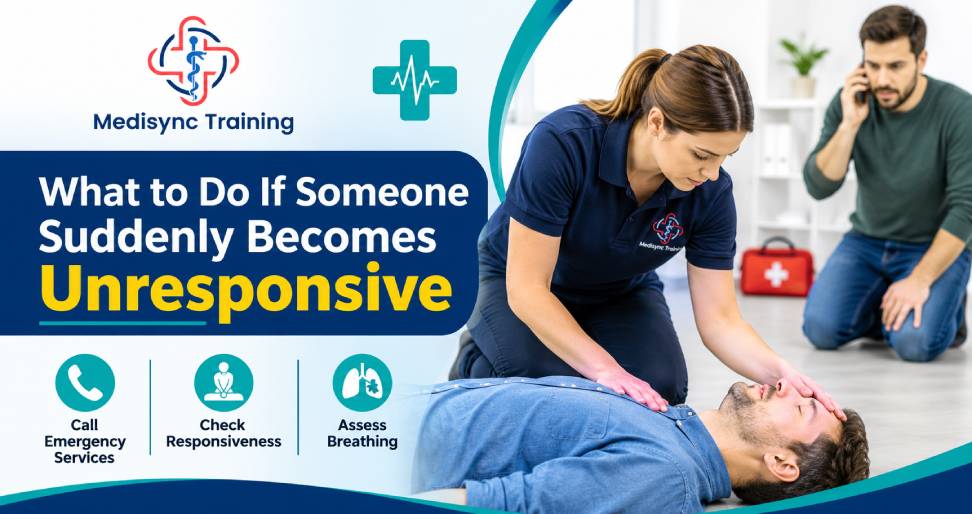
Imagine someone suddenly collapses, stops responding to questions, or loses consciousness in front of you. It can be frightening, especially when you are unsure what to do. However, knowing the correct first-aid steps can make a significant difference while waiting for professional medical assistance.
Sudden unresponsiveness is a potentially serious medical emergency. It may be associated with cardiac arrest, stroke, seizures, low blood sugar, severe allergic reactions, head injuries or other medical conditions. Acting quickly, assessing the person’s breathing and contacting emergency services are essential.
In this guide, we explain what to do if someone suddenly becomes unresponsive, how to recognise warning signs, and why first-aid training is important.
1. Check the Surroundings Before Approaching
Your safety should always come first. Before helping someone who has collapsed, quickly assess the surrounding environment.
Look for potential dangers such as:
-
Electrical hazards or exposed wires.
-
Traffic or moving vehicles.
-
Fire, smoke or hazardous substances.
-
Broken glass or sharp objects.
-
Other environmental dangers.
If the area is unsafe, avoid putting yourself at risk. Move the person only when necessary to protect them from immediate danger.
Once the surroundings are safe, approach the person and begin checking their responsiveness.
2. Check Whether the Person Is Responsive
Try to establish whether the person is conscious.
Follow these simple steps:
-
Speak loudly and clearly, asking, “Are you okay?”
-
Gently tap their shoulders.
-
Observe whether they open their eyes, speak, move or react.
-
If there is no response, immediately call for help.
Do not shake the person aggressively or waste time trying repeatedly to wake them.
If someone else is nearby, ask them to contact emergency services while you continue providing assistance.
3. Call Emergency Services Immediately
An unresponsive person requires urgent medical assessment, even if they appear to be breathing normally.
Call emergency services as soon as possible. In Australia, dial 000 for an ambulance.
If you are alone, use your mobile phone on speaker mode so you can continue helping while speaking with the emergency operator.
Provide clear information, including:
-
Your exact location.
-
Whether the person is conscious.
-
Whether they are breathing normally.
-
Any visible injuries or other concerning symptoms.
Follow the emergency operator’s instructions carefully.
4. Check the Person’s Breathing
Checking breathing is one of the most important steps when someone becomes unresponsive.
Gently tilt their head back and lift their chin to open the airway, unless there is a reason to suspect a spinal injury requiring modified care.
Look for normal breathing for no more than 10 seconds.
Pay attention to:
-
Regular chest movements.
-
Normal breathing sounds.
-
Air movement around the nose and mouth.
Occasional gasping, irregular breaths or abnormal panting should not be mistaken for normal breathing. These may indicate cardiac arrest.
Remember: If the person is unresponsive and not breathing normally, begin CPR immediately and follow emergency operator instructions.
5. If the Person Is Breathing, Place Them in the Recovery Position
If the person is unconscious but breathing normally, placing them in the recovery position can help maintain an open airway and reduce the risk of choking if they vomit.
The general recovery-position procedure includes:
-
Kneel beside the person and straighten their legs.
-
Position their nearest arm at a right angle to their body.
-
Bring their other hand towards their cheek.
-
Bend the far knee and carefully roll them towards you onto their side.
-
Tilt their head gently to keep the airway open.
-
Ensure their mouth is positioned so fluids can drain.
Continue monitoring their breathing and responsiveness until medical professionals arrive.
Important: If you suspect a serious head, neck or spinal injury, avoid unnecessary movement. Follow the emergency operator’s instructions and prioritise keeping the airway clear.
St John Ambulance+1
6. Start CPR If the Person Is Not Breathing Normally
If someone is unresponsive and not breathing normally, they may be experiencing cardiac arrest. Immediate CPR can help maintain blood circulation until professional medical assistance arrives.
For an adult, follow these basic steps:
-
Position the person on their back on a firm, flat surface.
-
Kneel beside their chest.
-
Place the heel of one hand in the centre of their chest.
-
Place your other hand on top and interlock your fingers.
-
Keep your arms straight and shoulders directly above your hands.
-
Push firmly and consistently, allowing the chest to return to its normal position after each compression.
For adult CPR, aim for:
-
Compression rate: 100–120 compressions per minute.
-
Compression depth: Approximately 5–6 cm.
-
Compression and breaths: If trained and able, provide 30 compressions followed by 2 rescue breaths.
If you are unable or unwilling to provide rescue breaths, continue chest compressions and follow the emergency operator’s instructions.
Continue CPR until the person shows signs of life, trained medical assistance takes over, you become physically unable to continue, or the scene becomes unsafe.
Resuscitation Council UK+2
7. Use an AED If One Is Available
An Automated External Defibrillator (AED) is a portable device designed to analyse the heart’s rhythm and deliver an electrical shock when required.
If someone nearby can help, ask them to find the nearest AED while you continue CPR.
When the device arrives:
-
Switch on the AED.
-
Follow its spoken and visual instructions.
-
Attach the electrode pads to the person’s bare chest as illustrated.
-
Make sure nobody touches the person while the AED analyses their heart rhythm.
-
Deliver a shock if instructed by the device.
-
Immediately resume CPR when instructed.
You do not need to be a medical professional to operate a public-access AED. Its instructions guide you through the process.
British Red Cross+1
8. What Should You Avoid When Someone Becomes Unresponsive?
Well-intentioned actions can sometimes make an emergency worse. Avoid these common mistakes:
-
Do not give food or water: An unconscious person may choke because they cannot swallow safely.
-
Do not slap or shake aggressively: This can cause additional injury.
-
Do not leave them unattended: Continue monitoring their breathing and responsiveness.
-
Do not assume gasping is normal breathing: Abnormal breathing can indicate cardiac arrest.
-
Do not force them to sit or stand: Allow appropriate positioning and avoid unnecessary movement.
-
Do not delay emergency assistance: Contact emergency services immediately.
If you suspect an underlying medical condition, share any relevant information you observe with the emergency medical team.
9. Why First Aid Training Is Important
Reading about emergency procedures is helpful, but practical knowledge is equally important. During an emergency, people can become anxious, confused or hesitant because they are unfamiliar with the correct response.
First-aid training helps individuals develop essential skills, including:
-
Recognising medical emergencies.
-
Assessing responsiveness and breathing.
-
Performing CPR correctly.
-
Using an AED.
-
Managing injuries and sudden illnesses.
-
Communicating effectively with emergency services.
-
Providing appropriate assistance until professional help arrives.
For employees, teachers, childcare professionals, healthcare workers and everyday individuals, these skills can make a meaningful difference in emergency preparedness.
Medisync Training supports individuals and workplaces through nationally recognised first-aid and CPR education in Perth. Its courses combine flexible online learning with practical, face-to-face training delivered by experienced health professionals.
Whether you want to learn essential resuscitation techniques or develop broader emergency response skills, Medisync Training offers learning options designed to build practical confidence.
Explore the available Services to learn more about first-aid courses, CPR training, childcare first aid and workplace group training.
Conclusion
Knowing what to do when someone suddenly becomes unresponsive can help save a life. The most important actions are to check for danger, assess responsiveness, call emergency services, check breathing and provide appropriate first aid.
If the person is breathing normally, maintain their airway and monitor their condition. If they are not breathing normally, start CPR, use an AED if available and follow emergency instructions.
However, emergency situations require more than theoretical knowledge. Learning practical first-aid techniques can help you respond with greater confidence when every second matters.
Build Your Emergency Response Skills with Medisync Training
Prepare yourself to handle unexpected emergencies with Medisync Training. Explore nationally recognised first-aid and CPR courses in Perth, featuring flexible online learning and practical training sessions.
Whether you are an individual, workplace employee or childcare professional, developing first-aid skills is an investment in everyone’s safety.
Visit Medisync Training today and take the first step towards becoming confident in emergency response.
-
Popular Posts
-
TIA vs Stroke: Understanding the Warning Signs, Symptoms, and Key Differences
November 6, 2026A sudden loss of balance, difficulty speaking, blurred vision, or weakness on one side of...
-
Stroke First Aid in Australia: Recognizing the FAST Signs
November 4, 2026A stroke can happen suddenly, without warning, and affect anyone regardless of age. Recognising the...
-
What to Do If Someone Suddenly Becomes Unresponsive: A Step-by-Step First Aid Guide
November 2, 2026Imagine someone suddenly collapses, stops responding to questions, or loses consciousness in front of you....
-
First Aid for Foot and Ankle Injuries: Essential Steps to Reduce Pain and Prevent Further Damage
October 30, 2026Foot and ankle injuries can happen unexpectedly during everyday activities, sports, exercise, or workplace tasks....
-
First Aid for Foot and Ankle Injuries: Essential Steps for Quick and Safe Recovery
October 28, 2026Foot and ankle injuries can happen unexpectedly while walking, running, playing sports, working, or performing...