Diabetic Emergency First Aid: What You Need to Know
November 18, 2026
Diabetes is a common health condition that affects how the body regulates blood glucose (blood sugar). People living with diabetes may experience sudden medical emergencies when their blood sugar levels become too low or too high. These situations can develop quickly and may become life-threatening without appropriate attention.
Knowing how to provide diabetic emergency first aid is an important skill for healthcare professionals, workplace first aiders, teachers, caregivers, and members of the public. Recognising the warning signs and responding correctly can help prevent serious complications and potentially save someone’s life.
In this guide, Medisync Training explains the common types of diabetic emergencies, their symptoms, immediate first aid responses, and why proper first aid training matters.
1. What Is a Diabetic Emergency?
A diabetic emergency occurs when a person’s blood glucose level becomes dangerously low or high, affecting the body’s normal functioning.
There are two major types of diabetic emergencies:
-
Hypoglycaemia: When blood glucose levels become too low.
-
Hyperglycaemia: When blood glucose levels become too high.
Both conditions require attention, but their symptoms and first aid responses are different. Understanding the difference is essential because providing the wrong treatment can make the situation worse.
2. Hypoglycaemia: Low Blood Sugar
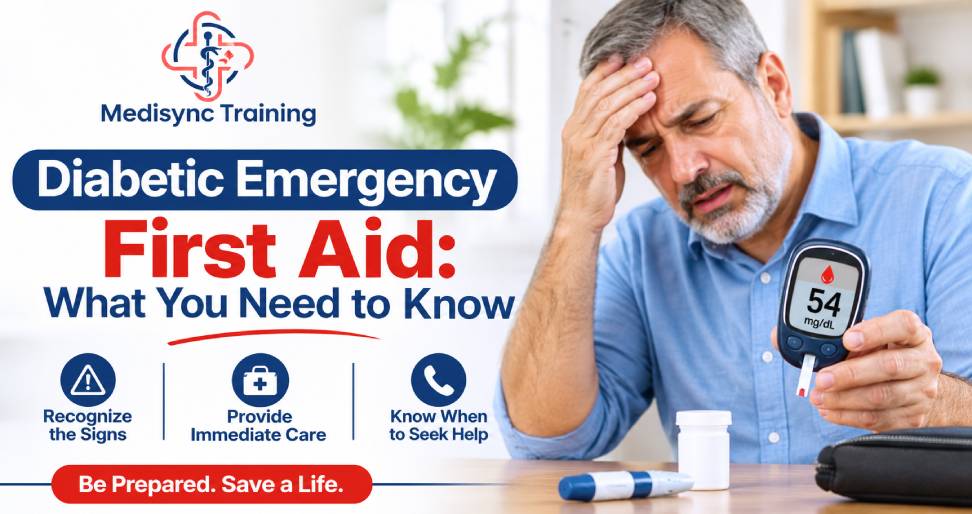
Hypoglycaemia occurs when blood glucose levels fall below the normal range, commonly below 4 mmol/L (70 mg/dL). It is particularly common among people who use insulin or certain diabetes medications.
Low blood sugar can develop suddenly and requires immediate attention.
Common symptoms of hypoglycaemia include:
-
Excessive sweating, even in cool conditions.
-
Shaking or trembling hands.
-
Sudden hunger.
-
Dizziness or light-headedness.
-
Headaches and weakness.
-
Irritability, anxiety, or unusual behaviour.
-
Difficulty concentrating or speaking.
-
Blurred vision.
-
Confusion and, in severe cases, seizures or unconsciousness.
What Causes Low Blood Sugar?
Several factors can contribute to hypoglycaemia, including:
-
Skipping meals or eating less than usual.
-
Taking more insulin or diabetes medication than required.
-
Excessive physical activity without adequate food intake.
-
Drinking alcohol, particularly without eating.
-
Changes in daily routines or meal schedules.
3. First Aid Treatment for Hypoglycaemia
If someone is experiencing low blood sugar but remains fully conscious and can swallow safely, immediate treatment can help restore their glucose levels.
Follow these first aid steps:
-
Make the person comfortable: Help them sit or lie down in a safe position and reassure them.
-
Check blood glucose: If a glucose meter is available and you are trained to use it, check their blood sugar level.
-
Provide fast-acting sugar: Give approximately 15 grams of fast-acting carbohydrates, such as glucose tablets, regular fruit juice, or a sugary drink.
-
Wait 15 minutes: Allow time for the sugar to be absorbed.
-
Recheck glucose levels: If possible, check their blood sugar again. If it remains low, repeat the treatment.
-
Provide a follow-up snack: Once the person recovers, offer a snack containing longer-acting carbohydrates, such as a sandwich or biscuits, if appropriate.
This approach is commonly known as the 15-15 rule.
CDC+2
Never give food, water, glucose tablets, or sugary drinks to someone who is unconscious, having a seizure, or unable to swallow safely. Call an ambulance immediately. Place an unconscious person who is breathing normally in the recovery position. If a prescribed glucagon injection is available, someone trained to use it may administer it while emergency help is on the way.
healthdirect+2
4. Hyperglycaemia: High Blood Sugar
Hyperglycaemia occurs when blood glucose levels become too high. Unlike hypoglycaemia, symptoms may develop gradually over several hours or days.
It can happen when the body does not produce enough insulin or cannot use insulin effectively.
Common symptoms of hyperglycaemia include:
-
Increased thirst and dry mouth.
-
Frequent urination.
-
Blurred vision.
-
Extreme tiredness or weakness.
-
Headaches.
-
Difficulty concentrating.
-
Unexplained weight loss in some cases.
If left untreated, severe hyperglycaemia can lead to dangerous complications, including diabetic ketoacidosis (DKA) and hyperosmolar hyperglycaemic state (HHS).
5. First Aid Treatment for Hyperglycaemia
If someone is showing signs of high blood sugar, it is important to respond calmly and seek appropriate medical assistance.
Follow these steps:
-
Recognise the symptoms: Look for excessive thirst, frequent urination, tiredness, and other unusual signs.
-
Check blood glucose: Use a glucose meter if available and you are trained to operate it.
-
Encourage water: If the person is fully conscious and can swallow safely, encourage them to drink water.
-
Follow their diabetes management plan: Allow them to follow their prescribed treatment. Do not independently change medication doses or administer insulin.
-
Seek medical advice: Arrange appropriate medical assessment, particularly if symptoms persist or worsen.
If the person develops vomiting, abdominal pain, deep or rapid breathing, fruity-smelling breath, severe dehydration, or confusion, seek emergency medical assistance immediately. These may indicate diabetic ketoacidosis or another serious complication.
Diabetes Australia+2
6. Understanding the Difference Between Hypoglycaemia and Hyperglycaemia
Recognising the difference between low and high blood sugar is essential when providing diabetic emergency first aid.
| Symptoms | Hypoglycaemia | Hyperglycaemia |
|---|---|---|
| Blood glucose | Too low | Too high |
| Sweating | Common | Less typical |
| Hunger | Common | Not typical |
| Thirst | Not a typical main symptom | Common |
| Urination | Not typical | Frequent |
| Shaking | Common | Less typical |
| Confusion | Possible | Possible |
| Onset | Often sudden | Often gradual |
Both conditions can become serious. When the cause is uncertain, seek medical advice rather than assuming that every symptom is caused by diabetes.
7. What Should You Do During a Severe Diabetic Emergency?
A severe diabetic emergency requires immediate action. The person’s condition may deteriorate quickly, particularly if they lose consciousness or experience seizures.
Remember these essential first aid steps:
-
Check the surroundings to ensure the area is safe.
-
Check the person’s responsiveness and breathing.
-
Call an ambulance if they are unconscious, having seizures, seriously unwell, or deteriorating.
-
If unconscious but breathing normally, place them in the recovery position.
-
If they are not breathing normally, begin CPR and use an AED as soon as possible, following emergency dispatcher instructions.
-
Never give anything by mouth to an unconscious person.
-
Stay with the person and monitor their condition until professional help arrives.
In Australia, call 000 for emergency ambulance assistance.
St John Ambulance+2
8. How Can Diabetic Emergencies Be Prevented?
Although not every diabetic emergency can be prevented, certain precautions can reduce the risk.
People living with diabetes and those supporting them should consider the following measures:
-
Monitor blood glucose levels as recommended by their healthcare professional.
-
Follow prescribed medication and insulin schedules.
-
Avoid skipping meals.
-
Maintain a balanced diet and regular eating routine.
-
Understand how exercise affects blood glucose.
-
Carry glucose tablets or another suitable fast-acting sugar source.
-
Keep emergency contact information accessible.
-
Inform family members, friends, and colleagues about possible warning signs.
-
Wear medical identification where appropriate.
Having a personalised diabetes management plan can also help people respond more confidently to unexpected changes in blood glucose levels.
9. Why Is Professional First Aid Training Important?
Understanding diabetic emergencies through articles and online resources is helpful, but knowing how to respond in a real-life situation requires practical knowledge and hands-on experience.
First aid training helps individuals develop essential emergency response skills, including:
-
Recognising the early warning signs of medical emergencies.
-
Assessing an injured or unwell person’s condition.
-
Understanding when to contact emergency services.
-
Providing appropriate first aid until professional help arrives.
-
Performing CPR and using an AED when required.
-
Responding confidently to unexpected medical situations.
For workplaces, schools, childcare centres, aged-care facilities, and healthcare organisations, trained staff can make an important difference in emergency preparedness.
10. Learn Essential First Aid Skills with Medisync Training
Be prepared. Stay confident. Make a difference when every second counts.
Whether you are a healthcare professional, workplace employee, childcare educator, or someone who wants to learn life-saving skills, gaining proper first aid knowledge is an important investment.
Medisync Training provides nationally recognised first aid and CPR training in Perth, helping individuals and organisations develop practical emergency response skills.
The available training options include:
-
HLTAID009 – Provide Cardiopulmonary Resuscitation: Develop essential CPR knowledge and practical skills.
-
HLTAID011 – Provide First Aid: Learn how to respond to common injuries, illnesses, and medical emergencies.
-
HLTAID012 – Provide First Aid in an Education and Care Setting: Designed for people working with children and infants.
-
HLTHPS006 – Assist Clients with Medication: Develop skills for assisting clients with medication in appropriate care settings.
Medisync Training combines flexible online learning with practical face-to-face sessions, helping participants gain knowledge and practise essential skills. Experienced trainers, including paramedics, nurses, and emergency medical professionals, support the learning experience.
Businesses can also arrange workplace group training, with flexible scheduling and onsite training options across Perth.
:Medisynctraining Medisync+2
Ready to improve your first aid knowledge?
Visit Medisync Training to explore available courses and book your training session. Prepare yourself to respond confidently when an emergency happens.
Conclusion
Diabetic emergencies can happen unexpectedly, and recognising the symptoms early can help prevent serious complications. Understanding the difference between hypoglycaemia and hyperglycaemia, providing appropriate first aid, and knowing when to seek emergency medical assistance are essential skills.
However, reading about first aid is only the beginning. Practical training helps individuals develop the confidence and knowledge required to respond effectively under pressure.
With professional training from Medisync Training, you can strengthen your emergency response skills and contribute to a safer workplace and community.
Frequently Asked Questions (FAQs):-
1. What is the first thing to do during a diabetic emergency?
Check the person’s responsiveness and breathing, assess the situation, and identify possible symptoms. If they are conscious and able to swallow safely, suspected low blood sugar can be treated with fast-acting glucose. Call emergency services if the condition is severe.
2. What are the warning signs of low blood sugar?
Common symptoms include sweating, shaking, dizziness, hunger, weakness, irritability, confusion, and difficulty concentrating. Severe hypoglycaemia can cause seizures or unconsciousness.
3. Can you give water to someone experiencing a diabetic emergency?
Water may be appropriate for a fully conscious person experiencing high blood sugar who can swallow safely. Never give water or other drinks to someone who is unconscious or unable to swallow.
4. When should you call an ambulance for a diabetic emergency?
Call an ambulance if someone becomes unconscious, experiences a seizure, cannot swallow safely, has abnormal breathing, or shows signs of a serious deterioration.
5. Where can I learn first aid training in Perth?
Medisync Training offers nationally recognised first aid and CPR courses in Perth, including HLTAID009, HLTAID011, and HLTAID012. Visit its website to explore training options.
Popular Posts
-
Diabetic Emergency First Aid: Symptoms, Immediate Response and Essential Life-Saving Skills
November 20, 2026A diabetic emergency can happen suddenly and may become life-threatening if the right first aid...
-
Diabetic Emergency First Aid: What You Need to Know
November 18, 2026Diabetes is a common health condition that affects how the body regulates blood glucose (blood...
-
First Aid for Low Blood Sugar and Hypoglycaemia: Symptoms, Causes and Emergency Treatment
November 16, 2026Low blood sugar, medically known as hypoglycaemia, is a condition that occurs when the glucose...
-
Fainting vs Seizure: How to Tell the Difference
November 13, 2026Understanding the difference between fainting and a seizure is important because both conditions can cause...
-
First Aid for Fainting: What Should You Do?
November 11, 2026Fainting can happen suddenly and without much warning. A person may feel dizzy, weak, sweaty,...