

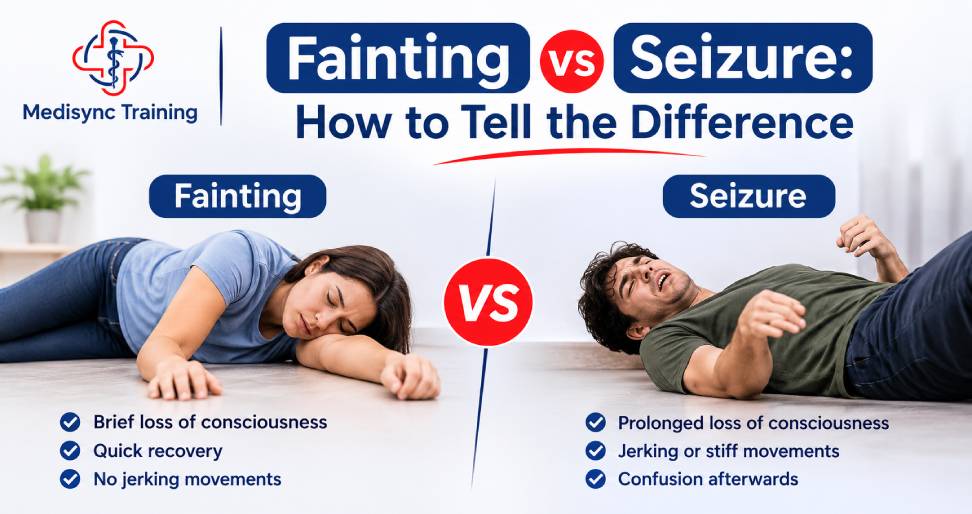
Fainting vs Seizure: How to Tell the Difference
November 13, 2026
Understanding the difference between fainting and a seizure is important because both conditions can cause a person to collapse, lose consciousness, or experience unusual body movements. Although they may look similar at first, their causes, warning signs, and first aid responses are different.
Witnessing someone suddenly collapse can be frightening, especially when you are unsure whether they are experiencing a seizure or fainting episode. Knowing what to look for can help you respond calmly, provide appropriate assistance, and recognise when emergency medical attention is necessary.
This guide explains the key differences between fainting and seizures, their common symptoms, possible causes, and the correct first aid steps to follow.
What Is Fainting?
Fainting, medically known as syncope, is a temporary loss of consciousness caused by a brief reduction in blood flow to the brain. When the brain does not receive enough oxygen-rich blood for a short period, the person may become dizzy, lose balance, and collapse.
Fainting usually lasts only a few seconds, and most people regain consciousness relatively quickly once they are lying flat.
Common causes of fainting include:
-
Dehydration or insufficient fluid intake.
-
Standing for extended periods.
-
Sudden changes in body position.
-
Low blood pressure.
-
Emotional stress, fear, or pain.
-
Overheating or spending too much time in crowded environments.
-
Low blood sugar in certain circumstances.
-
Some underlying heart conditions.
Common warning signs of fainting:
-
Light-headedness or dizziness.
-
Blurred or narrowing vision.
-
Sweating and pale skin.
-
Nausea or feeling unusually warm.
-
Weakness or sudden fatigue.
-
Ringing in the ears.
-
Feeling as though consciousness is about to disappear.
Recognising these early symptoms can help someone sit or lie down before they collapse, reducing the risk of injury.
What Is a Seizure?
A seizure occurs when there is a sudden disturbance in the brain’s electrical activity. This can temporarily affect movement, awareness, behaviour, sensations, or consciousness.
Seizures can happen for different reasons, although epilepsy is one of the most recognised conditions associated with recurrent seizures. A person can also experience a seizure due to head injuries, infections, metabolic disturbances, or other medical conditions.
Not every seizure involves dramatic shaking or falling to the ground. Some seizures cause brief periods of staring, confusion, unusual sensations, or repetitive movements.
Common signs of a seizure include:
-
Sudden loss of awareness or consciousness.
-
Uncontrolled shaking or jerking movements.
-
Stiffening of the arms, legs, or entire body.
-
Staring into space without responding.
-
Repetitive movements, such as lip-smacking.
-
Unusual sensations or sudden changes in behaviour.
-
Temporary confusion or disorientation afterwards.
-
Tiredness, headache, or muscle soreness following the episode.
A seizure may last from a few seconds to several minutes. A seizure lasting five minutes or longer is a medical emergency.
Fainting vs Seizure: Key Differences
Although fainting and seizures can both involve a temporary loss of consciousness, several characteristics can help distinguish between them.
| Feature | Fainting | Seizure |
|---|---|---|
| Main cause | Temporary reduction in blood flow to the brain | Abnormal electrical activity in the brain |
| Warning signs | Dizziness, sweating, nausea and blurred vision | May involve an unusual sensation, warning aura, or no warning |
| Body movements | Usually relaxed, although brief jerking can occur | May involve stiffening, rhythmic jerking or repetitive movements |
| Skin appearance | Often pale and clammy | May appear pale or flushed; lips can sometimes turn bluish |
| Duration | Usually a few seconds | Often around 1–2 minutes, but varies |
| Recovery | Usually quick, with awareness returning rapidly | Confusion, tiredness and headache may continue afterwards |
| Tongue biting | Uncommon | More suggestive, particularly when the side of the tongue is bitten |
| Urinary incontinence | Can occur, but is not common | Can occur |
| Medical assessment | Important to identify the underlying cause | Important to identify the seizure type and possible cause |
Important: These signs are helpful clues, not a definite diagnosis. Some people experience brief jerking movements during fainting, a condition known as convulsive syncope. Urinary incontinence can also occur in both conditions. Medical assessment is necessary when the cause of a collapse is uncertain.
Epilepsy Action Australia+2
How to Recognise Whether Someone Is Fainting or Having a Seizure
When someone suddenly collapses, observing what happens before, during, and after the incident can provide useful information.
Here are some practical things to look for:
1. Observe what happened before the collapse
Ask whether the person experienced dizziness, nausea, sweating, or blurred vision. These symptoms may indicate fainting.
A seizure may begin with unusual sensations, sudden fear, strange smells, or changes in awareness. However, some seizures happen without noticeable warning signs.
2. Look at the person’s movements
During fainting, the person usually loses muscle tone and falls. Some individuals may experience a few brief, irregular jerking movements.
During a seizure, the body may become stiff before repeated rhythmic jerking begins. The person may also display repetitive movements without responding to people around them.
3. Check how long the episode lasts
Fainting generally involves a short period of unconsciousness, with recovery occurring quickly.
Seizures may last longer, and the person may remain confused or sleepy after the physical movements stop. Timing the episode can help medical professionals understand what happened.
4. Observe the recovery period
Recovery is one of the most useful clues. Someone who has fainted generally becomes alert relatively quickly.
After a seizure, the person may experience a recovery phase called the postictal period. They might feel exhausted, confused, disoriented, or have difficulty remembering the event.
First Aid for Someone Who Has Fainted
Providing appropriate first aid can prevent injuries and help the person recover safely.
Follow these steps when someone faints:
-
Help the person lie flat on their back in a safe place.
-
Raise their legs if appropriate and there is no suspected injury.
-
Check their responsiveness and breathing.
-
Loosen tight clothing around the neck and ensure adequate ventilation.
-
Allow them time to recover without forcing them to stand.
-
Check for injuries caused by the fall.
-
Once fully alert, offer water if they can swallow normally and it is appropriate.
If the person does not respond, check their breathing. If they are not breathing normally, call emergency services and begin CPR, following your training and the emergency operator’s instructions.
Do not give food, water, or medication while the person is unconscious.
Medical assessment is important after a fainting episode, particularly if it is unexplained or happens repeatedly.
NHS+1
First Aid for Someone Experiencing a Seizure
Seeing someone have a seizure can be alarming, but remaining calm is essential. The main priority is protecting the person from injury while allowing the seizure to run its course.
Follow these first aid steps:
-
Stay with the person and note the time the seizure begins.
-
Move nearby furniture, sharp objects, and other hazards away.
-
Place something soft and flat under their head to prevent injury.
-
Loosen tight clothing around the neck.
-
Do not hold the person down or attempt to stop their movements.
-
Never place fingers, spoons, or other objects inside their mouth.
-
Once the seizure stops, check their breathing and place them in the recovery position if they are unresponsive but breathing normally.
-
Stay with them and provide reassurance as they regain awareness.
Never try to force water, food, or medication into the person’s mouth during or immediately after a seizure when they are not fully alert.
These actions help reduce the risk of injury and breathing complications.
First Aid Management of a Seizure+1
When Should You Call an Ambulance?
Both fainting and seizures can sometimes indicate serious underlying health problems. Recognising emergency warning signs is essential.
Call an ambulance immediately if:
-
The person is unconscious and does not recover promptly.
-
They are not breathing normally.
-
A seizure lasts five minutes or longer.
-
Another seizure begins before the person regains consciousness.
-
It is the person’s first known seizure.
-
They experience difficulty breathing after the episode.
-
They have suffered a serious injury.
-
The episode happens in water.
-
The person is pregnant or has diabetes and experiences a seizure.
-
They experience chest pain, severe headache, or symptoms suggesting a stroke.
In Australia, call Triple Zero (000) for emergency assistance.
First Aid Management of a Seizure+2
Can Fainting and Seizures Be Prevented?
Prevention depends on the underlying cause of the episode. However, certain precautions can reduce the risk of fainting and help people with seizure disorders manage their condition.
To reduce the risk of fainting:
-
Drink enough water throughout the day.
-
Avoid standing for prolonged periods.
-
Eat regular, balanced meals.
-
Avoid overheating and crowded environments when possible.
-
Stand up slowly after sitting or lying down.
-
Seek medical advice if fainting happens repeatedly.
To manage the risk of seizures:
-
Follow prescribed medication and treatment plans.
-
Maintain a consistent sleeping schedule.
-
Identify and avoid known seizure triggers.
-
Attend regular medical appointments.
-
Educate family members and colleagues about seizure first aid.
-
Develop an emergency response plan if seizures are recurrent.
People with a history of seizures should follow their healthcare professional’s advice and make sure those around them understand how to provide appropriate assistance.
Why First Aid Training Is Important
Fainting and seizures can happen at home, in workplaces, educational institutions, or public places. Without proper knowledge, witnesses may panic or perform actions that unintentionally cause further harm.
First aid training teaches people how to recognise medical emergencies, assess responsiveness, check breathing, provide appropriate assistance, and understand when professional medical support is required.
Learning how to respond to unconsciousness, seizures, and other sudden medical emergencies can make a significant difference in workplace and community safety.
Professional first aid training also helps individuals develop the confidence to respond effectively instead of relying on guesswork during stressful situations.
Conclusion
Fainting and seizures may appear similar because both can cause a person to collapse or temporarily lose consciousness. However, their causes, warning signs, movements, and recovery patterns are different.
Fainting is generally associated with a temporary reduction in blood flow to the brain, whereas seizures result from abnormal electrical activity in the brain. Recognising symptoms, observing the person’s recovery, and providing the correct first aid can help prevent complications.
Most importantly, never assume that every collapse is harmless. When symptoms are severe, unusual, or difficult to identify, seek immediate medical assistance.
Developing practical first aid knowledge through professional training can help individuals respond confidently and potentially save lives.
Popular Posts
-
Diabetic Emergency First Aid: Symptoms, Immediate Response and Essential Life-Saving Skills
November 20, 2026A diabetic emergency can happen suddenly and may become life-threatening if the right first aid...
-
Diabetic Emergency First Aid: What You Need to Know
November 18, 2026Diabetes is a common health condition that affects how the body regulates blood glucose (blood...
-
First Aid for Low Blood Sugar and Hypoglycaemia: Symptoms, Causes and Emergency Treatment
November 16, 2026Low blood sugar, medically known as hypoglycaemia, is a condition that occurs when the glucose...
-
Fainting vs Seizure: How to Tell the Difference
November 13, 2026Understanding the difference between fainting and a seizure is important because both conditions can cause...
-
First Aid for Fainting: What Should You Do?
November 11, 2026Fainting can happen suddenly and without much warning. A person may feel dizzy, weak, sweaty,...