Stroke First Aid in Australia: Recognizing the FAST Signs
November 4, 2026
A stroke can happen suddenly, without warning, and affect anyone regardless of age. Recognising the early symptoms and providing the correct first aid can make a significant difference to someone’s survival and recovery. In Australia, knowing how to identify a stroke using the FAST method is an essential life-saving skill.
A stroke is a medical emergency that requires immediate attention. Delaying treatment can lead to permanent brain damage, long-term disability or even death. Whether you are at home, at work, or in a public place, understanding stroke first aid in Australia can help you respond confidently when every second matters.
What Is a Stroke?
A stroke occurs when the blood supply to part of the brain is interrupted. This usually happens in one of two ways:
- Ischaemic stroke: Occurs when a blood clot blocks an artery supplying blood to the brain.
- Haemorrhagic stroke: Happens when a blood vessel in the brain ruptures, causing bleeding.
Brain cells need a continuous supply of oxygen and nutrients to function correctly. When blood flow is interrupted, brain cells begin to become damaged. The effects depend on which part of the brain is affected and how quickly medical treatment is provided.
This is why recognising stroke symptoms early and calling emergency services immediately are so important.
Recognising Stroke Symptoms Using the FAST Method
The FAST method is widely recommended by the Stroke Foundation in Australia. It provides a simple way to recognise the most common warning signs of a stroke.
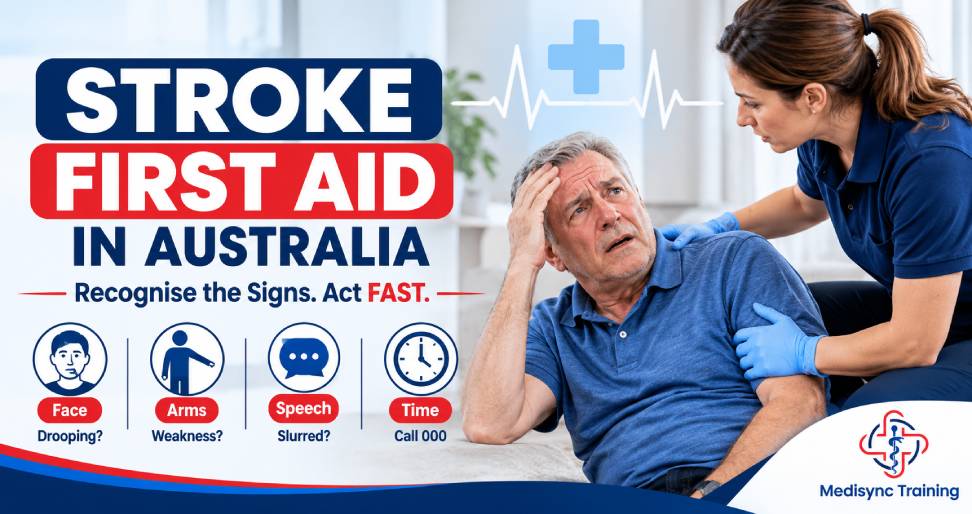
FAST stands for Face, Arms, Speech and Time.
F – Face: Check for Facial Weakness
Ask the person to smile or show their teeth. Observe whether one side of their face appears uneven or droops.
Common warning signs include:
- One side of the mouth drooping.
- Uneven facial movement when smiling.
- Difficulty controlling facial muscles.
- Sudden weakness or numbness on one side of the face.
Facial weakness can be one of the earliest visible signs of a stroke.
A – Arms: Check for Arm Weakness
Ask the person to raise both arms and hold them in front of their body.
Look for:
- One arm drifting downwards.
- Difficulty lifting one arm.
- Weakness or numbness in one arm.
- Inability to maintain both arms at the same height.
Sudden weakness, particularly on one side of the body, may indicate that the brain’s ability to control movement has been affected.
S – Speech: Check Their Speech
Ask the person to repeat a simple sentence, such as, “Today is a beautiful day.”
Listen carefully for unusual speech patterns.
Warning signs include:
- Slurred or unclear speech.
- Difficulty finding the correct words.
- Inability to speak properly.
- Difficulty understanding simple instructions.
- Confusion when answering questions.
Even if the person can speak, unusual or confused communication should never be ignored.
T – Time: Call Triple Zero (000)
Time is critical when someone experiences stroke symptoms.
If you notice even one of the FAST warning signs, immediately call Triple Zero (000) and request an ambulance.
Do not wait to see whether the symptoms improve. Early medical assessment and treatment can reduce the risk of serious brain damage and improve the person’s chances of recovery.
Other Warning Signs of a Stroke
Although FAST identifies the most common symptoms, a stroke can also cause other sudden changes in physical ability and behaviour.
Additional warning signs include:
- Sudden blurred vision or loss of vision in one or both eyes.
- Unexplained dizziness or difficulty walking.
- Sudden loss of balance or coordination.
- Numbness or weakness in the face, arm or leg.
- Sudden confusion or difficulty understanding others.
- Severe and sudden headache without an obvious cause.
- Difficulty swallowing.
These symptoms may occur individually or alongside the FAST signs. Never assume someone is safe simply because their face, arms and speech appear normal.
What to Do When Someone Is Having a Stroke
Providing appropriate first aid while waiting for professional medical assistance is essential. Follow these steps if you suspect someone is experiencing a stroke.
1. Call Triple Zero (000)
Contact emergency services immediately and explain that you suspect a stroke. Provide the person’s location and describe the symptoms you have noticed.
2. Keep the Person Comfortable
Help them rest in a comfortable position. Support their head and shoulders, and avoid unnecessary movement.
3. Monitor Their Breathing and Consciousness
Stay with the person and observe their condition. If they become unconscious, check their breathing. If they are unconscious but breathing normally, place them in the recovery position where appropriate and continue monitoring.
If they are not breathing normally, follow the emergency operator’s instructions and begin CPR.
4. Avoid Giving Food or Drinks
Do not give the person water, food or other liquids. A stroke can affect swallowing and create a risk of choking.
5. Do Not Give Medication
Never give aspirin or other medication unless specifically instructed by an appropriate medical professional. Some strokes involve bleeding in the brain, and aspirin may make the bleeding worse.
6. Record When Symptoms Started
Try to establish when the symptoms first appeared or when the person was last known to be well. This information can help medical professionals assess treatment options.
7. Reassure the Person
Remain calm, speak gently and explain that help is on the way. Continue monitoring them until the ambulance arrives.
Why Immediate Medical Attention Is Important
Stroke treatment is highly time-sensitive. Depending on the type of stroke and the patient’s condition, doctors may consider treatments such as clot-dissolving medication or procedures to remove a blood clot.
These treatments are not suitable for every patient, and medical professionals must first establish the type of stroke through appropriate assessment and investigations.
Getting to hospital quickly gives the medical team the opportunity to assess the patient and determine the most appropriate treatment.
Remember that even if symptoms disappear after a few minutes, emergency medical assessment is still necessary. Temporary stroke-like symptoms may indicate a transient ischaemic attack (TIA), sometimes called a mini-stroke. A TIA can be a warning of a future stroke.
The Importance of First Aid Training in Australia
Knowing how to recognise stroke symptoms is an important part of emergency preparedness. However, understanding the correct response also requires practical first-aid knowledge.
First aid training helps individuals develop the confidence to recognise medical emergencies, contact emergency services, monitor an injured or ill person and provide appropriate assistance while waiting for professional help.
Workplaces, community organisations and individuals can benefit from recognised first-aid training. Employees who understand emergency procedures can respond more effectively when a colleague, customer or visitor experiences a sudden medical emergency.
Medisync Training supports individuals and workplaces through practical first-aid education designed to develop essential emergency response skills. Learning how to identify stroke symptoms and respond appropriately can help create safer workplaces and communities.
Conclusion
A stroke can happen at any time, making awareness and quick action essential. Remembering the FAST method — Face, Arms, Speech and Time — can help you recognise the most common warning signs and respond without delay.
If you suspect someone is having a stroke, call Triple Zero (000) immediately. Keep the person comfortable, monitor their condition, avoid giving food, drinks or medication, and follow the emergency operator’s instructions.
Learning first aid is not just about gaining knowledge; it is about being prepared to help someone when they need it most. With the right training and awareness, you could make a life-saving difference.
Frequently Asked Questions (FAQs)
1. What are the first signs of a stroke?
The common early signs include facial drooping, arm weakness and difficulty speaking. These symptoms can appear suddenly and should be treated as a medical emergency.
2. What does FAST stand for in stroke first aid?
FAST stands for Face, Arms, Speech and Time. It helps people recognise common stroke symptoms and understand the importance of calling an ambulance immediately.
3. What emergency number should I call for a stroke in Australia?
Call Triple Zero (000) and request an ambulance if you suspect someone is having a stroke.
4. Should I give water to someone experiencing a stroke?
No. Do not give food or drinks because a stroke may affect the person’s ability to swallow safely.
5. What should I do if stroke symptoms disappear?
Call Triple Zero (000) even if the symptoms disappear. Temporary symptoms may indicate a transient ischaemic attack (TIA), which requires urgent medical assessment.
6. Can first aid training help someone respond to a stroke?
Yes. First aid training helps people recognise emergency warning signs, provide appropriate initial assistance and understand when to contact emergency services.
Popular Posts
-
Diabetic Emergency First Aid: Symptoms, Immediate Response and Essential Life-Saving Skills
November 20, 2026A diabetic emergency can happen suddenly and may become life-threatening if the right first aid...
-
Diabetic Emergency First Aid: What You Need to Know
November 18, 2026Diabetes is a common health condition that affects how the body regulates blood glucose (blood...
-
First Aid for Low Blood Sugar and Hypoglycaemia: Symptoms, Causes and Emergency Treatment
November 16, 2026Low blood sugar, medically known as hypoglycaemia, is a condition that occurs when the glucose...
-
Fainting vs Seizure: How to Tell the Difference
November 13, 2026Understanding the difference between fainting and a seizure is important because both conditions can cause...
-
First Aid for Fainting: What Should You Do?
November 11, 2026Fainting can happen suddenly and without much warning. A person may feel dizzy, weak, sweaty,...