
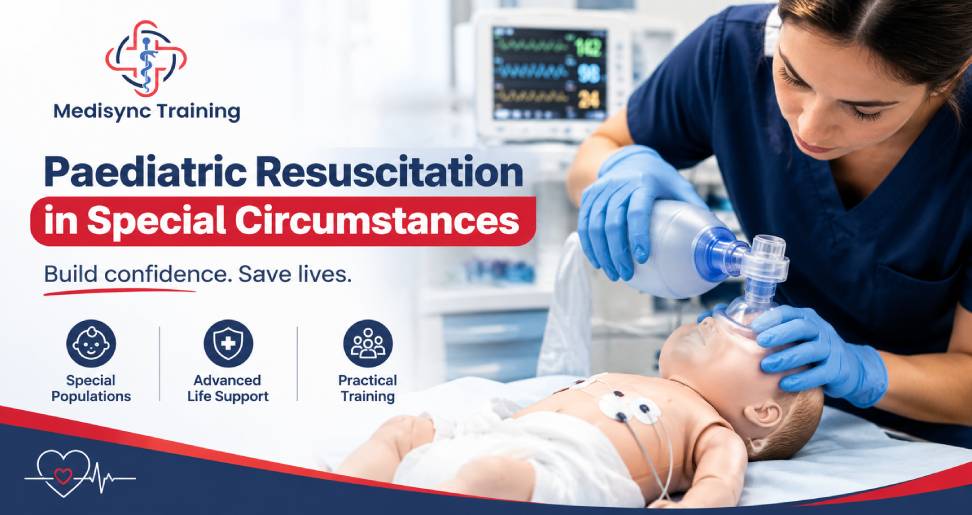
Paediatric Resuscitation in Special Circumstances
September 24, 2026
Paediatric emergencies can develop rapidly, and resuscitation may become more complicated when a child has an underlying medical condition or when cardiac arrest occurs because of an unusual circumstance. Paediatric resuscitation in special circumstances requires healthcare professionals to recognise the cause of deterioration quickly while continuing high-quality basic and advanced life support.
The 2025 European Resuscitation Council (ERC) Paediatric Life Support guidelines include specific recommendations for cardiac arrest prevention, resuscitation and management of children in special circumstances. These guidelines apply to infants, children and adolescents up to 18 years of age, excluding newborn resuscitation at birth.
What Makes Paediatric Resuscitation Different?
Children often experience cardiac arrest as a consequence of respiratory failure, hypoxia or shock rather than a primary cardiac problem. Consequently, identifying and correcting the underlying cause is an important part of resuscitation.
Special circumstances may require modifications to standard resuscitation approaches. Examples include:
- Anaphylaxis
- Drowning
- Severe asthma
- Hypothermia and hyperthermia
- Poisoning or drug toxicity
- Electrocution
- Trauma
- Severe electrolyte abnormalities
- Congenital heart disease
- Certain cardiac conditions and arrhythmias
Current international guidance specifically addresses many of these situations because treating the reversible cause can be critical to achieving successful resuscitation.
Anaphylaxis and Paediatric Resuscitation
Anaphylaxis can progress quickly and may cause airway swelling, breathing difficulties, circulatory collapse and cardiac arrest. Importantly, skin symptoms are not always present, so healthcare professionals should consider anaphylaxis when a child suddenly develops compatible respiratory, circulatory or gastrointestinal symptoms.
For suspected anaphylaxis, current ERC guidance recommends prompt intramuscular adrenaline according to the child’s weight and appropriate clinical protocols. If symptoms continue, further doses may be required according to the guideline and local emergency procedures.
If cardiac arrest occurs, standard paediatric resuscitation should be initiated while continuing to address the suspected cause.
Drowning and Paediatric Resuscitation
Drowning is an important special circumstance because respiratory impairment and hypoxia are central to the event. Children rescued from water may have severe hypoxaemia, hypothermia or other complications.
The priorities remain rapid recognition, removal from danger, appropriate resuscitation and early emergency medical support. Healthcare professionals should follow current paediatric life-support protocols while considering the effects of hypoxia and temperature abnormalities.
The 2025 international resuscitation guidance includes drowning among the special circumstances requiring specific consideration during resuscitation.
Severe Asthma
A severe asthma attack can result in profound respiratory distress and, in extreme cases, cardiac arrest. Early recognition of deterioration is therefore essential.
Management should focus on supporting oxygenation and ventilation while treating severe bronchospasm according to the appropriate emergency protocol. If the child progresses to cardiac arrest, CPR and advanced life support should continue while the underlying respiratory problem is addressed.
The key principle is to avoid focusing solely on chest compressions or cardiac rhythm while overlooking the respiratory cause that may have triggered the arrest.
Hypothermia and Hyperthermia
Temperature abnormalities can significantly affect cardiovascular and neurological function.
In severe hypothermia, rescuers need to consider the effects of low body temperature on the child’s circulation and cardiac rhythm. Resuscitation may require modified approaches and prolonged management depending on the circumstances and available resources.
Hyperthermia presents a different challenge. Severe overheating can contribute to cardiovascular instability, neurological injury and organ dysfunction. Rapid recognition and appropriate temperature management are important alongside resuscitation.
The 2025 AHA guidance identifies both hypothermia and hyperthermia among circumstances requiring specific resuscitation considerations.
Poisoning and Drug-Related Emergencies
Children may experience life-threatening poisoning after accidental or intentional exposure to medications, household substances or other toxic agents.
In these situations, resuscitation should continue while clinicians attempt to identify the substance involved. The treatment of poisoning can sometimes require therapies that go beyond conventional CPR, depending on the toxin and clinical presentation.
The 2025 AHA special-circumstances guidance covers multiple toxicological emergencies, including opioid poisoning, beta-blocker and calcium-channel-blocker toxicity, cyanide poisoning and several other toxic exposures.
Because toxicology management can be complex, healthcare professionals should follow appropriate poisoning-management protocols and seek specialist advice when required.
Electrocution and Trauma
Electrical injuries can produce respiratory arrest, cardiac arrhythmias, burns and traumatic injuries. Before approaching a casualty, rescuers must ensure that the electrical source has been made safe.
Trauma creates additional challenges because airway management, bleeding, spinal injuries and other life-threatening problems may occur simultaneously. The resuscitation team needs to identify reversible causes while maintaining effective CPR when cardiac arrest is present.
The 2025 paediatric guidance recognises traumatic cardiac arrest and other special circumstances as areas where resuscitation may require adaptations to standard practice.
Children With Congenital or Existing Heart Conditions
Some children have complex cardiac conditions that can affect how they deteriorate and respond to resuscitation.
Children with congenital heart disease may require specialised approaches based on their anatomy, previous procedures and current physiology. Early involvement of appropriate paediatric specialists can therefore be important.
Current paediatric advanced life-support guidance specifically addresses children with congenital heart disease, including selected patients with single-ventricle physiology.
The Importance of Teamwork and Training
Successful paediatric resuscitation is not only about knowing individual procedures. Teams must communicate effectively, recognise deterioration early and work systematically under pressure.
Regular training can help healthcare professionals develop practical skills in airway management, CPR, defibrillation, emergency medication administration and recognition of reversible causes.
This is where Medisync Training can support healthcare professionals and organisations looking to strengthen their emergency-care knowledge and resuscitation skills. Structured training can help learners understand how paediatric emergencies differ from adult emergencies and how special circumstances can change the priorities of care.
Practical education is particularly valuable because paediatric resuscitation requires confidence, rapid decision-making and effective teamwork.
Why Regular Paediatric Resuscitation Training Matters
Resuscitation guidelines are updated as new evidence becomes available. The ERC published its 2025 resuscitation guidelines following evidence reviews and international consensus processes, while the AHA and American Academy of Pediatrics also published updated 2025 CPR and emergency cardiovascular care guidance.
Healthcare professionals should therefore maintain their knowledge through recognised training, regular skills practice and familiarity with the protocols used in their workplace.
For organisations seeking structured education, Medisync Training can be a useful training partner for developing knowledge and confidence in emergency response.
Conclusion
Paediatric resuscitation in special circumstances requires more than simply following a standard CPR sequence. The rescuer must recognise the child’s condition, identify potentially reversible causes and adapt management appropriately.
Situations such as anaphylaxis, drowning, severe asthma, poisoning, temperature emergencies, trauma and congenital heart disease can all introduce additional considerations. Current 2025 international guidelines provide structured recommendations for healthcare professionals managing these complex emergencies.
Regular, evidence-informed education is essential for maintaining competence. Through appropriate training and practical preparation, healthcare professionals can be better prepared to respond systematically when a child experiences a life-threatening emergency.
Medisync Training can help healthcare professionals and organisations build the knowledge and practical confidence needed to respond effectively to paediatric emergencies.
Popular Posts
-
First Aid for Muscle Injuries: Strains, Tears and Immediate Care
October 9, 2026Muscle injuries can happen during sports, exercise, physical work, or everyday activities. A sudden movement,...
-
First Aid for Soft Tissue Injuries: Essential Steps for Safe and Effective Care
October 7, 2026Soft tissue injuries are common in workplaces, homes, sports activities, and everyday situations. A sudden...
-
First Aid for Mouth and Tongue Injuries: What You Should Do
October 5, 2026Mouth and tongue injuries can happen unexpectedly during sports, falls, accidents, biting incidents, or everyday...
-
First Aid for Ear Injuries and Foreign Objects
October 2, 2026Ear injuries can happen unexpectedly at home, at work, during sports, or while travelling. A...
-
Chemical Eye Injury: Immediate First Aid Steps
September 30, 2026A chemical splash to the eye can happen unexpectedly at home, in a workplace, laboratory,...