
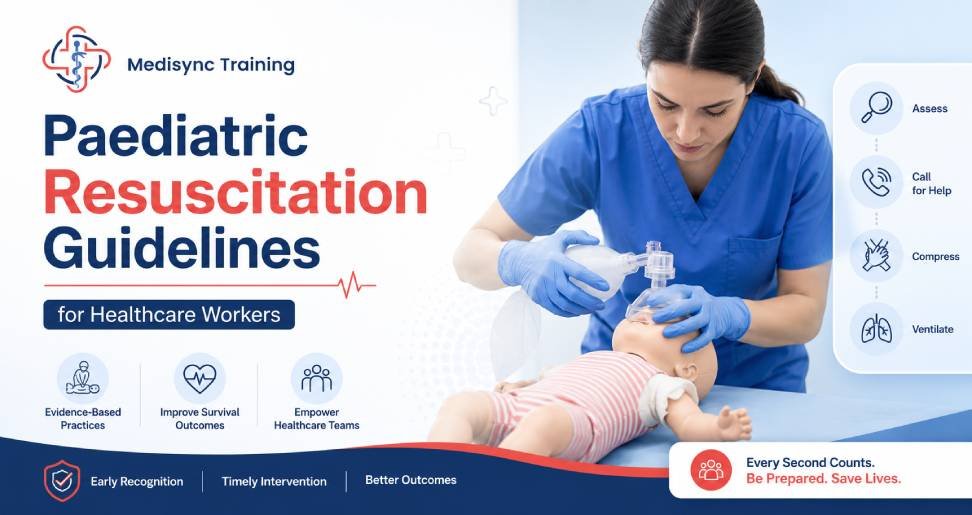
Paediatric Resuscitation Guidelines for Healthcare Workers: An Essential Guide for Australian Clinical Practice
July 8, 2026
Paediatric emergencies are among the most challenging situations healthcare workers encounter. Unlike adult patients, infants and children have unique physiological differences that require specialised assessment and resuscitation techniques. Following current paediatric resuscitation guidelines helps improve survival rates while reducing the risk of complications.
For healthcare professionals across Australia, maintaining up-to-date resuscitation knowledge is not simply a professional responsibility—it is an essential clinical competency. Regular refresher training ensures clinicians remain confident in recognising deterioration, performing high-quality cardiopulmonary resuscitation (CPR), managing airways, and responding effectively during life-threatening emergencies. Australian paediatric life support education is based on evidence-informed guidance from the Australian Resuscitation Council (ARC) and ANZCOR recommendations.
Why Paediatric Resuscitation Is Different
Children rarely experience cardiac arrest due to primary cardiac disease. In most cases, cardiac arrest develops after prolonged respiratory failure, hypoxia, shock, or trauma. Early recognition and intervention can often prevent deterioration before arrest occurs.
Healthcare workers should understand the key differences between adult and paediatric patients, including:
- Faster heart and respiratory rates
- Higher oxygen consumption
- Smaller airways that obstruct more easily
- Different medication dosing based on weight
- Age-specific normal vital signs
- Greater susceptibility to respiratory compromise
These differences require healthcare professionals to adapt their assessment and management throughout every stage of the resuscitation process.
Early Recognition Saves Lives
One of the most important paediatric resuscitation principles is recognising clinical deterioration before cardiac arrest develops.
Warning signs include:
- Increased work of breathing
- Cyanosis
- Altered level of consciousness
- Persistent tachycardia or bradycardia
- Poor peripheral perfusion
- Hypotension (late sign)
- Reduced oxygen saturation
Healthcare workers should use structured assessment tools such as the ABCDE approach to identify problems quickly and begin appropriate interventions before the child deteriorates further.
The Paediatric DRSABCD Approach
Australian healthcare providers follow the DRSABCD algorithm when managing paediatric emergencies.
Danger
Ensure the environment is safe for the patient, healthcare team, and bystanders before beginning treatment.
Response
Assess whether the child responds to voice or gentle stimulation.
Send for Help
Activate the emergency response system immediately and request additional clinical support.
Airway
Open the airway carefully while maintaining cervical spine precautions if trauma is suspected. Remove visible obstructions where appropriate.
Breathing
Assess breathing for no more than 10 seconds.
If breathing is absent or abnormal:
- Deliver effective rescue breaths.
- Provide oxygen where available.
- Prepare airway adjuncts if indicated.
CPR
Begin chest compressions immediately when there are no signs of life.
High-quality CPR includes:
- Correct compression depth
- Full chest recoil
- Minimal interruptions
- Appropriate compression-to-ventilation ratios
- Regular rescuer rotation to minimise fatigue
Defibrillation
Use an Automated External Defibrillator (AED) or manual defibrillator as soon as available, using paediatric settings or pads where appropriate. Early defibrillation remains an important component of resuscitation for shockable rhythms.
Effective Airway Management
Airway management is often the highest priority in paediatric emergencies because respiratory compromise commonly precedes cardiac arrest.
Healthcare workers should be proficient in:
- Head tilt and chin lift (when appropriate)
- Jaw thrust for suspected spinal injury
- Oropharyngeal airway insertion
- Bag-valve-mask ventilation
- Oxygen administration
- Airway suction techniques
Advanced airway management should only be performed by clinicians with appropriate training and competence.
High-Quality CPR Matters
Evidence consistently demonstrates that CPR quality directly influences survival outcomes.
Healthcare workers should focus on:
- Correct hand positioning
- Appropriate compression depth for the child’s age
- Compression rate consistent with current recommendations
- Allowing full chest recoil
- Minimising pauses
- Avoiding excessive ventilation
Regular hands-on practice is essential because CPR skills decline significantly without ongoing training and assessment.
Teamwork During Resuscitation
Successful paediatric resuscitation depends on effective teamwork rather than individual performance.
Healthcare teams should establish:
- Clear leadership
- Defined clinical roles
- Closed-loop communication
- Timely medication administration
- Continuous reassessment
- Accurate documentation
Simulation-based training helps improve communication, decision-making, and confidence during real emergencies.
Post-Resuscitation Care
Successful return of spontaneous circulation (ROSC) is only the beginning of patient management.
Post-resuscitation priorities include:
- Maintaining airway patency
- Optimising oxygenation and ventilation
- Stabilising circulation
- Monitoring neurological status
- Identifying and treating the underlying cause
- Ongoing intensive monitoring
Comprehensive post-resuscitation care significantly influences long-term neurological outcomes.
Ongoing Training Is Essential
Clinical guidelines continue to evolve as new evidence emerges. Healthcare workers should participate in regular education and competency assessments to maintain clinical readiness.
Nationally recognised CPR and First Aid courses allow professionals to refresh their practical skills while ensuring compliance with Australian workplace requirements. Annual CPR renewal is commonly recommended for healthcare professionals who may be required to perform resuscitation.
For professionals seeking practical, evidence-based education, Medisync Training provides nationally recognised courses delivered by experienced trainers using realistic, scenario-based learning. Their training supports healthcare workers, aged care professionals, educators, disability support staff, and community organisations in building the confidence required to respond effectively during medical emergencies.
Whether you require HLTAID009 Provide Cardiopulmonary Resuscitation, HLTAID011 Provide First Aid, HLTAID012 Provide First Aid in an Education and Care Setting, or medication training, Medisync Training offers flexible learning options designed to meet Australian workplace standards.
Strengthen Your Clinical Skills with Medisync Training
Maintaining competence in paediatric resuscitation requires more than theoretical knowledge—it demands regular practical experience, confidence, and ongoing professional development.
Healthcare workers who refresh their CPR and paediatric emergency response skills are better prepared to recognise deterioration early, deliver high-quality resuscitation, and improve patient outcomes.
If you’re looking to update your qualifications or expand your emergency response capabilities, explore the nationally recognised training programs available through Medisync Training. Their hands-on courses are designed to help Australian healthcare professionals remain compliant, confident, and prepared for real-world emergencies while supporting the highest standards of patient care.
Popular Posts
-
First Aid for Severe Hand Injuries: Essential Steps to Prevent Further Damage
October 26, 2026Hand injuries can happen at home, in the workplace, during sports, or while using tools...
-
First Aid for Amputations: Emergency Response Guide
October 21, 2026An amputation is a serious medical emergency that occurs when a body part, such as...
-
First Aid for Neck Injuries After an Accident: What You Should Do
October 16, 2026Neck injuries can occur unexpectedly after road accidents, workplace incidents, sports injuries, or accidental falls....
-
First Aid for Back and Spinal Injuries: What You Should Do in an Emergency
October 15, 2026Back and spinal injuries can occur unexpectedly at home, in the workplace, during sports activities,...
-
First Aid for Joint Injuries: Essential Steps to Reduce Pain and Prevent Further Damage
October 14, 2026Joint injuries can happen unexpectedly during sports, exercise, workplace activities, household tasks, or everyday movement....