
First Aid Management of Crush Injury: Essential Steps to Take in an Emergency
September 23, 2026
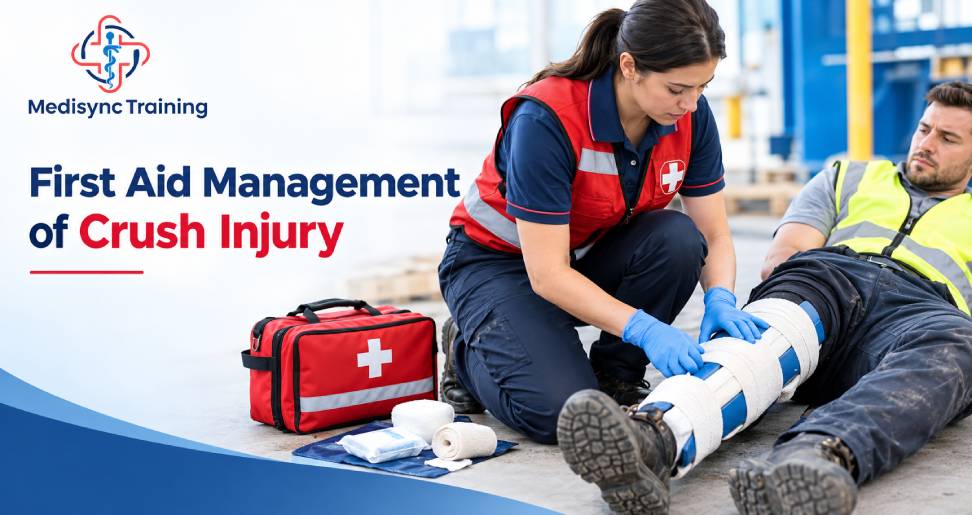
A crush injury occurs when part of the body is trapped, compressed, or squeezed by a heavy object or force. It can happen during workplace accidents, road crashes, building collapses, machinery incidents, falls, or other emergencies. Although the injury may appear to affect only one part of the body, a serious crush injury can involve fractures, bleeding, muscle damage, nerve injury, and circulation problems.
Knowing the correct first aid management of crush injury can help protect the injured person while professional medical assistance is arranged. Importantly, a person with a crush injury may not always experience severe pain or show obvious external injuries, so every suspected crush injury should be taken seriously. ANZCOR recommends immediate hospital assessment for people subjected to crush injuries.
What Is a Crush Injury?
A crush injury happens when a body part is subjected to significant pressure or compression. The affected area can include the arms, legs, chest, abdomen, pelvis, or other parts of the body.
Common causes include:
- Industrial or construction accidents
- Road traffic collisions
- Heavy machinery incidents
- Collapsed structures
- Workplace equipment accidents
- Natural disasters
- Heavy objects falling onto a person
- A person becoming trapped underneath an object
The injury can damage muscles, bones, blood vessels, nerves, and surrounding tissues. It may also cause internal bleeding or other complications that cannot be identified simply by looking at the affected area.
Why Crush Injuries Can Be Serious
Crush injuries can produce both immediate and delayed complications. Compression may restrict blood flow and damage muscle tissue. When the pressure is removed, damaged tissue can release substances into the bloodstream, potentially contributing to serious systemic complications.
Crush injuries may also be associated with fractures, open wounds, bleeding, swelling, nerve damage, and compartment syndrome.
This is why first aid should focus on scene safety, rapid emergency assistance, bleeding control, appropriate care of other injuries, prevention of heat loss, and continuous monitoring rather than attempting complicated medical treatment.
First Aid Management of Crush Injury
1. Check the Scene for Safety
Before approaching the casualty, make sure the environment is safe. A collapsed structure, moving machinery, traffic, electrical equipment, or unstable objects can put rescuers at risk.
Do not place yourself in danger while attempting a rescue. If specialist rescue equipment or trained emergency personnel are required, wait for the appropriate emergency services.
2. Call for Emergency Medical Assistance
A suspected crush injury requires urgent medical assessment. Call your local emergency service and explain what happened, where the person is trapped, and what injuries you can identify.
ANZCOR recommends sending for an ambulance as part of the initial management of crush injury.
3. Remove the Crushing Force Only When Safe
If it is safe and physically possible, the crushing force should be removed as soon as possible. However, rescuers should not attempt dangerous lifting or moving of heavy objects without appropriate assistance.
The priority is to avoid creating additional injuries to the casualty or rescuers. Follow instructions from emergency responders when specialist rescue is required.
4. Check Responsiveness and Breathing
Assess the person’s responsiveness and breathing. If the casualty is unresponsive and not breathing normally, begin appropriate basic life support and CPR if you are trained to do so.
The Indian Red Cross also advises monitoring respiration and consciousness in people with crush injuries and starting CPR if the person stops breathing.
This is one reason practical training is valuable. Completing a recognised First Aid Certificate can help people develop the confidence and skills needed to respond appropriately during emergencies.
5. Control Severe External Bleeding
If there is significant external bleeding, control it using appropriate first-aid techniques. Apply direct pressure where appropriate and use suitable dressings or other available first-aid equipment.
Do not remove an embedded object from a wound. Instead, control bleeding around it and wait for emergency medical assistance.
Bleeding, open wounds, fractures, and other injuries can occur alongside crush injuries, making a structured assessment particularly important.
6. Treat Other Visible Injuries
A person involved in a crushing incident may have multiple injuries. Look for signs of fractures, wounds, burns, head injuries, spinal injuries, or breathing difficulties.
Avoid unnecessary movement, particularly when a head, neck, or spinal injury is suspected. For suspected fractures, the injured body part should generally be supported and unnecessary movement avoided.
7. Prevent the Person From Becoming Cold
Serious trauma can contribute to shock and loss of body heat. Keep the casualty appropriately covered and protected from environmental exposure while waiting for emergency services.
Continue monitoring breathing, responsiveness, and any changes in their condition. ANZCOR specifically recommends preventing or treating hypothermia and repeatedly checking the casualty for deterioration.
8. Do Not Give Food or Drink
Avoid giving food or drink to a seriously injured person unless directed by an appropriate healthcare professional. Emergency treatment or surgery may be required, and eating or drinking can create additional risks. The Red Cross similarly advises not giving a person in shock anything to eat or drink.
Recognising Possible Shock
Shock is a potentially life-threatening condition that can develop following serious injury. Possible signs include:
- Pale, cool, or clammy skin
- Rapid breathing
- A rapid or weak pulse
- Confusion or altered responsiveness
- Restlessness or irritability
- Excessive thirst
- Nausea or vomiting
A person showing signs of shock needs immediate medical attention.
Keep monitoring the casualty while waiting for emergency services and provide care within the limits of your training.
Why First Aid Training Matters
Crush injuries often occur unexpectedly, particularly in workplaces where machinery, vehicles, construction materials, or heavy equipment are involved. Having trained first-aiders available can make a significant difference during the initial response.
Medisync Training provides first-aid and workplace training designed to help learners develop practical knowledge for responding to emergency situations. Depending on workplace and role requirements, learners can explore options such as a First Aid Certificate, Childcare First Aid Course, and Medication Training.
For people working with children, carers, educators, and childcare professionals, appropriate training is especially important because emergencies involving children can require a calm, structured response.
Common Mistakes to Avoid
When managing a suspected crush injury, avoid:
- Entering an unsafe area without assessing the hazards
- Attempting to move heavy objects without appropriate support
- Assuming there is no serious injury because there is little visible damage
- Giving food or drink to a seriously injured casualty
- Moving someone unnecessarily when spinal injury is suspected
- Leaving the casualty unattended
- Failing to monitor breathing and responsiveness
- Delaying emergency medical assistance
A person can appear relatively stable while still having significant internal or tissue damage. ANZCOR notes that people with crush injuries may have little pain or no obvious external signs, reinforcing the importance of medical assessment.
Final Thoughts
Understanding the first aid management of crush injury is an important part of emergency preparedness. The first priority is always safety, followed by calling for emergency assistance, safely removing the crushing force where possible, assessing breathing and responsiveness, controlling serious bleeding, treating other injuries, preventing heat loss, and continuously monitoring the casualty.
Crush injuries can have complications that are not immediately visible, so urgent medical evaluation should never be overlooked. Proper first-aid training can help individuals respond more confidently and appropriately until professional medical care arrives.
For structured first-aid education and workplace-focused training, Medisync Training offers training options that can help learners build practical emergency-response skills. Developing these skills before an emergency occurs can help people act calmly and systematically when their knowledge is needed most.
Popular Posts
-
First Aid for Amputations: Emergency Response Guide
October 21, 2026An amputation is a serious medical emergency that occurs when a body part, such as...
-
First Aid for Neck Injuries After an Accident: What You Should Do
October 16, 2026Neck injuries can occur unexpectedly after road accidents, workplace incidents, sports injuries, or accidental falls....
-
First Aid for Back and Spinal Injuries: What You Should Do in an Emergency
October 15, 2026Back and spinal injuries can occur unexpectedly at home, in the workplace, during sports activities,...
-
First Aid for Joint Injuries: Essential Steps to Reduce Pain and Prevent Further Damage
October 14, 2026Joint injuries can happen unexpectedly during sports, exercise, workplace activities, household tasks, or everyday movement....
-
First Aid for Dislocations: What to Do and What to Avoid
October 13, 2026A dislocation occurs when a bone is forced out of its normal position within a...