
First Aid Management of Australian Snake Bite
September 16, 2026
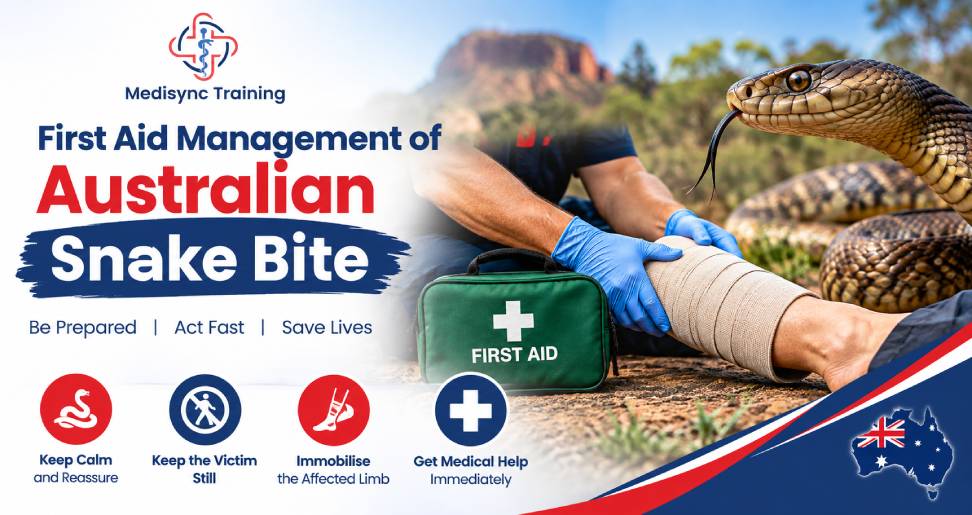
Australia is home to many venomous snake species, and a snake bite should always be treated as a medical emergency. Even when there are few or no obvious symptoms immediately after the bite, serious envenomation can develop. Australian first-aid guidelines recommend keeping the person still, applying pressure immobilisation and arranging urgent ambulance assistance.
Knowing the correct first aid management of an Australian snake bite can help reduce the movement of venom through the lymphatic system while professional medical assistance is on its way. This article explains the recommended first-aid response and the mistakes that should be avoided.
What Should You Do After an Australian Snake Bite?
The first priority is to protect everyone from further danger. Move away from the snake without attempting to catch, kill or handle it. Many Australian snakes are protected, and approaching the animal can result in another bite.
Once you are in a safe location:
- Keep the injured person calm and still.
- Call Triple Zero (000) and request an ambulance.
- Apply a pressure immobilisation bandage.
- Immobilise the affected limb with a splint if possible.
- Continue monitoring the person’s condition.
- Begin CPR if the person becomes unresponsive and is not breathing normally.
The Australian and New Zealand Committee on Resuscitation (ANZCOR) specifically recommends ambulance assistance, immobilisation, pressure bandaging and CPR when required.
Why Is Pressure Immobilisation Important?
Pressure immobilisation is a key component of Australian snake-bite first aid. The technique is designed to restrict lymphatic movement of venom by applying firm pressure to the affected limb and keeping it still. It is not intended to stop blood circulation.
If the bite is on an arm or leg, place a broad pressure bandage over the bite site. Then use another firm roller or elasticised bandage to wrap the limb, beginning near the fingers or toes and working upwards as far as practical. St John Australia recommends a bandage approximately 10–15 cm wide for this purpose.
After bandaging, the limb should be immobilised with a splint. The person should remain as still as possible while waiting for emergency services.
Step-by-Step Pressure Immobilisation
A practical approach includes the following:
1. Keep the Person Still
Have the person lie down and remain calm. Movement can contribute to venom distribution, so unnecessary walking or movement should be avoided.
2. Call Triple Zero (000)
Arrange an ambulance as soon as possible. A suspected Australian snake bite requires urgent medical assessment, even if the person initially feels well.
3. Bandage the Bite
Apply a broad pressure bandage directly over the bite area. Follow this with a firm bandage around the limb, working from the fingers or toes upwards. The bandage should be firm without intentionally restricting blood flow.
4. Immobilise the Limb
Use a splint to prevent movement of the affected limb. Keep the rest of the person’s body as still as possible as well.
5. Record Important Information
Record the approximate time of the bite and the time the pressure bandage was applied. If practical, mark the suspected bite location on the bandage. This information can assist healthcare professionals during treatment.
What Should You NOT Do?
Knowing what not to do is just as important as knowing what to do.
Do not wash the bite. Venom residue on the skin or clothing may potentially assist medical teams with identifying the snake through venom detection methods.
Do not cut or incise the wound. Cutting the bite does not provide appropriate treatment and can cause additional injury.
Do not suck out the venom. Attempting to remove venom by mouth is not recommended.
Do not use a tourniquet. Australian first-aid guidance specifically advises against using an arterial tourniquet.
Do not try to catch or kill the snake. This can expose the victim or rescuers to another bite.
Possible Signs and Symptoms
Snake-bite symptoms can vary depending on the species and the amount of venom involved. A person may initially have little pain or no obvious signs, so the absence of symptoms does not mean that the bite is harmless.
Possible symptoms can include:
- Nausea or vomiting
- Headache or dizziness
- Drowsiness or faintness
- Blurred or double vision
- Drooping eyelids
- Difficulty speaking or swallowing
- Changes in the voice
- Tightness or pain in the throat, chest or abdomen
- Breathing difficulties
- Progressive weakness or respiratory failure
Symptoms may take time to develop, which is why suspected snake bites require urgent medical evaluation.
What If the Person Becomes Unresponsive?
Continue monitoring the person’s responsiveness and breathing while waiting for the ambulance.
If the person becomes unresponsive and is not breathing normally, commence CPR and follow the emergency operator’s instructions. ANZCOR recommends immediate CPR in the event of cardiac arrest.
First-aid training can be particularly valuable because emergency situations require calm, practical decision-making rather than relying solely on memory.
Why First Aid Training Matters
Knowing the correct response to a snake bite is particularly important for people who work or spend time outdoors, including agricultural workers, outdoor recreation participants, construction workers, park staff and people living in areas where snakes are encountered.
Practical training helps people become familiar with emergency procedures such as pressure immobilisation, CPR, patient monitoring and appropriate communication with emergency services.
For organisations and individuals looking to develop practical emergency-response skills, Medisync Training provides first-aid training resources and workplace-focused training options designed to help participants respond appropriately to emergencies.
Final Thoughts
Australian snake bites require immediate and appropriate first aid. The most important principles are simple: stay calm, keep the person completely still, call Triple Zero (000), apply pressure immobilisation and wait for professional medical assistance.
Avoid common harmful responses such as cutting the wound, sucking venom, washing the bite, applying a tourniquet or attempting to catch the snake. Correct first aid can help keep the situation under control while emergency medical professionals are on their way.
Practical first-aid training can also give people the confidence and skills needed to respond appropriately when an unexpected emergency occurs.
Popular Posts
-
First Aid for Muscle Injuries: Strains, Tears and Immediate Care
October 9, 2026Muscle injuries can happen during sports, exercise, physical work, or everyday activities. A sudden movement,...
-
First Aid for Soft Tissue Injuries: Essential Steps for Safe and Effective Care
October 7, 2026Soft tissue injuries are common in workplaces, homes, sports activities, and everyday situations. A sudden...
-
First Aid for Mouth and Tongue Injuries: What You Should Do
October 5, 2026Mouth and tongue injuries can happen unexpectedly during sports, falls, accidents, biting incidents, or everyday...
-
First Aid for Ear Injuries and Foreign Objects
October 2, 2026Ear injuries can happen unexpectedly at home, at work, during sports, or while travelling. A...
-
Chemical Eye Injury: Immediate First Aid Steps
September 30, 2026A chemical splash to the eye can happen unexpectedly at home, in a workplace, laboratory,...