
First Aid Management of Anaphylaxis: A Complete Guide to Emergency Response
September 14, 2026
Anaphylaxis is a severe and potentially life-threatening allergic reaction that can develop rapidly after exposure to an allergen. Unlike a mild allergic reaction, anaphylaxis can affect several body systems at once and may cause breathing difficulties, swelling, a sudden drop in blood pressure, or loss of consciousness.
Knowing how to recognise and respond to anaphylaxis can make a critical difference in an emergency. Prompt first aid, particularly the early use of an adrenaline auto-injector when indicated, can help prevent the reaction from becoming fatal. This is why appropriate first aid education is valuable for workplaces, childcare environments, schools, healthcare settings, and the wider community.
What Is Anaphylaxis?
Anaphylaxis is a serious systemic allergic reaction that occurs when the immune system responds dramatically to a substance that the body identifies as a threat. The reaction can develop within minutes and may become progressively worse if emergency treatment is delayed.
Common triggers include:
- Foods such as peanuts, tree nuts, eggs, milk, shellfish, and other allergens
- Insect stings, particularly from bees and wasps
- Certain medications
- Latex
- Other substances capable of triggering a severe allergic response
A person who has previously experienced anaphylaxis may be particularly vulnerable, but a severe reaction can also occur in someone without a known history of anaphylaxis.
Recognising the Signs of Anaphylaxis
Early recognition is one of the most important parts of first aid management. Symptoms can vary from person to person and do not necessarily occur in a particular order.
Possible signs include:
Breathing difficulties
A person may experience wheezing, shortness of breath, noisy breathing, coughing, or difficulty speaking. Swelling of the throat or tongue can make breathing increasingly difficult.
Swelling
Swelling may occur around the lips, tongue, face, or throat. Rapid swelling of the airway is particularly dangerous because it can interfere with breathing.
Skin reactions
Hives, redness, itching, or flushing may appear. However, it is important to remember that skin symptoms do not always occur during anaphylaxis.
Circulatory problems
A severe reaction can cause dizziness, weakness, pale or clammy skin, a rapid pulse, or collapse. A person may become confused or lose consciousness as blood pressure falls.
Gastrointestinal symptoms
Abdominal pain, nausea, vomiting, or diarrhoea can sometimes accompany anaphylaxis.
Because anaphylaxis can progress quickly, do not wait for every symptom to appear before taking action when a severe allergic reaction is suspected.
First Aid Management of Anaphylaxis
The first aid response should be prompt and focused on obtaining emergency medical assistance and administering adrenaline when appropriate.
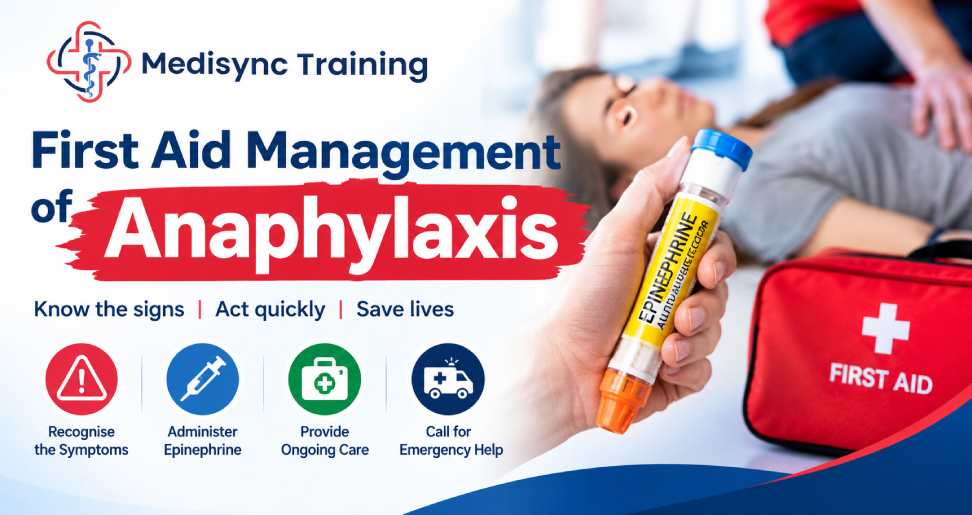
1. Recognise the emergency
If a person develops symptoms consistent with anaphylaxis, treat the situation as a medical emergency. Ask whether they have a known allergy or an anaphylaxis action plan if this can be done without delaying treatment.
2. Call emergency services
Contact the appropriate emergency service immediately. Clearly explain that anaphylaxis is suspected and provide the person’s location and condition.
Do not leave the person alone while waiting for emergency responders.
3. Help administer their adrenaline auto-injector
Adrenaline is the first-line emergency treatment for anaphylaxis. If the person has an adrenaline auto-injector prescribed for them, help them use it according to their action plan and the instructions for the device.
If they are unable to administer it themselves, a trained first aider may need to assist.
Adrenaline should not be delayed while waiting to see whether symptoms improve.
4. Position the person appropriately
Generally, help the person remain lying down. Avoid allowing them to suddenly stand or walk, as this may worsen circulatory problems.
If breathing is particularly difficult, they may need to sit with their legs extended. If the person is unconscious but breathing normally, place them in the recovery position and monitor their breathing.
If they are not breathing normally, begin CPR and use an automated external defibrillator (AED) if one is available and appropriate.
5. Monitor their condition
Stay with the person and continuously monitor their breathing and responsiveness. Anaphylaxis can worsen quickly, and symptoms may return even after initial improvement.
If emergency medical services provide further instructions, follow them carefully.
A second adrenaline dose may sometimes be required if symptoms do not improve or return, depending on the person’s action plan, the device instructions, and professional medical advice.
What Should You Avoid During Anaphylaxis?
Knowing what not to do is also important.
Do not:
- Leave the person alone.
- Encourage them to walk around.
- Delay emergency assistance while searching for the allergen.
- Assume the reaction is mild because skin symptoms are limited.
- Rely on antihistamines as a substitute for adrenaline in anaphylaxis.
- Give food or drink to someone who is having difficulty breathing or is becoming unconscious.
The priority is rapid emergency response and appropriate adrenaline administration.
Why Anaphylaxis Training Matters
Anaphylaxis emergencies can happen in many environments. Schools, childcare centres, workplaces, sporting facilities, restaurants, and community organisations may all encounter people with severe allergies.
Training helps individuals understand how to identify an emergency, respond confidently, follow an allergy or anaphylaxis action plan, and provide appropriate first aid while waiting for professional medical assistance.
For organisations that need structured emergency-response education, First Aid Certificate training can help participants develop essential first aid knowledge and practical skills. Appropriate training can be particularly valuable for people responsible for the safety of children, employees, customers, or community members.
Those working with young children can also benefit from specialised Childcare First Aid Course training, where managing allergic reactions and other childhood emergencies is an important part of being prepared.
Medication-related responsibilities may also arise in childcare and workplace environments. Where relevant, Medication Training can help workers understand appropriate medication-related procedures within their role and organisational requirements.
Preparing for an Anaphylaxis Emergency
Preparation is one of the strongest ways to improve emergency readiness. Organisations should ensure staff know where emergency equipment and relevant action plans are located and understand how to respond when a person experiences a severe allergic reaction.
Individuals with known allergies should also keep their prescribed emergency medication accessible and ensure people around them know how to respond if an emergency occurs.
Regular first aid training and refresher education can help prevent hesitation during a high-pressure situation. Practical training allows participants to become familiar with emergency procedures rather than trying to learn them for the first time during an actual crisis.
Final Thoughts
Anaphylaxis can become life-threatening within a short period, making rapid recognition and appropriate first aid essential. Understanding the warning signs, contacting emergency services, helping administer prescribed adrenaline, positioning the person safely, and monitoring their condition are key elements of an effective response.
However, reading about anaphylaxis is not a substitute for practical first aid education. Proper training can give individuals greater confidence in recognising and responding to emergencies.
For Australian workplaces, childcare professionals, and individuals seeking practical emergency-response skills, Medisync Training provides first aid and related training designed to support safer, better-prepared communities. Investing in quality training can help ensure that when an emergency occurs, people are prepared to respond quickly and appropriately.
Popular Posts
-
First Aid for Muscle Injuries: Strains, Tears and Immediate Care
October 9, 2026Muscle injuries can happen during sports, exercise, physical work, or everyday activities. A sudden movement,...
-
First Aid for Soft Tissue Injuries: Essential Steps for Safe and Effective Care
October 7, 2026Soft tissue injuries are common in workplaces, homes, sports activities, and everyday situations. A sudden...
-
First Aid for Mouth and Tongue Injuries: What You Should Do
October 5, 2026Mouth and tongue injuries can happen unexpectedly during sports, falls, accidents, biting incidents, or everyday...
-
First Aid for Ear Injuries and Foreign Objects
October 2, 2026Ear injuries can happen unexpectedly at home, at work, during sports, or while travelling. A...
-
Chemical Eye Injury: Immediate First Aid Steps
September 30, 2026A chemical splash to the eye can happen unexpectedly at home, in a workplace, laboratory,...