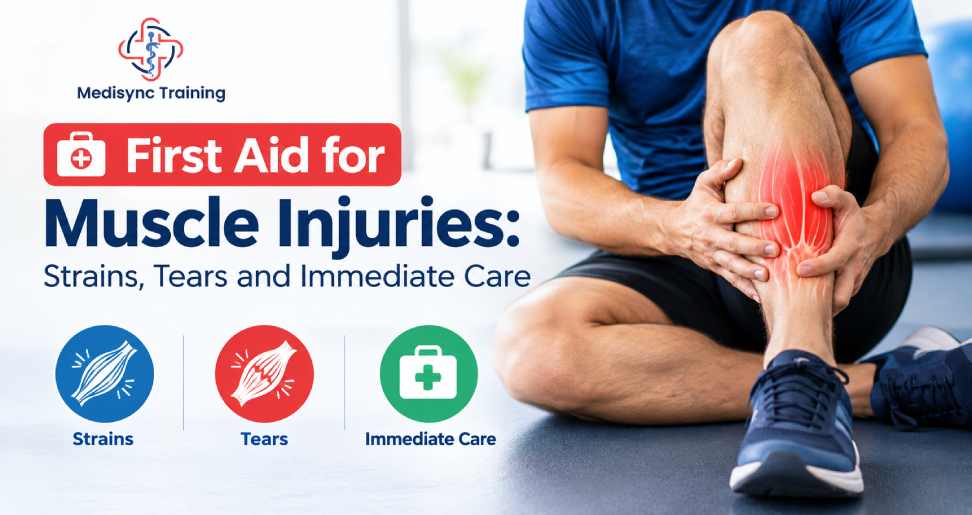
First Aid for Muscle Injuries: Strains, Tears and Immediate Care
October 9, 2026
Muscle injuries can happen during sports, exercise, physical work, or everyday activities. A sudden movement, lifting a heavy object, or stretching beyond the body’s limits can cause pain, swelling, and restricted movement. Knowing how to provide first aid for muscle injuries is essential for reducing discomfort, preventing further damage, and supporting recovery.
Muscle strains and tears are common soft tissue injuries, but their severity can vary considerably. While mild injuries may improve with appropriate home care, more serious injuries require professional medical assessment. Understanding the warning signs and taking the right steps immediately can make a significant difference.
In this guide, we explain the different types of muscle injuries, their symptoms, immediate first aid measures, and when to seek medical assistance.
What Are Muscle Strains and Tears?
Muscles are made up of fibres that contract and relax to produce movement. When these fibres are overstretched or subjected to excessive force, an injury can occur.
A muscle strain refers to damage caused by overstretching or overloading a muscle or its associated tendon. Depending on the force involved, the injury may range from minor fibre damage to a complete tear.
Muscle injuries are generally classified into three grades:
- Grade 1 – Mild strain: A small number of muscle fibres are damaged, causing mild pain and tenderness with little loss of strength.
- Grade 2 – Moderate strain: A greater number of fibres are injured, resulting in more noticeable pain, swelling, bruising, and reduced muscle function.
- Grade 3 – Severe strain or tear: The muscle or tendon may be completely torn, potentially causing severe pain, significant weakness, and difficulty moving the affected area.
Commonly affected muscles include the hamstrings, quadriceps, calves, shoulders, and lower back.
Common Causes of Muscle Injuries
Muscle strains and tears can develop during everyday activities or physically demanding situations. Common causes include:
- Sudden acceleration, twisting, or changes in direction.
- Inadequate warm-up before exercise.
- Lifting heavy objects using improper techniques.
- Repetitive movements and overtraining.
- Stretching a muscle beyond its normal range.
- Fatigue, which can affect coordination and muscle control.
- Slipping, falling, or experiencing a direct impact.
Recognising these risk factors can help individuals take preventive measures and reduce the likelihood of future injuries.
Signs and Symptoms of a Muscle Strain or Tear
Symptoms depend on the location and severity of the injury. They may appear immediately or develop gradually over several hours.
Common warning signs include:
- Sudden or sharp pain in the affected muscle.
- Tenderness when touching or moving the area.
- Swelling and bruising.
- Muscle stiffness or spasms.
- Weakness or difficulty using the injured muscle.
- Reduced flexibility and range of motion.
- Pain when stretching or contracting the muscle.
A severe tear may produce a popping sensation at the time of injury. Some people may also notice a visible gap, deformity, or substantial loss of muscle function.
These symptoms should not be ignored, particularly when pain is severe or movement becomes difficult.
First Aid for Muscle Injuries: Immediate Care Steps
Providing prompt and appropriate first aid can help protect the injured muscle and prevent additional damage. Follow these steps when a muscle strain or tear occurs.
1. Stop the Activity Immediately
The first step is to stop exercising or performing the activity that caused the injury. Continuing to move the affected muscle can increase tissue damage and worsen the pain.
Help the injured person move to a safe, comfortable position. Avoid forcing the muscle to stretch or testing its strength repeatedly.
2. Protect and Rest the Injured Muscle
Protect the injured area from further strain. Avoid heavy lifting, running, jumping, or other movements that cause pain.
Rest should be relative rather than unnecessarily prolonged. Once serious injury has been ruled out and symptoms begin improving, gentle movement can usually be reintroduced according to comfort and medical advice.
3. Apply a Cold Pack
A cold pack may help relieve pain and limit swelling during the early stages of a muscle injury.
Wrap an ice pack or cold compress in a thin towel and apply it to the affected area for approximately 15–20 minutes at a time. Never place ice directly against the skin, as this can cause cold injury.
Allow the skin to return to its normal temperature between applications. Stop if the skin becomes unusually pale, painful, or numb.
4. Use Compression Carefully
A suitable elastic bandage may provide support and help control swelling. Wrap it evenly around the affected area without applying excessive pressure.
Check the area below the bandage for changes in colour, temperature, sensation, or circulation. Loosen the bandage immediately if the person experiences tingling, numbness, increased pain, or cold fingers or toes.
Do not use compression if it causes discomfort or if a serious injury requires urgent assessment.
5. Elevate the Injured Area
If practical, raise the injured limb above the level of the heart while resting. For example, a person with a calf strain may support the leg on pillows.
Elevation can help manage swelling, particularly when combined with appropriate rest and compression.
6. Avoid Activities That May Worsen the Injury
During the initial period, avoid vigorous stretching, strenuous exercise, deep massage, and activities that increase pain or swelling.
Heat may also aggravate swelling immediately after an acute injury. Avoid returning to sports or heavy physical work simply because the initial pain has subsided.
These precautions are especially important when a significant tear is suspected.
When Should You Seek Medical Attention?
Not every muscle strain requires emergency treatment, but certain symptoms indicate a potentially serious injury.
Seek urgent medical assessment if the injured person experiences:
- Severe pain or rapidly increasing swelling.
- Significant bruising or an obvious muscle deformity.
- Inability to walk, bear weight, or use the affected limb.
- A popping sensation followed by marked weakness.
- Numbness, tingling, or changes in skin colour or temperature.
- An injury accompanied by suspected fracture or substantial bleeding.
Call emergency services if there is an obvious severe injury, loss of circulation, or another life-threatening concern.
Medical evaluation may involve a physical examination and, when necessary, imaging tests to assess the extent of the damage. Severe tears may require specialist treatment, and some complete tears need surgery.
Recovery and Rehabilitation After a Muscle Injury
Recovery time varies according to the severity, location, and nature of the injury. Mild strains may improve within a few weeks, while more serious injuries can take several weeks or months to recover.
Once pain and swelling have settled, a gradual rehabilitation programme can help restore movement, flexibility, and strength. Depending on the injury, this may include gentle mobility exercises, progressive strengthening, balance training, and sport-specific movements.
Avoid returning to strenuous activity until normal movement and strength have sufficiently recovered. A healthcare professional can help determine when it is safe to resume exercise.
Rehabilitation should be tailored to the individual rather than based on a fixed timeline. Increasing activity too quickly can cause reinjury.
How Can Muscle Injuries Be Prevented?
Although not every muscle injury can be avoided, several practical steps can reduce the risk:
- Warm up before exercise and physically demanding activities.
- Increase training intensity gradually.
- Use correct lifting and movement techniques.
- Maintain adequate strength and flexibility.
- Allow sufficient recovery between demanding workouts.
- Stay hydrated and maintain appropriate nutrition.
- Stop exercising when unusual pain or muscle fatigue develops.
These habits can support healthy muscle function and reduce unnecessary strain during physical activities.
Learn Essential First Aid Skills with Medisync Training
Knowing how to respond to muscle strains, tears, and other soft tissue injuries can help people act confidently when accidents occur. Proper first aid involves recognising the severity of an injury, protecting the affected area, managing pain and swelling, and identifying when professional medical assistance is necessary.
Medisync Training supports individuals and organisations in developing practical first aid knowledge for real-world situations. Learning through structured training can help participants recognise injuries, respond appropriately, and understand the importance of seeking medical attention when required.
Explore First Aid Training Services to learn more about available training options and build confidence in responding to common injuries and emergencies.
Conclusion
Muscle strains and tears can occur during exercise, sports, work, or routine daily activities. Recognising the symptoms and providing appropriate first aid can help limit further damage and support recovery.
Remember the key steps: stop the activity, protect the injured muscle, apply a wrapped cold pack, use compression carefully when appropriate, and elevate the affected area if possible. Avoid painful movements and seek medical attention when symptoms are severe or a significant tear is suspected.
With timely care, appropriate rehabilitation, and the right first aid knowledge, individuals can make safer decisions and reduce the risk of complications following a muscle injury.
Popular Posts
-
First Aid for Amputations: Emergency Response Guide
October 21, 2026An amputation is a serious medical emergency that occurs when a body part, such as...
-
First Aid for Neck Injuries After an Accident: What You Should Do
October 16, 2026Neck injuries can occur unexpectedly after road accidents, workplace incidents, sports injuries, or accidental falls....
-
First Aid for Back and Spinal Injuries: What You Should Do in an Emergency
October 15, 2026Back and spinal injuries can occur unexpectedly at home, in the workplace, during sports activities,...
-
First Aid for Joint Injuries: Essential Steps to Reduce Pain and Prevent Further Damage
October 14, 2026Joint injuries can happen unexpectedly during sports, exercise, workplace activities, household tasks, or everyday movement....
-
First Aid for Dislocations: What to Do and What to Avoid
October 13, 2026A dislocation occurs when a bone is forced out of its normal position within a...