

First Aid for Foot and Ankle Injuries: Essential Steps for Quick and Safe Recovery
October 28, 2026
Foot and ankle injuries can happen unexpectedly while walking, running, playing sports, working, or performing everyday activities. A simple misstep on uneven ground can cause a painful ankle sprain, while a fall or direct impact may result in a fracture. Knowing how to provide first aid for foot and ankle injuries can help reduce discomfort, limit swelling, and prevent further damage until professional medical assistance is available.
For Australian workplaces, schools, childcare centres, sporting facilities, and homes, understanding basic first aid is an important part of injury prevention and emergency preparedness. This guide explains common foot and ankle injuries, immediate first-aid measures, warning signs, and ways to reduce the risk of future injuries.
Understanding Common Foot and Ankle Injuries
The foot and ankle contain bones, ligaments, muscles, tendons, and joints that work together to support body weight and maintain balance. Injuries can affect any of these structures.
Common types include:
- Ankle sprains: Occur when ligaments stretch or tear, often because the ankle twists unexpectedly.
- Foot fractures: Breaks or cracks in bones caused by falls, impacts, or excessive force.
- Strains: Injuries involving stretched or torn muscles or tendons.
- Bruises and soft-tissue injuries: Develop after direct impact, sometimes causing tenderness, swelling, or discolouration.
- Achilles tendon injuries: Affect the tendon connecting the calf muscles to the heel and may cause sudden pain or difficulty walking.
Symptoms can include pain, swelling, bruising, tenderness, reduced movement, and difficulty putting weight on the affected foot. However, symptoms alone cannot reliably distinguish a serious sprain from a fracture.
First Aid for Foot and Ankle Injuries: Step-by-Step Guide
Providing appropriate first aid immediately after an injury can help protect the affected area while you assess the need for further treatment.
1. Stop the Activity and Ensure Safety
The first step is to stop the activity that caused the injury. If the person is playing sport, walking on uneven ground, or working in a potentially dangerous area, help them move away from immediate hazards without putting additional pressure on the injured foot.
Encourage the injured person to remain calm and sit or lie down comfortably. Avoid asking them to walk around to test the injury, particularly if the pain is severe or a fracture is possible.
If the incident involves a serious injury or other medical emergency, follow the Australian DRSABCD emergency action plan and call Triple Zero (000) when required.
2. Rest and Protect the Injured Area
Rest is an important part of initial injury management. Stop activities that cause pain and avoid unnecessary movement of the injured ankle or foot.
If a fracture or dislocation is suspected, support the limb in the position in which it is found. Do not attempt to straighten a visibly deformed ankle or push a bone back into place.
Avoid forcing the person to stand or walk. If they cannot bear weight comfortably, arrange prompt medical assessment.
3. Apply a Cold Pack Safely
A cold pack can help manage pain and swelling following many acute soft-tissue injuries.
Wrap an ice pack or cold compress in a thin, damp cloth and apply it for approximately 15–20 minutes at a time. Allow the skin to return to its normal temperature between applications.
Never place ice directly against the skin, and do not apply a cold pack over an open wound. Use additional caution when the person has reduced skin sensation or circulation problems.
Cold therapy can provide temporary relief, but it does not repair damaged ligaments or bones. Severe pain, increasing swelling, or other concerning symptoms still require medical evaluation.
4. Use Compression Carefully
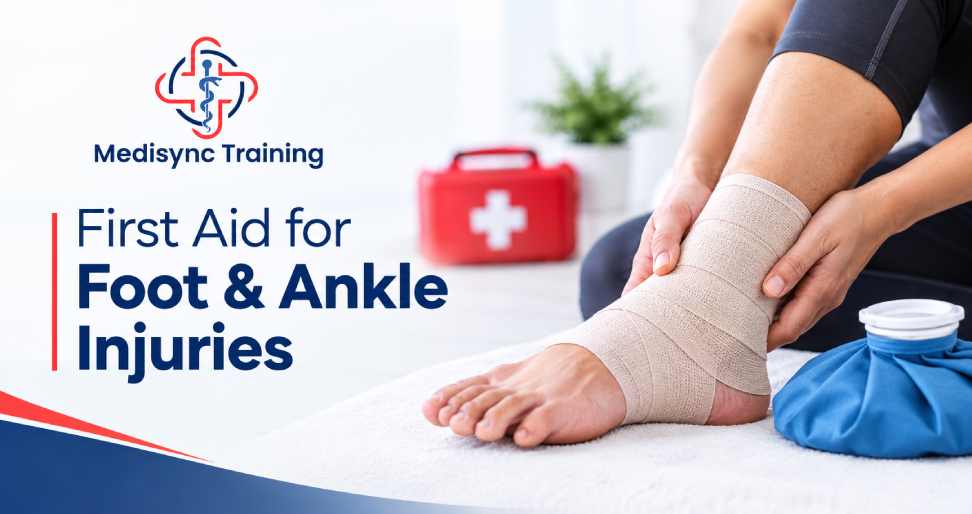
A suitable elastic compression bandage may help control swelling in some soft-tissue injuries. If the injury appears mild and compression can be applied safely, wrap the affected area gently without restricting circulation.
Check the toes regularly for changes in colour, temperature, sensation, or movement. Loosen or remove the bandage if the toes become cold, pale, blue, numb, or develop pins and needles.
Do not apply tight compression over a suspected fracture, severe deformity, or an injury with compromised circulation. Seek medical advice if you are unsure how to support the affected area safely.
5. Elevate the Foot
When comfortable, raise the injured foot above heart level while the person rests. Use pillows or folded blankets to support the leg without placing pressure on a painful area.
Elevation may help reduce fluid accumulation and swelling during the early stages of an injury.
If elevation increases pain or causes discomfort, adjust the position. Do not move the limb unnecessarily when a serious fracture or dislocation is suspected.
When Should You Seek Emergency Medical Help?
Not every ankle injury is minor. Some injuries require urgent assessment to prevent complications and ensure appropriate treatment.
Seek emergency medical assistance if the person has:
- An obvious deformity of the foot or ankle.
- Bone visible through the skin or a deep wound exposing underlying tissue.
- Heavy or uncontrolled bleeding.
- A foot or toes that become unusually pale, blue, cold, or numb.
- Severe pain or rapidly increasing swelling.
- A suspected fracture or dislocation.
- Significant difficulty moving the toes or signs of impaired circulation.
Call Triple Zero (000) for life-threatening emergencies, severe injuries, or when ambulance assistance is necessary.
Even without these warning signs, arrange medical assessment if the person cannot bear weight, pain is substantial, or symptoms are worsening. People with diabetes or reduced foot sensation should seek medical advice promptly after a foot injury, as complications may be harder to recognise.
What Should You Avoid After a Foot or Ankle Injury?
Incorrect first aid can worsen discomfort or delay appropriate treatment. Avoid the following mistakes:
Do not force movement: Testing the ankle repeatedly or encouraging someone to walk through significant pain can aggravate the injury.
Do not apply ice directly: Direct contact can damage the skin, especially during prolonged exposure.
Avoid heat and vigorous massage initially: These may aggravate swelling in an acute soft-tissue injury.
Do not attempt to realign the joint: Suspected fractures and dislocations require appropriate medical care.
Do not ignore persistent symptoms: Continuing pain, swelling, bruising, or difficulty walking should not be dismissed simply because the person initially felt better.
When a serious injury cannot be ruled out, protect the affected area and seek professional assessment rather than assuming it is a simple sprain.
Recovery and Prevention of Future Injuries
Recovery depends on the type and severity of the injury. Mild sprains may improve with appropriate care, while fractures, severe ligament injuries, and tendon damage can require prolonged treatment.
Follow the advice of a healthcare professional before returning to sports, physically demanding work, or strenuous exercise. Once movement is safe, a clinician or physiotherapist may recommend gradual mobility exercises, strengthening activities, and balance training.
You can also reduce the likelihood of future injuries by:
- Wearing supportive, well-fitting footwear.
- Keeping walkways clear of obstacles and hazards.
- Warming up before sports and exercise.
- Increasing physical activity gradually.
- Using appropriate protective equipment.
- Improving balance, flexibility, and lower-limb strength.
- Following workplace safety procedures when working on uneven or slippery surfaces.
Returning to demanding activities too early can increase the risk of reinjury, so recovery should be guided by symptoms and appropriate professional advice.
Why First Aid Training Matters
Knowing what to do when a foot or ankle injury occurs can make a significant difference in workplaces, educational settings, sporting environments, and everyday situations. Trained first aiders are better prepared to assess immediate dangers, recognise warning signs, provide appropriate initial care, and communicate effectively with emergency services.
Medisync Training offers nationally recognised first aid training options in Australia, including the HLTAID011 Provide First Aid course. The training combines online learning with practical assessment to help participants develop skills for responding to common injuries and emergencies.
If you want to improve your emergency response skills, explore Medisync Training’s First Aid Courses. Learning practical first aid techniques can help you respond more confidently when someone experiences an injury at home, at work, or in the community.
Conclusion
Foot and ankle injuries can range from mild sprains to serious fractures requiring urgent medical treatment. Immediate priorities include ensuring safety, stopping the activity, protecting the injured area, using cold therapy appropriately, and avoiding unnecessary movement.
Recognising emergency warning signs is equally important. When a fracture, dislocation, circulation problem, or severe injury is suspected, seek prompt medical assistance instead of relying on home care alone.
With suitable first aid knowledge, safer everyday habits, and access to professional training, individuals and workplaces can become better prepared to manage foot and ankle injuries responsibly.
Popular Posts
-
First Aid for Foot and Ankle Injuries: Essential Steps for Quick and Safe Recovery
October 28, 2026Foot and ankle injuries can happen unexpectedly while walking, running, playing sports, working, or performing...
-
First Aid for Severe Hand Injuries: Essential Steps to Prevent Further Damage
October 26, 2026Hand injuries can happen at home, in the workplace, during sports, or while using tools...
-
First Aid for Amputations: Emergency Response Guide
October 21, 2026An amputation is a serious medical emergency that occurs when a body part, such as...
-
First Aid for Neck Injuries After an Accident: What You Should Do
October 16, 2026Neck injuries can occur unexpectedly after road accidents, workplace incidents, sports injuries, or accidental falls....
-
First Aid for Back and Spinal Injuries: What You Should Do in an Emergency
October 15, 2026Back and spinal injuries can occur unexpectedly at home, in the workplace, during sports activities,...