
First Aid for Eye Injuries: What You Should Do
September 28, 2026
Eye injuries can happen unexpectedly at home, in the workplace, during sports, or while performing everyday activities. A small particle of dust, a chemical splash, a scratch, or an impact can cause anything from temporary irritation to a serious eye emergency. Knowing what to do immediately can help prevent further damage and support safer recovery.
Understanding first aid for eye injuries is therefore an important practical skill. Appropriate first aid does not replace professional medical assessment, particularly when an injury is severe. However, taking the right initial steps can make a significant difference while waiting for medical assistance.
Common Types of Eye Injuries
Eye injuries can occur in several ways, and the appropriate first-aid response depends on what has happened.
Common examples include:
- Dust, dirt, or other small particles entering the eye
- Scratches or abrasions on the surface of the eye
- Chemical splashes
- Blunt injuries caused by an object or impact
- Penetrating injuries involving sharp objects
- Burns around the eye
- Foreign objects becoming embedded in or around the eye
Symptoms may include pain, redness, watering, swelling, blurred vision, sensitivity to light, or difficulty keeping the affected eye open.
First Aid for a Small Particle in the Eye
Dust, eyelashes, sand, and other loose particles can cause considerable irritation. The first step is to remain calm and avoid rubbing the eye.
Wash your hands before attempting to help. If the person wears contact lenses, they should remove them if they can do so easily.
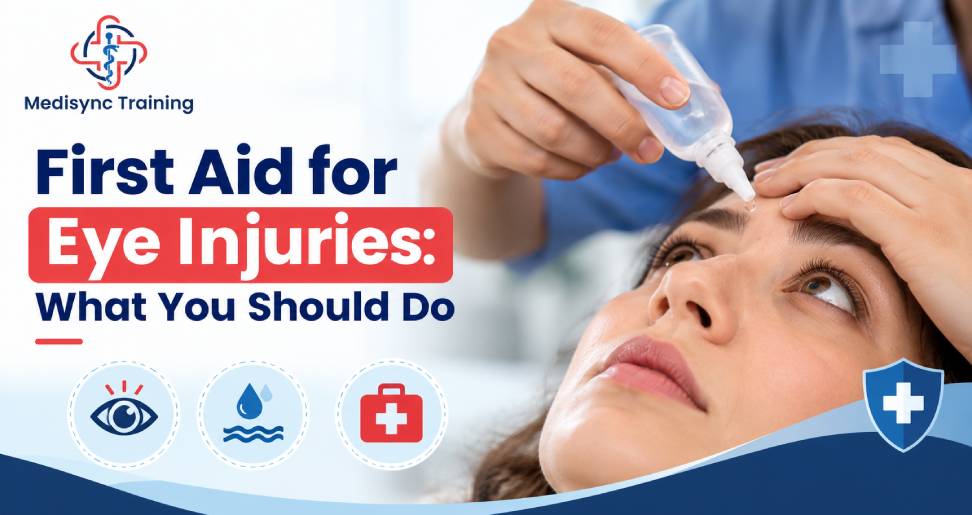
Allow tears to wash the particle away naturally. The eye can also be gently rinsed with clean, lukewarm water or an appropriate sterile eyewash. Encourage the person to blink normally rather than repeatedly touching the eye.
If the sensation continues, vision becomes affected, or the object does not come out with gentle rinsing, medical attention should be sought.
What to Do After a Chemical Splash
Chemical exposure to the eye should be treated as an emergency because some chemicals can cause serious damage very quickly.
Immediately begin flushing the affected eye with clean, running water. Keep the eyelids open as much as possible so water can reach the entire surface of the eye. Continue flushing while arranging urgent medical assessment.
If the person wears contact lenses, flushing should begin immediately rather than delaying irrigation to remove them. If the lenses come out during irrigation, continue rinsing.
Do not attempt to neutralize the chemical with another substance, and do not apply eye drops unless advised by a healthcare professional. If possible, take the chemical container or its safety information with you when seeking medical care.
Dealing With an Object That Has Entered the Eye
A sharp object or foreign body that appears embedded in the eye requires urgent professional attention.
Do not try to pull it out. Avoid pressing on the eye or rubbing it. If possible, keep the person still and prevent unnecessary movement of the affected eye.
A loose protective covering can be placed over the area without applying pressure. Both eyes naturally move together, so reducing eye movement can help minimize additional injury while waiting for medical assistance.
Seek emergency medical care as quickly as possible.
First Aid for a Blow to the Eye
A ball, tool, fall, or another object can cause blunt trauma to the eye. Even when there is no visible wound, an impact can sometimes cause internal damage.
A cold compress may help reduce swelling around the eye. Wrap the cold pack in a clean cloth rather than applying ice directly to the skin.
Do not press firmly on the injured eye. If there is significant pain, vision changes, bleeding, severe swelling, double vision, or other concerning symptoms, obtain urgent medical assessment.
What You Should Never Do
Some common reactions can make an eye injury worse. Avoid:
- Rubbing or pressing the injured eye
- Attempting to remove an embedded object
- Using unprescribed medication or eye drops
- Applying pressure to a suspected penetrating injury
- Delaying treatment after a chemical exposure
- Trying to remove particles with sharp or contaminated objects
The safest response is to protect the eye, avoid further injury, and obtain appropriate professional help when needed.
When Should You Seek Medical Attention?
Not every minor eye irritation requires emergency treatment, but certain signs indicate that prompt medical assessment is important.
Seek urgent professional care if there is:
- Sudden or persistent vision loss or blurred vision
- Severe or increasing eye pain
- A penetrating or embedded object
- Chemical exposure
- Blood inside or around the eye
- Significant swelling
- Unequal pupils or unusual pupil appearance
- Difficulty moving the eye
- Double vision
- Severe sensitivity to light
- A significant impact to the eye
- Persistent symptoms after an attempted rinse
When in doubt, it is safer to seek professional medical advice rather than assuming the injury is minor.
Why First Aid Training Matters
Knowing basic first aid can help people respond more confidently during unexpected emergencies. Eye injuries are a good example because the wrong response—such as rubbing the eye or attempting to remove an embedded object—can potentially increase the risk of further harm.
Workplaces can also benefit from structured workplace first aid training, particularly where employees may encounter chemicals, machinery, dust, tools, or other occupational hazards. Training helps participants understand how to recognize emergencies, provide appropriate initial assistance, and know when professional medical support is required.
For organizations and individuals looking to build practical emergency-response skills, Medisync Training provides first aid training designed to support safer responses in different situations. Its training resources can help learners develop knowledge that is useful at work, at home, and in other everyday environments.
Preventing Eye Injuries
Prevention is an important part of eye safety. Many injuries can be reduced by identifying hazards before an accident occurs.
In workplaces, appropriate protective eyewear should be used where there is a risk from chemicals, flying particles, dust, or mechanical hazards. Employers should also provide suitable safety procedures and ensure workers understand how to respond to emergencies.
At home, keep chemical products safely stored and follow product instructions. Children should be supervised around sharp objects, tools, and potentially hazardous substances. During sports and recreational activities, appropriate protective equipment can also reduce injury risks.
Be Prepared Before an Emergency Happens
Eye injuries can range from minor irritation to emergencies requiring immediate medical treatment. Understanding basic first aid helps you respond calmly and avoid actions that could make an injury worse.
Remember the key principles: do not rub the eye, rinse chemical exposures immediately with clean running water, never remove an embedded object yourself, and seek professional medical care when warning signs are present.
Practical training can make emergency situations easier to manage. By developing first aid knowledge through reputable training such as Medisync Training, individuals and workplaces can become better prepared to respond appropriately when an unexpected injury occurs.
First aid is about providing safe initial assistance—not replacing professional healthcare. When an eye injury is serious or symptoms are concerning, prompt medical evaluation should always take priority.
Popular Posts
-
First Aid for Muscle Injuries: Strains, Tears and Immediate Care
October 9, 2026Muscle injuries can happen during sports, exercise, physical work, or everyday activities. A sudden movement,...
-
First Aid for Soft Tissue Injuries: Essential Steps for Safe and Effective Care
October 7, 2026Soft tissue injuries are common in workplaces, homes, sports activities, and everyday situations. A sudden...
-
First Aid for Mouth and Tongue Injuries: What You Should Do
October 5, 2026Mouth and tongue injuries can happen unexpectedly during sports, falls, accidents, biting incidents, or everyday...
-
First Aid for Ear Injuries and Foreign Objects
October 2, 2026Ear injuries can happen unexpectedly at home, at work, during sports, or while travelling. A...
-
Chemical Eye Injury: Immediate First Aid Steps
September 30, 2026A chemical splash to the eye can happen unexpectedly at home, in a workplace, laboratory,...