
Chemical Eye Injury: Immediate First Aid Steps
September 30, 2026
A chemical splash to the eye can happen unexpectedly at home, in a workplace, laboratory, school, healthcare setting, or while cleaning. Substances such as bleach, cleaning products, acids, alkalis, solvents, and other chemicals can damage the surface of the eye within a short period. Knowing the correct chemical eye injury first aid steps can help reduce the duration of chemical exposure and may limit further damage.
A chemical eye injury should be treated as an emergency. Immediate irrigation is one of the most important first aid measures, and professional medical assessment may be required, particularly when the chemical is strong, symptoms are severe, or vision is affected. The American Academy of Ophthalmology’s EyeWiki identifies irrigation as the cornerstone of initial management and stresses the importance of starting it as quickly as possible.
What Is a Chemical Eye Injury?
A chemical eye injury occurs when a chemical substance comes into contact with the eye or surrounding tissues. The severity can vary depending on the type of chemical, its concentration, the amount involved, and how long it remains in contact with the eye.
Common substances that may cause chemical eye injuries include:
- Household bleach and disinfectants
- Oven and drain cleaners
- Strong acids and alkalis
- Industrial cleaning chemicals
- Solvents
- Fertilisers and pesticides
- Laboratory chemicals
- Certain cosmetics and personal-care products
Alkaline substances can be particularly concerning because they may penetrate eye tissues. However, any chemical exposure should be taken seriously.
Recognising the Signs of a Chemical Eye Injury
Symptoms can develop immediately and may include:
- Burning or stinging
- Eye redness
- Excessive watering
- Swelling
- Blurred or reduced vision
- Sensitivity to light
- Difficulty opening the eye
- Eye or eyelid pain
- A sensation of something being stuck in the eye
Severe pain or vision changes require urgent medical attention. NHS guidance specifically recommends emergency assessment when a strong chemical such as bleach or oven cleaner enters the eye.
Chemical Eye Injury: Immediate First Aid Steps
1. Make the Area Safe
Before helping someone, consider your own safety. If the chemical is still present in the surrounding area, avoid exposing yourself to it.
If possible, identify the chemical involved without putting yourself at risk. The container, product label, or safety information can later help healthcare professionals understand what caused the injury.
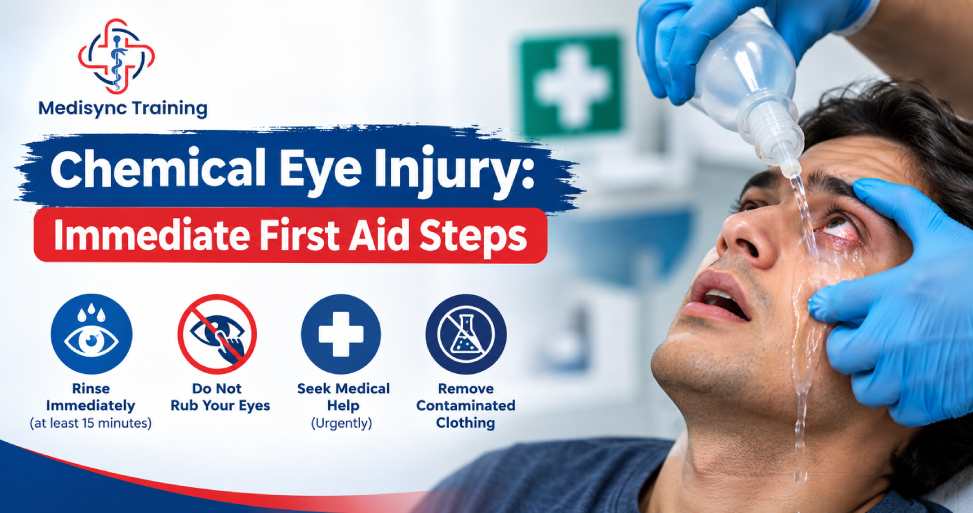
2. Start Flushing the Eye Immediately
Do not delay irrigation while trying to find a specialised eye-wash product.
Use clean, preferably cool or lukewarm water and allow it to flow gently over the affected eye. A tap, shower, or clean water source can be used when appropriate.
The NHS advises holding the eye open and flushing it with plenty of clean water for at least 20 minutes.
The key principle is simple: start rinsing as soon as possible.
3. Keep the Eyelids Open
Chemical exposure can cause intense blinking or involuntary closing of the eyelids. Gently keeping the affected eye open can help water reach the entire surface.
Do not force the eyelid open aggressively. The goal is to allow a continuous, gentle flow of water across the eye.
If only one eye is affected, position the person so that water drains away from the unaffected eye whenever possible. This helps prevent the chemical from spreading to the other eye.
4. Remove Contact Lenses if Possible
Contact lenses can potentially retain chemicals against the surface of the eye.
If the person is wearing contact lenses and they can be removed safely during irrigation, remove them and continue flushing. Do not delay irrigation simply because contact lenses are difficult to remove.
The priority is to reduce the chemical’s contact time with the eye.
5. Do Not Rub the Eye
Rubbing may increase irritation and potentially cause additional mechanical damage.
Even if the eye feels uncomfortable or something seems to be stuck in it, avoid rubbing or pressing on the affected area.
6. Do Not Try to Neutralise the Chemical
One important mistake is attempting to counteract an acid with an alkaline substance or an alkali with an acidic substance.
This can cause additional chemical reactions and potentially increase injury. EyeWiki advises against using acidic or alkaline solutions to neutralise a chemical burn. Instead, immediate irrigation with a nontoxic liquid such as water should begin.
7. Continue Irrigation While Seeking Medical Help
Flushing should not be stopped simply because the initial burning sensation improves.
For significant chemical exposures, continue irrigation while arranging urgent medical assessment. Emergency medical professionals may continue irrigation during transport and assess the eye more thoroughly after initial decontamination.
8. Take the Chemical Container or Product Information
If it can be done safely, take the chemical container, product label, or relevant safety information with the person seeking treatment.
Knowing exactly what substance caused the injury can help medical professionals determine appropriate management.
When Is Emergency Medical Attention Needed?
A chemical eye injury should receive prompt medical assessment, particularly when the exposure involves a strong chemical.
Seek emergency medical care if there is:
- Any change in vision
- Severe or persistent eye pain
- Significant redness or swelling
- Difficulty opening the eye
- Sensitivity to light
- A strong acid or alkali exposure
- Persistent symptoms after irrigation
- A chemical injury involving a child
- Any concern about serious damage
Do not drive yourself if your vision is impaired. Arrange appropriate emergency transport or assistance.
What Should You Avoid After a Chemical Eye Injury?
Several actions can make the situation worse. Avoid:
- Rubbing the affected eye
- Delaying irrigation
- Using another chemical to neutralise the substance
- Applying unprescribed eye drops
- Pressing firmly on the eye
- Ignoring blurred vision or severe pain
- Returning to work before appropriate assessment when symptoms remain
The immediate objective is to remove the chemical safely and obtain professional medical care when required.
Why First Aid Training Matters in Chemical Emergencies
Chemical eye injuries demonstrate why workplace first aid knowledge is valuable. In an emergency, people may panic or lose valuable time deciding what to do. Training can help individuals recognise emergencies, protect themselves and others, contact emergency services, and provide appropriate first aid while professional help is being arranged.
For people looking to develop broader emergency-response skills, First Aid Certificate training can provide practical knowledge for managing a range of injuries and illnesses. Medisync Training offers HLTAID011 – Provide First Aid, combining online learning with face-to-face practical training and assessment. The course covers recognising emergencies, providing immediate first aid, CPR, and other common emergency situations.
Medisync Training also provides CPR Course training and Childcare First Aid Course options for people who need skills relevant to emergency situations involving children. Its courses use a blended learning approach, combining self-paced theory with practical sessions.
For workplaces and organisations, Medisync Training provides First Aid Training through group bookings, including onsite options and flexible scheduling. This can help teams develop practical emergency-response skills relevant to their working environment.
Preventing Chemical Eye Injuries
Prevention remains an important part of workplace and household safety.
Simple precautions include:
- Wear suitable protective eyewear when handling chemicals.
- Follow product instructions and workplace safety procedures.
- Store chemicals in clearly labelled containers.
- Never mix cleaning chemicals unless specifically instructed.
- Keep chemicals away from children.
- Know where the workplace eyewash station is located.
- Ensure workers understand emergency procedures.
- Maintain accessible first aid supplies.
- Provide appropriate safety training for employees who handle hazardous substances.
Workplaces that use chemicals should also ensure that employees understand the relevant safety information and know how to respond if an exposure occurs.
Final Thoughts
A chemical eye injury requires immediate action. The most important first aid priority is to begin flushing the affected eye with plenty of clean water as soon as possible and continue irrigation while appropriate medical help is obtained. Do not rub the eye or attempt to neutralise the chemical.
Understanding these steps can make a significant difference during a stressful emergency. However, first aid information should not replace professional medical assessment after a significant chemical exposure.
For individuals and workplaces in Perth looking to strengthen their emergency-response capabilities, Medisync Training provides nationally recognised first aid and CPR training with flexible online and practical learning options. Building practical first aid knowledge before an emergency occurs can help people respond more confidently when immediate action is required.
Popular Posts
-
First Aid for Amputations: Emergency Response Guide
October 21, 2026An amputation is a serious medical emergency that occurs when a body part, such as...
-
First Aid for Neck Injuries After an Accident: What You Should Do
October 16, 2026Neck injuries can occur unexpectedly after road accidents, workplace incidents, sports injuries, or accidental falls....
-
First Aid for Back and Spinal Injuries: What You Should Do in an Emergency
October 15, 2026Back and spinal injuries can occur unexpectedly at home, in the workplace, during sports activities,...
-
First Aid for Joint Injuries: Essential Steps to Reduce Pain and Prevent Further Damage
October 14, 2026Joint injuries can happen unexpectedly during sports, exercise, workplace activities, household tasks, or everyday movement....
-
First Aid for Dislocations: What to Do and What to Avoid
October 13, 2026A dislocation occurs when a bone is forced out of its normal position within a...