
How Blended Learning Is Changing CPR Training in Perth
June 21, 2026
In today’s fast-paced world, learning methods are evolving rapidly, and emergency response education is no exception. Traditional classroom-only training is no longer the only option for individuals and businesses seeking CPR certification. The rise of blended learning has transformed the way people gain life-saving skills, making CPR education more accessible, flexible, and effective. For individuals and organisations in Perth, this modern approach is changing how people learn, practice, and become confident in emergency situations.
As workplaces, schools, childcare centres, healthcare facilities, and businesses across Australia continue to prioritise safety and compliance, blended learning is becoming a preferred training solution. It combines online learning with practical face-to-face instruction, creating a more convenient experience without compromising the quality of CPR education.
What Is Blended Learning?
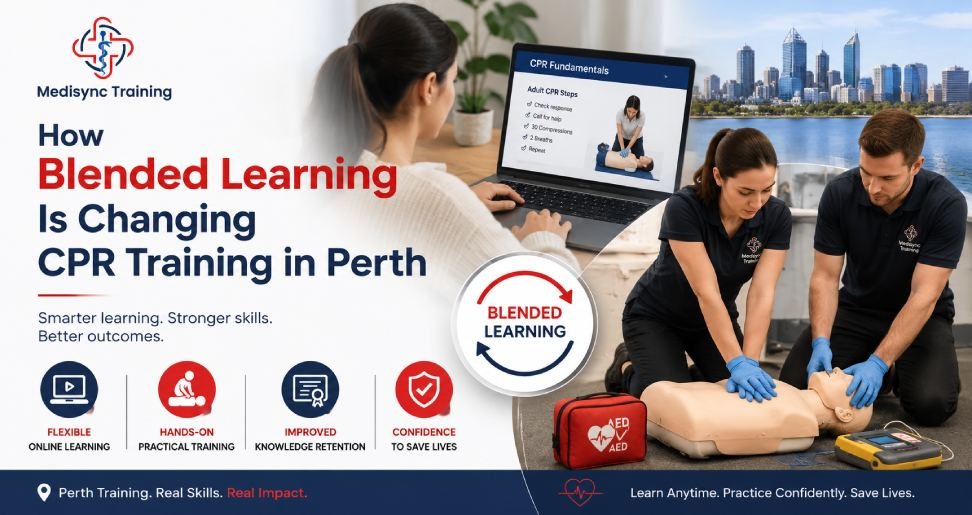
Blended learning is a training approach that combines digital education with in-person practical sessions. Instead of spending long hours in a classroom reviewing theory, learners can complete much of the knowledge-based content online at their own pace before attending practical assessments.
For CPR training in Perth, this usually includes:
- Completing CPR theory modules online
- Learning emergency response procedures digitally
- Understanding Australian CPR guidelines and protocols
- Attending practical sessions for hands-on assessment
- Demonstrating CPR techniques under trainer supervision
This learning model creates a balance between flexibility and practical skill development.
Why Traditional CPR Training Is Evolving
Traditional CPR training has served an important purpose for many years. However, modern lifestyles and workplace demands have made it increasingly difficult for people to dedicate an entire day to classroom learning.
Many Australians face challenges such as:
- Busy work schedules
- Family responsibilities
- Travel limitations
- Shift-based employment
- Time constraints
Blended learning addresses these issues by allowing participants to complete theory-based learning from home, the office, or anywhere with internet access.
This shift is particularly valuable for businesses in Perth that need multiple employees certified while reducing disruptions to daily operations.
The Growing Demand for Flexible CPR Training in Perth
Perth continues to experience growth across industries including healthcare, mining, education, childcare, hospitality, and construction. Many of these sectors require employees to maintain current CPR certifications to meet workplace safety standards.
Flexible learning options are becoming increasingly attractive because organisations want training solutions that minimise downtime while maintaining quality outcomes.
Employees can complete online learning when convenient and attend shorter practical sessions for competency assessments. This approach allows businesses to maintain productivity while ensuring staff remain compliant with safety requirements.
Benefits of Blended Learning for CPR Training
Greater Flexibility
One of the biggest advantages of blended learning is convenience. Participants can study theory sections according to their schedules instead of attending lengthy classroom sessions.
Whether someone works full-time, studies at university, or manages family commitments, learning can fit around existing responsibilities.
For many Perth residents, this flexibility removes common barriers that prevent people from obtaining or renewing CPR certification.
Better Learning Retention
People learn differently. Some absorb information by reading, while others learn better through visual demonstrations or practical activities.
Blended learning supports multiple learning styles by combining:
- Videos
- Interactive online modules
- Digital quizzes
- Real-world scenarios
- Practical demonstrations
Repeating information through different formats often improves understanding and long-term retention.
Learners arrive at practical sessions with prior knowledge, allowing instructors to focus more on building confidence and hands-on capability.
Improved Engagement
Long classroom sessions can sometimes become repetitive and difficult to follow. Online learning elements make the process more interactive.
Modern digital learning platforms may include:
- Scenario-based learning
- Interactive assessments
- Videos demonstrating CPR techniques
- Visual explanations
- Progress tracking
These features help learners stay engaged throughout the process.
Faster Certification Process
Many people require CPR certification urgently for employment purposes.
Blended learning often reduces the amount of time required in physical training sessions because theoretical learning is completed beforehand.
This creates a faster pathway to certification without sacrificing learning quality.
For job seekers in Perth, faster completion can support quicker employment opportunities across industries where CPR qualifications are mandatory.
How Blended CPR Training Supports Australian Workplace Requirements
Australian workplaces have increasing responsibilities regarding employee health and safety. Employers are expected to provide safe environments and ensure staff members are prepared to respond during emergencies.
CPR training plays an important role in:
- Workplace compliance
- Emergency preparedness
- Risk reduction
- Employee safety awareness
- Building confidence during critical situations
Blended learning allows businesses to train teams efficiently while reducing operational interruptions.
This is especially beneficial for sectors where staff availability is critical, including:
- Healthcare facilities
- Childcare centres
- Schools
- Aged care providers
- Construction companies
- Hospitality businesses
Technology Is Transforming CPR Education
Digital learning technologies continue to improve training experiences across Australia.
Modern CPR education now uses:
- Mobile-friendly learning systems
- Interactive videos
- Online assessments
- Virtual learning environments
- Automated progress tracking
These innovations create a smoother learning experience while maintaining educational standards.
Learners gain access to materials whenever needed, allowing them to review important concepts before practical assessments.
The result is greater confidence and stronger preparedness during real emergency situations.
Why Hands-On Practice Still Matters
While digital learning has transformed CPR education, practical training remains essential.
CPR is a physical skill that requires participants to demonstrate techniques correctly, including:
- Chest compression depth
- Compression timing
- Rescue breathing techniques
- Emergency response procedures
- Use of automated external defibrillators (AEDs)
Practical sessions ensure participants can apply knowledge effectively in real-world situations.
Blended learning does not replace practical experience; instead, it enhances it by allowing learners to arrive prepared and ready to focus on skill application.
Choosing the Right CPR Training Provider in Perth
Not all training providers deliver the same learning experience. When selecting a CPR course, individuals and organisations should look for providers that offer:
- Nationally recognised training
- Experienced trainers
- Flexible scheduling options
- Updated Australian guidelines
- Practical learning environments
- Convenient learning platforms
For individuals and businesses seeking modern CPR education solutions, Medisync Training provides an approach designed to support flexible learning needs while maintaining high-quality instruction standards.
With growing demand for convenient and effective CPR education across Perth, choosing a provider that understands current learning expectations can make a significant difference in training outcomes.
Final Thoughts
Blended learning is reshaping CPR training in Perth by making life-saving education more convenient, engaging, and efficient. As technology continues to evolve and workplace demands increase, flexible learning models are becoming the preferred option for many Australians.
The combination of online learning and practical instruction creates an effective balance between convenience and hands-on skill development. It allows learners to gain essential knowledge at their own pace while ensuring they can confidently apply those skills during emergencies.
For businesses, professionals, students, and individuals seeking CPR certification, blended learning offers a practical pathway toward becoming better prepared for situations where every second matters.
As demand for smarter and more accessible training solutions continues to grow, providers such as Medisync Training are helping shape the future of CPR education for Perth communities and workplaces.
Popular Posts
-
Paediatric Resuscitation Guidelines for Healthcare Workers: An Essential Guide for Australian Clinical Practice
July 8, 2026Paediatric emergencies are among the most challenging situations healthcare workers encounter. Unlike adult patients, infants...
-
Traumatic Cardiac Arrest Management: A Practical Guide for Faster Emergency Response in Australia
July 6, 2026Traumatic cardiac arrest (TCA) is one of the most critical medical emergencies a person can...
-
How to Use an AED in an Emergency: A Step-by-Step Guide for Australians
July 1, 2026Every minute counts during a cardiac emergency. When someone suffers a sudden cardiac arrest (SCA),...
-
First Aid and CPR Training Classes: A Lifesaving Skill Every Australian Should Learn
June 26, 2026Emergencies can happen anywhere—at home, in the workplace, on the road, or during a weekend...
-
How Blended Learning Is Changing CPR Training in Perth
June 21, 2026In today's fast-paced world, learning methods are evolving rapidly, and emergency response education is no...