
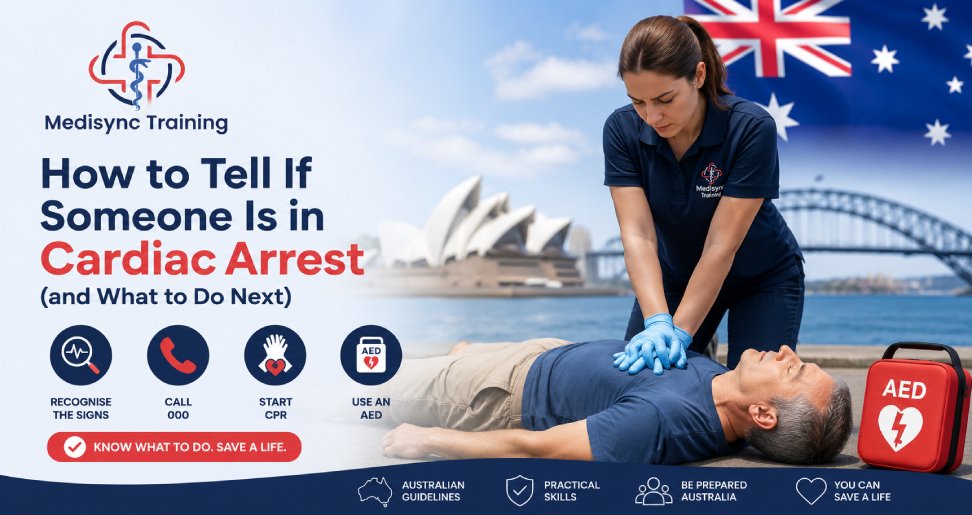
How to Tell If Someone Is in Cardiac Arrest (and What to Do Next)
May 28, 2026
Cardiac arrest is one of the most serious medical emergencies in Australia. It can happen without warning, at home, at work, at the gym, or even during community sporting events. Knowing how to recognise cardiac arrest and act quickly could save someone’s life before paramedics arrive.
Many Australians confuse cardiac arrest with a heart attack, but they are not the same thing. A heart attack occurs when blood flow to the heart is blocked, while cardiac arrest happens when the heart suddenly stops beating effectively. Without immediate action, survival chances drop every minute.
Understanding the warning signs and learning CPR can make all the difference.
What Is Cardiac Arrest?
Cardiac arrest occurs when the heart suddenly stops pumping blood around the body. When this happens, oxygen can no longer reach the brain and vital organs. A person can lose consciousness within seconds.
In Australia, emergency responders encourage people to remember the DRSABCD action plan used in CPR and first aid training. Quick recognition and immediate CPR are critical in improving survival outcomes.
How to Tell If Someone Is in Cardiac Arrest
Recognising cardiac arrest early is essential. The signs are often sudden and severe.
1. The Person Collapses Suddenly
One of the most obvious signs is sudden collapse. The person may drop to the ground without warning and appear unresponsive.
2. They Are Not Breathing Normally
A person in cardiac arrest may stop breathing completely or only gasp occasionally. These gasping sounds, known as agonal breathing, are not normal breathing and should always be treated as an emergency.
3. They Do Not Respond
Try speaking loudly or gently tapping their shoulders. If they do not respond, it is a major warning sign.
4. No Signs of Movement
The person may appear lifeless, pale, or still. Unlike someone who has fainted, they typically will not regain consciousness on their own.
5. Skin May Look Blue or Grey
A lack of oxygen can cause lips, fingertips, or skin tone to appear bluish or grey.
6. Seizure-Like Movements
In some cases, cardiac arrest may initially look like a seizure because the brain is suddenly deprived of oxygen.
Heart Attack vs Cardiac Arrest
Many Australians search online for symptoms of heart attack which side because chest pain is commonly associated with heart problems. Heart attack pain often occurs on the left side of the chest, but symptoms can also spread to the jaw, neck, shoulder, back, or arms.
A heart attack can sometimes lead to cardiac arrest if the heart becomes severely damaged. Warning signs before a heart attack may include:
- Chest tightness or pressure
- Shortness of breath
- Nausea
- Fatigue
- Dizziness
- Pain in the upper body
Some people also look for information about the 6 signs of heart attack a month before male because men can experience subtle early symptoms before a major cardiac event. These warning signs may include unusual tiredness, chest discomfort, poor sleep, shortness of breath, anxiety, and indigestion-like pain. Recognising these symptoms early and seeking medical advice is extremely important.
What to Do Next if Someone Is in Cardiac Arrest
If you suspect cardiac arrest, acting immediately can save a life.
Step 1: Call Triple Zero (000)
Call emergency services immediately or ask someone nearby to do it. Put your phone on speaker mode if possible so you can begin CPR while talking with the operator.
Step 2: Start CPR Immediately
CPR helps keep blood flowing to the brain and organs until professional help arrives.
In Australia, CPR generally involves:
- 30 chest compressions
- 2 rescue breaths
- Continue the cycle until help arrives
Push hard and fast in the centre of the chest. If you are not confident giving rescue breaths, hands-only CPR is still far better than doing nothing.
Current Australian CPR training focuses on starting compressions quickly rather than wasting time checking for a pulse.
Use an AED if Available
An Automated External Defibrillator (AED) can restart the heart by delivering an electrical shock.
AEDs are becoming increasingly common across Australia and are often found in:
- Shopping centres
- Airports
- Sporting clubs
- Schools
- Gyms
- Community centres
Modern AEDs provide spoken instructions, making them simple for everyday Australians to use during emergencies.
According to Australian CPR training providers, early defibrillation dramatically improves survival chances.
Why CPR Training Matters
Many people panic during emergencies because they have never been trained in CPR. That hesitation can cost valuable time.
Completing a nationally recognised CPR course helps Australians build the confidence to act quickly in real-life situations. Training includes:
- Recognising cardiac arrest
- Performing CPR correctly
- Using an AED safely
- Responding under pressure
- Following Australian Resuscitation Council guidelines
For Australians wanting practical, hands-on emergency response training, Medisync Training offers nationally recognised CPR and first aid courses designed for workplaces, carers, educators, healthcare workers, and community members. Their scenario-based learning helps participants gain real confidence in emergency situations.
Can Young and Healthy People Experience Cardiac Arrest?
Yes. While cardiac arrest is more common in older adults or those with heart disease, it can also affect younger and seemingly healthy individuals.
Risk factors may include:
- Undiagnosed heart conditions
- High blood pressure
- Smoking
- Diabetes
- Obesity
- Drug use
- Family history of heart disease
Athletes can also experience sudden cardiac arrest due to underlying heart abnormalities.
Common Myths About Cardiac Arrest
“Only older people are at risk.”
False. Cardiac arrest can happen at any age.
“I might hurt someone by doing CPR.”
Doing something is usually far better than doing nothing. CPR significantly increases survival chances.
“AEDs are dangerous.”
AEDs are designed for public use and will only deliver a shock if needed.
Final Thoughts
Knowing how to tell if someone is in cardiac arrest could help you save a life. The key signs include sudden collapse, unresponsiveness, and abnormal breathing. Immediate action — calling 000, starting CPR, and using an AED — can dramatically improve survival chances.
Australians are encouraged to refresh their CPR knowledge regularly because guidelines and best practices continue to evolve. Whether for your workplace, family, or community, CPR training is one of the most valuable life skills you can learn.
Organisations such as Medisync Training help everyday Australians gain the confidence and practical skills needed to respond effectively during cardiac emergencies.
Popular Posts
-
Warning Signs of Heart Attack: An Essential Action Plan
September 7, 2026A heart attack can happen suddenly, and recognising the warning signs early can make a...
-
How Proper Medication Training Reduces Risks for Vulnerable Adults
September 2, 2026Vulnerable adults may rely on careers and support workers to help them manage their medicines...
-
Burns First Aid Treatment Steps Australia: What to Do When a Burn Happens
August 12, 2026Burn injuries can happen unexpectedly at home, at work, in childcare settings, or while cooking....
-
Common CPR Mistakes That Reduce Survival Rates
July 3, 2026When someone suffers a sudden cardiac arrest, every second counts. Immediate, high-quality CPR can significantly...
-
How to Calm Someone Having a Panic Attack: A Practical Guide for Australians
June 5, 2026Panic attacks can happen unexpectedly and often leave both the person experiencing them and those...