When and How to Use an AED During Cardiac Emergencies
April 17, 2026
Sudden cardiac arrest can happen to anyone, anywhere, and at any time. It often occurs without warning and requires immediate action. In such situations, an Automated External Defibrillator (AED) can be the difference between life and death. Knowing when and how to use an AED is an important life-saving skill that everyone should learn.
What Is an AED?
An Automated External Defibrillator (AED) is a portable medical device designed to help people experiencing sudden cardiac arrest. It works by analyzing the heart’s rhythm and, if necessary, delivering an electric shock to restore a normal heartbeat. AEDs are commonly found in public places such as airports, shopping malls, schools, offices, gyms, and hospitals.
The good news is that AEDs are designed for use by the general public. You do not need to be a medical professional to use one. The device provides clear voice instructions to guide you step-by-step.
When Should You Use an AED?
You should use an AED when a person shows signs of sudden cardiac arrest. These signs include:
- The person suddenly collapses
- They are unresponsive (not waking up)
- They are not breathing or are only gasping
- They have no pulse
If you notice these symptoms, act immediately. Time is critical during cardiac arrest. For every minute without CPR and defibrillation, the chances of survival decrease significantly.
What to Do First in a Cardiac Emergency
Before using an AED, follow these steps:
- Check responsiveness – Tap the person and shout to see if they respond.
- Call emergency services – Ask someone to call emergency medical services immediately.
- Start CPR – Begin chest compressions if the person is not breathing.
- Ask someone to bring an AED – If available nearby, get it as quickly as possible.
CPR should be continued until the AED is ready to use.
How to Use an AED – Step by Step
Using an AED is easier than most people think. Just follow these steps:
Step 1: Turn on the AED
Open the AED and press the power button. The device will start giving voice instructions.
Step 2: Attach the electrode pads
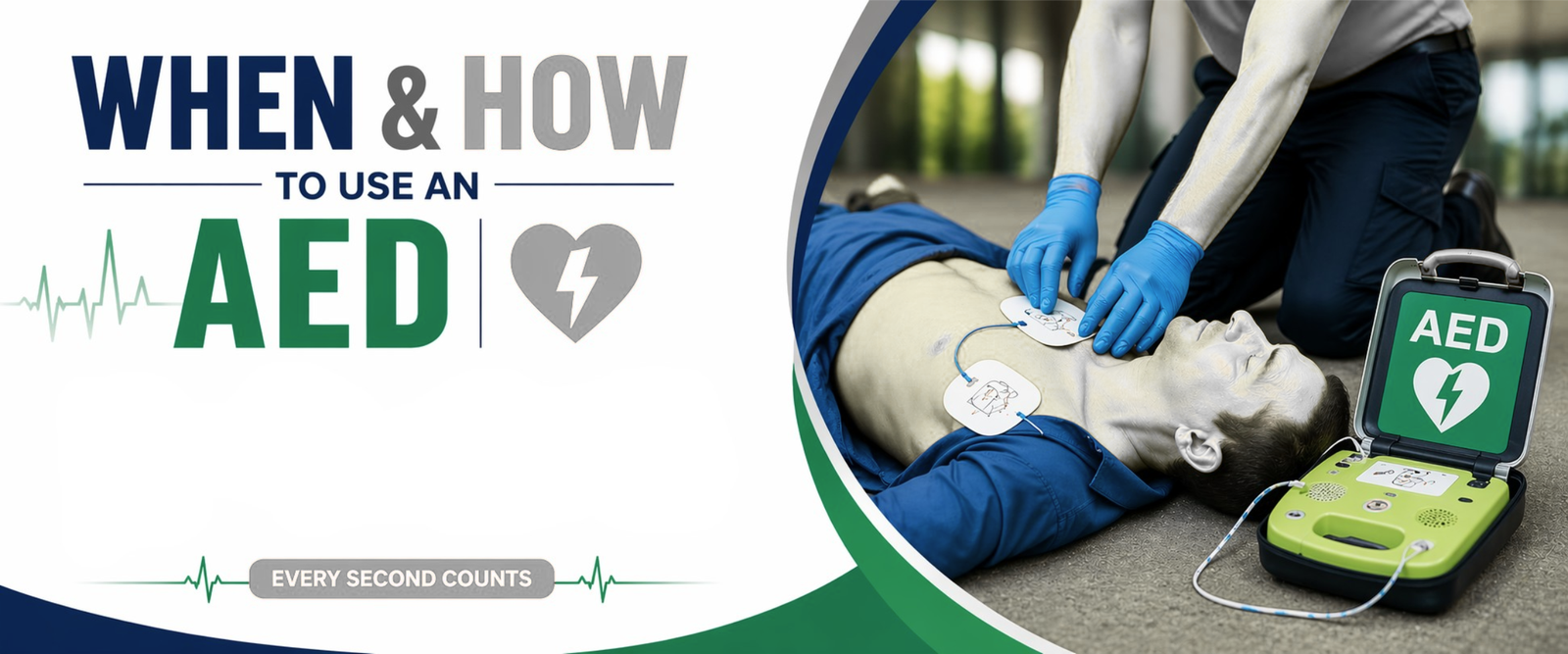
Expose the person’s chest and attach the pads as shown in the diagram on the pads:
- One pad on the upper right chest
- One pad on the lower left side of the chest
Make sure the chest is dry before placing the pads.
Step 3: Let the AED analyze the heart rhythm
The AED will analyze the heart rhythm automatically. Make sure no one is touching the person during this time.
Step 4: Deliver the shock if advised
If the AED says “Shock advised,” make sure everyone is clear and press the shock button. The device will deliver an electric shock.
Step 5: Continue CPR
After the shock, continue CPR for about two minutes until the AED analyzes again or emergency services arrive.
The AED will guide you through the entire process, so stay calm and follow the instructions.
Important Safety Tips
- Do not touch the person while the AED is analyzing or delivering a shock.
- Remove any metal objects or jewelry from the chest area if possible.
- If the person is wet, dry the chest before attaching pads.
- If the person has a pacemaker, place the pad slightly away from the device.
- AEDs can be used on adults and children (use pediatric pads if available).
Why AED Training Is Important
Learning how to use an AED and perform CPR can help you save a life. Many workplaces, schools, and community centers offer basic life support and first aid training. Even basic knowledge can make a huge difference in an emergency.
Remember, doing something is always better than doing nothing. You cannot make the situation worse by trying to help, but you can save a life by acting quickly.
Sudden cardiac arrest is a serious emergency that requires immediate action. An AED is a simple, safe, and effective device that can restore a normal heart rhythm and improve survival chances. Knowing when and how to use an AED, along with CPR, can help you respond confidently during a cardiac emergency.
You don’t need to be a doctor to save a life. With quick thinking, CPR, and an AED, anyone can become a lifesaver.
Popular Posts
-
Childcare First Aid Course Requirements in Australia: Everything You Need to Know
July 22, 2026Working in the childcare and early education sector comes with significant responsibilities. Whether you are...
-
First Aid Certificate Course Midland WA: Everything You Need to Know Before You Enrol
July 17, 2026Accidents and medical emergencies can happen anywhere—at home, in the workplace, at school, or even...
-
Paediatric Resuscitation Guidelines for Healthcare Workers: An Essential Guide for Australian Clinical Practice
July 8, 2026Paediatric emergencies are among the most challenging situations healthcare workers encounter. Unlike adult patients, infants...
-
Traumatic Cardiac Arrest Management: A Practical Guide for Faster Emergency Response in Australia
July 6, 2026Traumatic cardiac arrest (TCA) is one of the most critical medical emergencies a person can...
-
How to Use an AED in an Emergency: A Step-by-Step Guide for Australians
July 1, 2026Every minute counts during a cardiac emergency. When someone suffers a sudden cardiac arrest (SCA),...