How to Use an AED in an Emergency: A Step-by-Step Guide for Australians
July 1, 2026
Every minute counts during a cardiac emergency. When someone suffers a sudden cardiac arrest (SCA), immediate action can mean the difference between life and death. According to Australian health authorities, using an Automated External Defibrillator (AED) alongside cardiopulmonary resuscitation (CPR) significantly increases the chances of survival before emergency medical services arrive.
The good news is that AEDs are designed to be used by anyone—not just healthcare professionals. They provide clear voice prompts that guide you through each step, making them easy to operate even if you’ve never used one before.
This guide explains what an AED is, when to use it, and the correct steps to follow during an emergency.
What Is an AED?
An Automated External Defibrillator (AED) is a portable medical device that analyses a person’s heart rhythm and, if necessary, delivers an electric shock to restore a normal heartbeat.
AEDs are commonly found in:
- Shopping centres
- Schools and universities
- Airports
- Gyms and sports clubs
- Community centres
- Office buildings
- Train stations
- Public venues
These devices are specifically designed for use by members of the public. They provide spoken instructions, visual prompts, and built-in safety checks to help users respond confidently during an emergency.
What Is Sudden Cardiac Arrest?
Sudden cardiac arrest occurs when the heart unexpectedly stops beating effectively due to an electrical malfunction. Without immediate treatment, the brain and vital organs are deprived of oxygen-rich blood, leading to death within minutes.
Common signs of sudden cardiac arrest include:
- The person suddenly collapses.
- They are unconscious.
- They are not breathing normally or are only gasping.
- They have no signs of circulation or responsiveness.
It’s important not to confuse sudden cardiac arrest with a heart attack. A heart attack is caused by blocked blood flow to the heart, while sudden cardiac arrest is an electrical problem that causes the heart to stop pumping blood.
Why Early Defibrillation Matters
Survival rates decrease by approximately 7–10% for every minute defibrillation is delayed. Performing CPR helps circulate oxygenated blood, but only an AED can restore a shockable heart rhythm when required.
Early CPR combined with rapid defibrillation gives the best chance of survival and improves recovery outcomes.
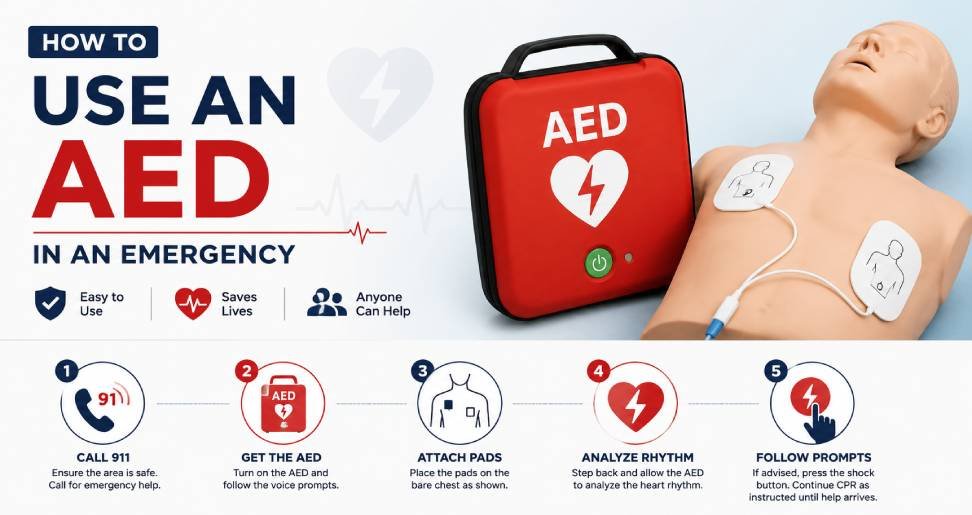
Step-by-Step Guide to Using an AED
Step 1: Ensure the Scene Is Safe
Before assisting the casualty, make sure the surrounding area is safe for both you and the person.
Look out for hazards such as:
- Traffic
- Fire
- Electrical dangers
- Water
- Chemical spills
Never place yourself at risk while providing first aid.
Step 2: Check for Responsiveness
Approach the person and gently tap their shoulders while asking loudly:
“Are you okay?”
If there is no response, check whether they are breathing normally.
If they are unconscious and not breathing or only gasping, begin emergency treatment immediately.
Step 3: Call Triple Zero (000)
Call 000 immediately or ask someone nearby to do so.
If other people are present:
- Ask one person to call an ambulance.
- Ask another person to locate the nearest AED.
Many public buildings in Australia now have AEDs available for emergencies.
Step 4: Start CPR
Begin chest compressions immediately.
For adults:
- Place your hands in the centre of the chest.
- Compress approximately one-third of the chest depth.
- Perform compressions at a rate of 100–120 per minute.
- Continue CPR until the AED is ready.
If you are trained, combine 30 chest compressions with 2 rescue breaths. If not, hands-only CPR is still highly effective.
Step 5: Turn On the AED
As soon as the AED arrives:
- Open the case.
- Press the power button if required.
- Follow the voice instructions carefully.
The AED will guide you through every step.
Step 6: Expose the Chest
Remove clothing covering the person’s chest.
If necessary:
- Dry a wet chest.
- Remove medication patches.
- Quickly shave excessive chest hair only if it prevents the pads from sticking properly.
Good pad contact is essential for accurate heart rhythm analysis.
Step 7: Attach the AED Pads
Place the adhesive pads exactly as shown in the diagrams.
Typically:
- One pad goes on the upper right side of the chest.
- The other goes on the lower left side below the armpit.
For children, use paediatric pads if available and follow the instructions provided with the AED.
Step 8: Allow the AED to Analyse
Once the pads are attached:
- Stop CPR.
- Ensure nobody is touching the casualty.
The AED will analyse the heart rhythm automatically.
Step 9: Deliver the Shock If Advised
If the AED advises a shock:
- Make sure everyone stands clear.
- Loudly announce, “Clear!”
- Press the shock button if instructed.
Some AEDs deliver the shock automatically without requiring you to press a button.
Never touch the casualty during shock delivery.
Step 10: Resume CPR Immediately
After the shock—or if no shock is advised—resume CPR immediately.
Continue following the AED prompts until:
- Emergency services arrive.
- The person begins breathing normally.
- Another trained responder takes over.
- You become physically unable to continue.
AED Safety Tips
AEDs are extremely safe when used correctly.
Remember these important precautions:
- Never touch the casualty while the AED is analysing.
- Keep everyone clear during shock delivery.
- Remove the casualty from standing water before use.
- Ensure oxygen sources are moved away from the chest if possible.
- Follow every voice prompt from the AED.
The device will only recommend a shock if one is medically appropriate.
Can Anyone Use an AED?
Yes.
In Australia, anyone can legally use an AED during an emergency. You do not need medical qualifications or previous experience.
AEDs are designed for public use and provide clear, step-by-step guidance throughout the process.
Even if you’re unsure, it’s better to act quickly than wait for emergency services to arrive.
Where Can You Find AEDs?
AEDs are becoming increasingly available across Australia.
You may find them in:
- Sporting facilities
- Shopping centres
- Airports
- Schools
- Workplaces
- Hotels
- Community halls
- Libraries
- Local council buildings
Many businesses now install AEDs as part of their workplace health and safety programs.
Why CPR Training Is Still Essential
Although AEDs are easy to use, formal CPR and first aid training gives you the confidence to respond effectively under pressure.
Training helps you:
- Recognise cardiac arrest quickly.
- Perform high-quality CPR.
- Operate an AED correctly.
- Manage emergencies until paramedics arrive.
- Protect family members, colleagues, and your community.
These practical skills could one day help save someone’s life.
Final Thoughts
Knowing how to use an AED is a life-saving skill that everyone should understand. Sudden cardiac arrest can happen without warning, and immediate action significantly improves a person’s chance of survival.
Remember the key steps:
- Ensure the area is safe.
- Call Triple Zero (000).
- Begin CPR immediately.
- Use an AED as soon as it becomes available.
- Follow the voice prompts and continue CPR until professional help arrives.
Being prepared today could help save a life tomorrow. Learning CPR and AED use through accredited first aid training equips you with the confidence and practical skills needed to respond quickly and effectively during a cardiac emergency.
Frequently Asked Questions
1. Can an AED be used on someone with a pacemaker?
Yes. Place the AED pad at least a few centimetres away from the visible pacemaker or implanted device.
2. Can I use an AED on a pregnant woman?
Yes. The priority is saving the mother’s life. Use the AED as instructed.
3. What if the person has a wet chest?
Dry the chest before attaching the AED pads to ensure they adhere properly.
4. Can an AED shock someone who doesn’t need it?
No. AEDs analyse the heart rhythm and will only advise a shock if it is medically appropriate.
5. Do I need training before using an AED?
No. Anyone can use an AED, but completing CPR and first aid training provides greater confidence and improves your emergency response skills.
Popular Posts
-
First Aid for Severe Hand Injuries: Essential Steps to Prevent Further Damage
October 26, 2026Hand injuries can happen at home, in the workplace, during sports, or while using tools...
-
First Aid for Amputations: Emergency Response Guide
October 21, 2026An amputation is a serious medical emergency that occurs when a body part, such as...
-
First Aid for Neck Injuries After an Accident: What You Should Do
October 16, 2026Neck injuries can occur unexpectedly after road accidents, workplace incidents, sports injuries, or accidental falls....
-
First Aid for Back and Spinal Injuries: What You Should Do in an Emergency
October 15, 2026Back and spinal injuries can occur unexpectedly at home, in the workplace, during sports activities,...
-
First Aid for Joint Injuries: Essential Steps to Reduce Pain and Prevent Further Damage
October 14, 2026Joint injuries can happen unexpectedly during sports, exercise, workplace activities, household tasks, or everyday movement....