
How to Manage a Seizure at Work: A Complete First Aid Guide
August 14, 2026
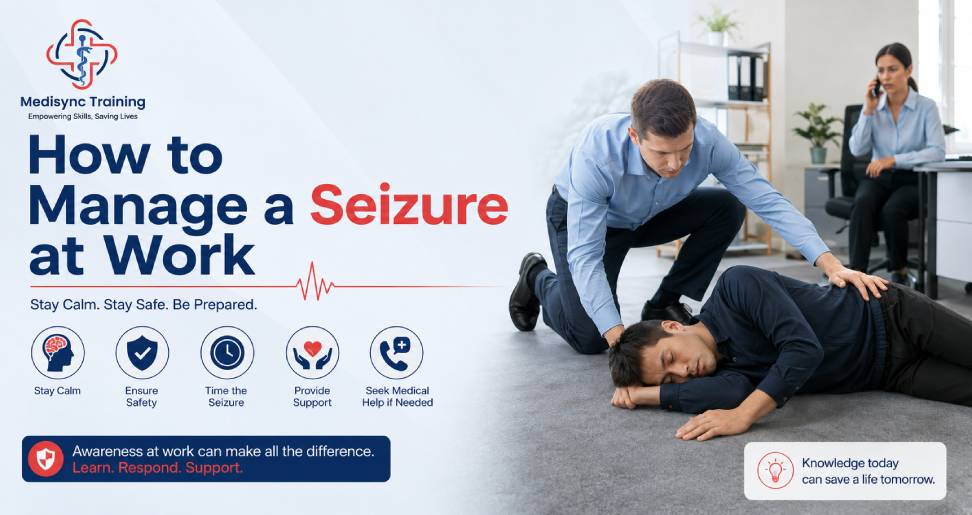
A seizure can happen unexpectedly in any workplace, whether in an office, warehouse, school, construction site, retail environment, or healthcare setting. Seeing someone suddenly fall, become unresponsive, or experience uncontrolled movements can be frightening. However, knowing how to respond calmly and correctly can help prevent injuries and provide essential support until the person recovers or emergency services arrive.
This guide explains how to manage a seizure at work, including what to do during and after a seizure, when to call emergency services, and how workplace first aid training can improve emergency preparedness.
Important: This article provides general first-aid information and does not replace formal training or individual medical advice. In Australia, call Triple Zero (000) when emergency assistance is required.
What Is a Seizure?
A seizure occurs when there is abnormal electrical activity in the brain. Seizures can look different from person to person. Some involve unconsciousness, stiffening and rhythmic jerking, while others may involve staring, confusion, unusual movements or temporary loss of awareness.
A person experiencing a seizure may fall suddenly, become rigid, jerk repeatedly, appear confused, or be unable to respond normally. They may also feel tired, confused or agitated after the seizure.
Because not every seizure looks the same, workplace employees should focus on keeping the person safe rather than trying to diagnose the type of seizure.
What to Do When Someone Has a Seizure at Work
1. Stay Calm and Check for Danger
Your first priority is safety. Quickly look around the area and identify hazards such as machinery, sharp objects, electrical equipment, hot surfaces, glass or traffic.
If possible, remove nearby objects that could cause injury. Do not place yourself in danger while attempting to help.
If the seizure occurs near operating machinery or another serious hazard, follow the workplace emergency procedure and move the person only when necessary to protect them from immediate danger.
2. Protect Their Head
If the person has fallen to the floor, place something soft underneath their head, such as a folded jacket or suitable soft material.
This can help reduce the risk of head injury while the seizure is occurring. Avoid surrounding the person with unnecessary objects or attempting to hold their body down.
3. Time the Seizure
One of the most important things a workplace responder can do is record when the seizure begins.
Use a watch, phone or workplace clock to monitor the duration. It can be difficult to estimate how long a seizure has lasted when you are under pressure.
The duration is particularly important because a seizure lasting five minutes or more can require emergency medical attention.
4. Do Not Restrain the Person
Never attempt to hold the person’s arms or legs down or stop their movements.
Trying to restrain someone during a seizure can cause additional injuries to both the person experiencing the seizure and the person trying to help.
Instead, clear the surrounding area and allow the seizure to run its course while protecting the person from preventable injury.
5. Never Put Anything in Their Mouth
A common misconception is that something should be placed between a person’s teeth during a seizure. Do not do this.
Do not place food, water, fingers, medication or other objects in the person’s mouth while they are having a seizure.
The person may not be able to swallow safely, and attempting to put something in their mouth can cause injury.
What to Do After the Seizure
When the jerking or seizure activity stops, continue supporting the person.
Place Them in the Recovery Position
If the person is unconscious but breathing normally, place them in the recovery position when appropriate. This helps keep the airway clear and can reduce the risk associated with vomiting or fluids entering the airway.
Continue monitoring their breathing and responsiveness.
Reassure Them
A person may be confused, tired, frightened or embarrassed after a seizure. Speak calmly and reassure them.
You could say:
“You are safe. You had a seizure, and we are here with you.”
Avoid overwhelming them with questions immediately. Give them time to regain awareness and recover.
Check for Injuries
Look for obvious injuries caused by the fall or seizure. If they have suffered a significant injury, seek medical assistance.
Do not leave the person alone while they are recovering. Continue monitoring them until they are sufficiently recovered or professional medical help takes over.
When Should You Call 000?
Not every seizure necessarily requires an ambulance, particularly when a person has a known seizure condition and an established management plan. However, emergency medical assistance should be sought in circumstances such as:
- The seizure lasts five minutes or longer.
- Another seizure starts soon after the first one.
- The person does not regain consciousness within the expected recovery period.
- The person has suffered a serious injury.
- It is believed to be their first seizure.
- The seizure happens in water.
- The person is pregnant.
- There is no known seizure management plan and you are unsure what to do.
- The person’s breathing is abnormal or they otherwise appear seriously unwell.
Australian first-aid guidance recommends calling Triple Zero (000) for several of these circumstances.
What If the Person Has a Seizure Management Plan?
Some employees may have an individual Epilepsy Management Plan or another seizure management plan.
If such a plan is available and the person has previously shared it with the workplace, employees should follow its instructions. A management plan can describe the person’s seizure types, expected recovery, specific first-aid procedures and circumstances in which an ambulance should be called.
Workplaces should ensure that relevant staff know where an agreed plan is stored and understand their responsibilities.
If emergency medication is prescribed, only people who have received appropriate person-specific training should administer it.
Creating a Seizure-Ready Workplace
Workplace preparedness is about more than keeping a first aid kit available. Employees should know how to recognise emergencies, contact emergency services and provide appropriate first aid.
Businesses can improve preparedness by:
- Maintaining an accessible first aid kit.
- Ensuring employees know workplace emergency procedures.
- Identifying trained first aiders.
- Keeping emergency contact procedures clear.
- Providing appropriate first aid training.
- Respecting employee privacy and individual medical plans.
- Conducting emergency drills where appropriate.
- Ensuring first aid responsibilities are clearly allocated.
The Epilepsy Foundation also highlights the importance of fair treatment and appropriate workplace support for employees living with epilepsy.
Why First Aid Training Matters
Reading about seizure first aid is useful, but an emergency can feel very different when it happens in front of you. Practical training can help employees develop the confidence to assess a situation, protect an injured person and respond appropriately.
Medisync Training provides first aid and CPR training designed to help individuals and workplace teams build practical emergency-response skills. Its courses include CPR, First Aid and other nationally recognised training options, with flexible online learning combined with practical sessions. Medisync Training also offers workplace group bookings and can provide training at workplace locations in Perth.
For businesses that want employees to be better prepared for medical emergencies, investing in appropriate workplace first aid training can be a valuable part of an overall safety strategy.
Final Thoughts
Knowing how to manage a seizure at work can make a significant difference during an unexpected emergency. The key principles are simple: stay calm, protect the person from injury, protect their head, time the seizure, never restrain them, never put anything in their mouth, and stay with them during recovery.
If the seizure lasts five minutes or longer, another seizure follows, a serious injury occurs, or other emergency criteria apply, call Triple Zero (000).
Most importantly, workplaces should not rely solely on written instructions. Regular first aid education and practical training can help employees respond with greater confidence when an emergency occurs. Training providers such as Medisync Training can help workplaces develop the practical first aid skills needed to respond safely and effectively.
Popular Posts
-
Choking First Aid Steps for Adults: A Complete Guide to Responding Quickly
August 24, 2026Choking can happen suddenly while eating, drinking, or even when a small object enters the...
-
Workplace First Aid Training Group Bookings Perth: A Practical Guide for Businesses
August 20, 2026Workplace emergencies can happen without warning. From cuts and burns to falls, allergic reactions, heat-related...
-
Anaphylaxis Action Plan Australia Template: A Practical Guide for Individuals, Schools and Workplaces
August 17, 2026Anaphylaxis is a severe and potentially life-threatening allergic reaction that requires immediate action. In Australia,...
-
How to Manage a Seizure at Work: A Complete First Aid Guide
August 14, 2026A seizure can happen unexpectedly in any workplace, whether in an office, warehouse, school, construction...
-
Burns First Aid Treatment Steps Australia: What to Do When a Burn Happens
August 12, 2026Burn injuries can happen unexpectedly at home, at work, in childcare settings, or while cooking....