
Burns First Aid Treatment Steps Australia: What to Do When a Burn Happens
August 12, 2026
Burn injuries can happen unexpectedly at home, at work, in childcare settings, or while cooking. A hot drink, boiling water, open flame, electrical equipment, chemicals, or even prolonged exposure to the sun can cause a burn. Knowing the correct burns first aid treatment steps in Australia can make an important difference while waiting for professional medical care.
The first few minutes after a burn are particularly important. Australian first aid guidance recommends stopping the burning process, cooling the affected area with cool running water, covering the injury appropriately, and seeking medical assistance when required.
This guide explains what to do, what not to do, and when a burn requires urgent medical attention.
What Causes Burns?
A burn is an injury to the skin or underlying tissue caused by heat or another damaging source. Common causes include:
- Hot water, tea, coffee, or other liquids
- Steam
- Open flames
- Hot cooking surfaces
- Chemicals
- Electricity
- Friction
- Radiation, including sunlight
Scalds caused by hot liquids are particularly common in everyday environments. Burns can range from minor redness and pain to serious injuries involving deeper layers of tissue.
Understanding the different causes is useful because some burns, particularly chemical and electrical burns, may require additional precautions and medical assessment.
Burns First Aid Treatment Steps Australia
If someone suffers a burn, stay calm and act quickly. The following steps provide a practical approach to initial first aid.
1. Make Sure the Area Is Safe
Before helping the injured person, check for danger. You should not put yourself at risk while trying to provide first aid.
Move the person away from the source of the burn if it is safe to do so. For example, remove them from an area containing flames, hot liquids, or electrical hazards.
For serious emergencies, Australian first aid practice follows the DRSABCD action plan: Danger, Response, Send for help, Airway, Breathing, CPR and Defibrillation.
2. Stop the Burning Process
The source of the injury needs to be stopped as quickly as possible.
If clothing catches fire, the person should stop moving, drop to the ground, and roll until the flames are extinguished. Once the immediate danger has been controlled, attention can be given to the burn.
Do not attempt to remove clothing that has become stuck to the skin.
3. Cool the Burn Under Running Water
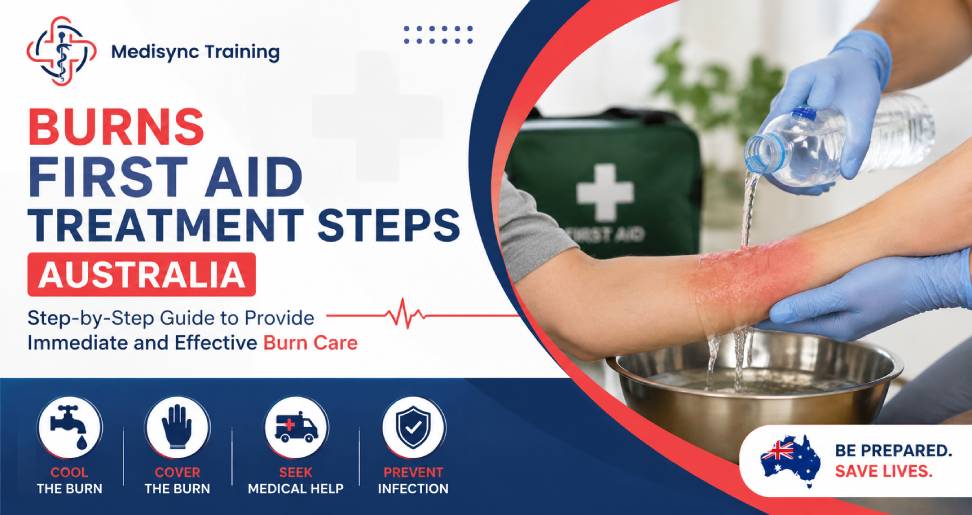
One of the most important burns first aid treatment steps in Australia is cooling the affected area with cool running water for 20 minutes.
Start cooling the burn as soon as possible. Australian health guidance recommends running water over the affected area for at least 20 minutes.
Cooling can help reduce pain and limit further tissue damage.
Importantly, use cool running water rather than ice. Ice can cause additional tissue damage and is not recommended for treating burns.
If the burn is on an arm or leg, position the affected area under clean, gently running tap water where possible.
4. Remove Jewellery and Tight Items
Swelling can develop after a burn. Remove rings, watches, bracelets, belts, or tight clothing from around the affected area if they are not stuck to the skin.
Do this carefully and preferably while cooling the injury.
Never pull away material that has adhered to the burn. Removing stuck clothing can cause additional injury.
5. Cover the Burn
After cooling, protect the affected area with a light, loose, non-stick covering.
Australian first aid guidance recommends clean, dry, non-fluffy material, such as suitable plastic cling film, as a temporary covering.
Avoid wrapping the area tightly because swelling may continue to develop.
The purpose of covering the burn is to protect the injured skin from contamination and reduce discomfort while medical assistance is arranged if necessary.
6. Monitor the Person for Shock
A significant burn can cause shock, particularly when the injury is extensive or severe.
Watch for signs such as:
- Pale or cool, moist skin
- Dizziness or faintness
- Weakness
- Anxiety or restlessness
- Rapid, weak pulse
- Confusion
- Reduced consciousness
Keep the person warm with a blanket while avoiding direct heat. Continue monitoring their condition and seek emergency assistance when appropriate.
When Should You Call 000 for a Burn?
Not every burn requires an ambulance, but some injuries need urgent medical attention.
Call Triple Zero (000) if the burn is severe, involves the airway, or the person’s condition is otherwise life-threatening.
Medical assessment is particularly important when a burn:
- Is large or covers a significant part of the body
- Is deep
- Affects the face, airway, hands, feet or genitals
- Was caused by electricity
- Was caused by chemicals
- Involves significant blistering or tissue damage
- Occurs alongside breathing difficulties or other serious injuries
Healthdirect also advises seeking urgent help for large burns, including burns larger than the size of the person’s hand.
When in doubt about the seriousness of a burn, professional medical advice should be sought.
What Not to Put on a Burn
Many traditional home remedies can make a burn worse or interfere with proper medical treatment.
Do not apply:
- Ice
- Butter or fats
- Ointments or creams as an initial treatment
- Household remedies
- Adhesive dressings directly onto the burn
Do not burst blisters or touch the injured skin unnecessarily. Also, do not remove material that has stuck to the burn.
The safest immediate approach for a typical thermal burn is to cool it with cool running water for 20 minutes and then protect it appropriately.
What About Chemical Burns?
Chemical burns require particular care because the substance can continue damaging tissue.
If a chemical gets onto the skin, remove contaminated clothing where it is safe to do so and rinse the affected area under cool running water for at least 20 minutes. Do not remove anything that is stuck to the skin. The person providing first aid should also avoid coming into contact with the chemical.
Chemical burns should be medically assessed, particularly when the chemical is hazardous or the injury is significant.
Why First Aid Training Matters
Knowing the theory behind burns first aid treatment steps Australia is useful, but practical first aid training can help people respond more confidently during a real emergency.
For parents, educators, childcare workers, workplace employees and community members, learning how to assess an injury and respond appropriately can be an important safety skill.
Medisync Training provides first aid training designed to help participants build practical knowledge and confidence in responding to common emergencies. Learning first aid through appropriate training can help people understand essential procedures, recognise when an injury requires escalation, and respond appropriately while waiting for professional medical assistance.
Rather than relying on internet advice or home remedies during an emergency, completing recognised first aid training gives you the opportunity to learn essential skills in a structured environment.
Final Thoughts
Knowing the correct burns first aid treatment steps in Australia can help you respond quickly when an accident occurs. The key actions are to make the area safe, stop the burning process, cool the burn under cool running water for 20 minutes, remove jewellery or tight items if they are not stuck, cover the injury with a light non-stick material, and monitor the person for signs of shock.
Avoid ice, butter, oils and other inappropriate home remedies, and never burst blisters or remove material stuck to the skin.
Most importantly, recognise when professional medical attention is needed. Serious, extensive, deep, chemical or electrical burns can require urgent assessment.
For anyone who wants to become more confident in emergency response, Medisync Training can be a useful place to explore first aid training options and develop practical skills that can make a difference when someone needs help.
Popular Posts
-
Choking First Aid Steps for Adults: A Complete Guide to Responding Quickly
August 24, 2026Choking can happen suddenly while eating, drinking, or even when a small object enters the...
-
Workplace First Aid Training Group Bookings Perth: A Practical Guide for Businesses
August 20, 2026Workplace emergencies can happen without warning. From cuts and burns to falls, allergic reactions, heat-related...
-
Anaphylaxis Action Plan Australia Template: A Practical Guide for Individuals, Schools and Workplaces
August 17, 2026Anaphylaxis is a severe and potentially life-threatening allergic reaction that requires immediate action. In Australia,...
-
How to Manage a Seizure at Work: A Complete First Aid Guide
August 14, 2026A seizure can happen unexpectedly in any workplace, whether in an office, warehouse, school, construction...
-
Burns First Aid Treatment Steps Australia: What to Do When a Burn Happens
August 12, 2026Burn injuries can happen unexpectedly at home, at work, in childcare settings, or while cooking....