

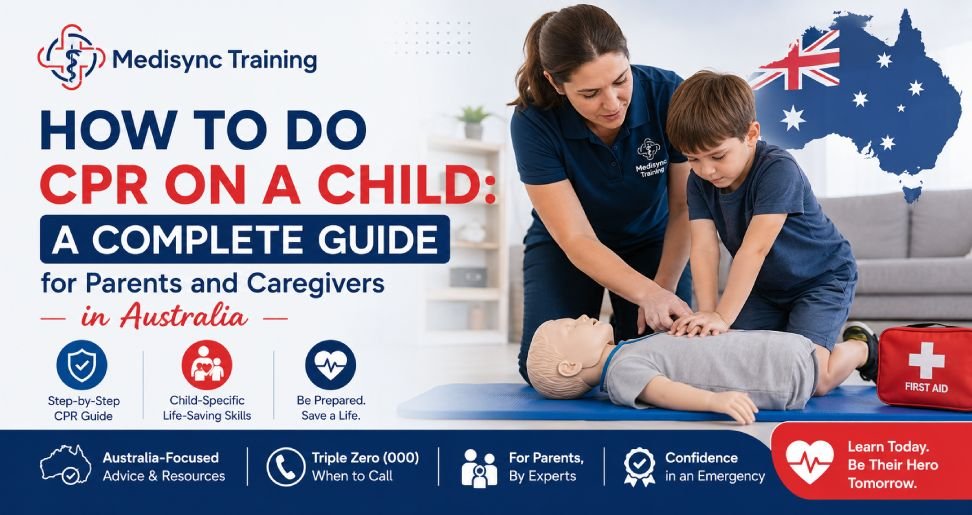
How to Do CPR on a Child: A Complete Guide for Parents and Caregivers in Australia
June 9, 2026
When a child experiences a medical emergency, every second matters. Knowing how to perform CPR (Cardiopulmonary Resuscitation) on a child can significantly improve their chances of survival while waiting for emergency services to arrive. Whether you are a parent, teacher, childcare worker, or caregiver, learning this life-saving skill is essential.
In Australia, first aid training is strongly encouraged for anyone responsible for children’s wellbeing. Understanding the correct CPR procedure for children can help you act confidently during critical situations and potentially save a young life.
What Is CPR and Why Is It Important?
CPR is an emergency procedure used when a person’s breathing or heartbeat has stopped. It combines chest compressions and rescue breaths to maintain blood flow and oxygen supply to vital organs until professional medical assistance arrives.
Children can stop breathing due to various reasons, including:
- Choking incidents
- Drowning accidents
- Severe allergic reactions
- Asthma attacks
- Electric shocks
- Trauma or injuries
- Cardiac arrest
Because children’s bodies are different from adults, the CPR technique must be adjusted accordingly. Using the correct method is crucial to avoid causing injury while providing effective assistance.
Step 1: Check for Danger
Before approaching the child, ensure the environment is safe for both you and the child. Look for hazards such as:
- Traffic
- Electrical dangers
- Fire
- Water hazards
- Unsafe structures
Never place yourself at risk while attempting a rescue.
Step 2: Check the Child’s Responsiveness
Gently tap the child and speak loudly:
“Are you okay?”
Observe whether the child responds by moving, opening their eyes, speaking, or making any sounds.
If the child is unresponsive, proceed immediately to the next step.
Step 3: Call for Help
In Australia, dial 000 for emergency services.
If another person is nearby, ask them to call emergency services while you begin CPR. If you are alone with the child, perform CPR for approximately one minute before calling for help if possible.
Step 4: Open the Airway
Carefully place the child on their back on a firm surface.
Use the head-tilt, chin-lift technique:
- Place one hand on the forehead.
- Gently tilt the head back.
- Lift the chin using two fingers.
This helps open the airway and allows you to check for breathing.
Step 5: Check for Breathing
Look, listen, and feel for normal breathing for up to 10 seconds.
Look for:
- Chest movement
Listen for:
- Breathing sounds
Feel for:
- Air coming from the mouth or nose
If the child is not breathing normally or only gasping, start CPR immediately.
Step 6: Begin Chest Compressions
For children aged one year to puberty:
- Place the heel of one hand in the centre of the chest.
- For larger children, use two hands if needed.
- Keep your arms straight.
- Compress the chest to approximately one-third of its depth.
Perform compressions at a rate of:
100 to 120 compressions per minute
A useful guide is to follow the rhythm of songs that match this pace.
Step 7: Give Rescue Breaths
After 30 chest compressions:
- Open the airway again.
- Pinch the child’s nose closed.
- Cover their mouth completely with yours.
- Give two gentle breaths.
Each breath should last about one second and make the chest rise visibly.
If the chest does not rise, reposition the head and try again.
Step 8: Continue the CPR Cycle
Continue with:
- 30 chest compressions
- 2 rescue breaths
Repeat this cycle until:
- The child starts breathing normally.
- Emergency services arrive.
- Another trained person takes over.
- You become physically unable to continue.
Consistency is critical during CPR. Even if you are unsure, performing CPR is generally better than doing nothing at all.
Special Considerations for Child CPR
Children’s bodies are more delicate than adults’, so it’s important to use appropriate force during compressions.
Some key differences include:
Compression Depth
For children, compress the chest approximately one-third of its depth rather than using excessive pressure.
Rescue Breaths Matter More
Many childhood cardiac emergencies begin with breathing problems rather than heart-related issues. Therefore, rescue breaths play an especially important role in paediatric CPR.
Stay Calm
Remaining calm allows you to perform CPR more effectively and provide reassurance to others nearby.
The Importance of Professional First Aid Training
While reading guides like this can improve your understanding, practical training is essential for developing confidence and competence.
Hands-on first aid courses allow participants to:
- Practise CPR techniques
- Learn choking management
- Understand emergency response procedures
- Gain confidence in real-life scenarios
- Meet workplace and childcare requirements
For childcare professionals, educators, and parents seeking comprehensive training, enrolling in a Childcare First Aid Course Midland can provide valuable practical experience and nationally recognised certification.
Why Australians Should Learn Child CPR
Australia has a strong culture of safety and preparedness. Whether at home, school, sporting events, or community activities, emergencies can happen unexpectedly.
Learning CPR offers several benefits:
- Increased confidence during emergencies
- Better outcomes for injured or ill children
- Compliance with childcare and workplace regulations
- Greater community safety awareness
The ability to respond quickly can make a life-changing difference before paramedics arrive.
Learn with Medisync Training
When it comes to first aid education, choosing a reputable training provider is important. Medisync Training offers high-quality first aid programs designed to equip Australians with practical, real-world emergency response skills.
Their courses are tailored to meet current Australian standards and help participants gain hands-on experience in CPR, first aid, and childcare emergency management. Whether you’re a parent looking to protect your family or a childcare professional meeting industry requirements, quality training can help ensure you’re prepared when it matters most.
Final Thoughts
Knowing how to do CPR on a child is one of the most valuable skills any parent, caregiver, or educator can possess. In an emergency, your actions during the first few minutes can significantly influence a child’s outcome.
By understanding the correct CPR process and participating in professional first aid training, you can be better prepared to respond confidently during critical situations. Investing time in learning these life-saving techniques is an investment in the safety and wellbeing of the children around you.
Remember: in an emergency, call 000 immediately and begin CPR if the child is not breathing normally. Quick action can save lives.
Popular Posts
-
First Aid for Severe Hand Injuries: Essential Steps to Prevent Further Damage
October 26, 2026Hand injuries can happen at home, in the workplace, during sports, or while using tools...
-
First Aid for Amputations: Emergency Response Guide
October 21, 2026An amputation is a serious medical emergency that occurs when a body part, such as...
-
First Aid for Neck Injuries After an Accident: What You Should Do
October 16, 2026Neck injuries can occur unexpectedly after road accidents, workplace incidents, sports injuries, or accidental falls....
-
First Aid for Back and Spinal Injuries: What You Should Do in an Emergency
October 15, 2026Back and spinal injuries can occur unexpectedly at home, in the workplace, during sports activities,...
-
First Aid for Joint Injuries: Essential Steps to Reduce Pain and Prevent Further Damage
October 14, 2026Joint injuries can happen unexpectedly during sports, exercise, workplace activities, household tasks, or everyday movement....