
Importance of First Aid in the Workplace
June 12, 2026
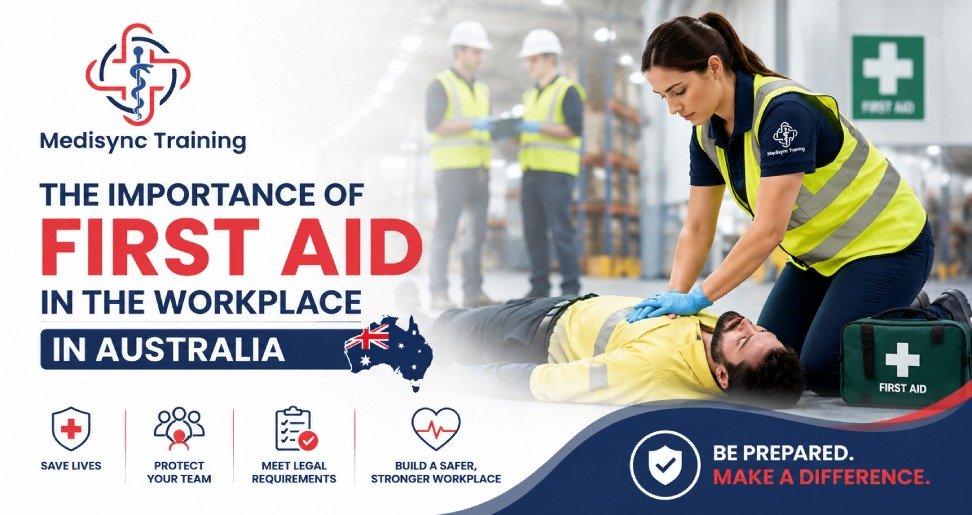
Workplace safety is a fundamental responsibility for every Australian business. While employers invest heavily in risk management, safety equipment, and employee wellbeing programs, one critical aspect often determines how effectively an emergency is handled—the availability of first aid in the workplace.
Accidents and medical emergencies can happen without warning. Whether it is a minor cut, a slip and fall, a burn, or a more serious incident such as cardiac arrest, immediate first aid can significantly reduce the severity of injuries and even save lives. This is why Australian workplaces are encouraged to have trained first aiders, accessible first aid equipment, and clear emergency response procedures in place.
In this article, we explore the importance of first aid in the workplace, the legal considerations for Australian businesses, and how professional training providers like Medisync Training can help organisations create safer work environments.
Why First Aid Matters in Australian Workplaces
First aid is the immediate care provided to a person who has been injured or becomes ill before professional medical assistance arrives. In many workplace emergencies, the actions taken during the first few minutes can make a significant difference to the outcome.
Some key benefits of workplace first aid include:
1. Saving Lives
In critical situations such as cardiac arrest, severe bleeding, choking, or anaphylaxis, immediate intervention can be lifesaving. A trained first aider can provide essential care while waiting for emergency services, increasing the chances of survival and recovery.
2. Reducing the Severity of Injuries
Prompt first aid treatment helps prevent injuries from worsening. For example, correctly treating burns, fractures, or wounds can minimise complications and support faster healing.
3. Creating a Safer Workplace Culture
Employees feel more confident and secure when they know their workplace is prepared for emergencies. A strong first aid program demonstrates an employer’s commitment to health, safety, and employee wellbeing.
4. Supporting Faster Recovery
When injuries are managed effectively from the outset, employees often experience shorter recovery times and reduced long-term health impacts. This can also help reduce absenteeism and lost productivity.
5. Improving Emergency Response
Workplaces with trained first aiders can respond quickly and effectively during emergencies. This organised response can reduce panic and ensure appropriate actions are taken until professional medical assistance arrives.
Understanding the First Aid in the Workplace Code of Practice
Australian employers have legal obligations under Work Health and Safety (WHS) legislation to provide adequate first aid arrangements for workers.
The first aid in the workplace code of practice provides practical guidance on meeting these obligations. It recommends that businesses assess their workplace risks and determine the appropriate level of first aid resources required based on factors such as:
- The nature of workplace hazards
- The size of the workforce
- The workplace location
- The number of visitors and contractors
- The availability of emergency medical services
Businesses are generally expected to provide access to first aid kits, trained first aid personnel, and, where necessary, dedicated first aid facilities. Safe Work Australia also emphasises the importance of conducting a workplace risk assessment to determine specific first aid requirements.
Common Workplace Emergencies Requiring First Aid
Many Australian industries face unique risks that may require immediate first aid intervention. Common workplace incidents include:
- Cuts and lacerations
- Burns and scalds
- Sprains and fractures
- Eye injuries
- Heat-related illnesses
- Electric shock
- Choking incidents
- Allergic reactions
- Heart attacks and cardiac arrest
Industries such as construction, manufacturing, mining, logistics, healthcare, and hospitality often have higher injury risks. However, even office environments can experience medical emergencies that require prompt first aid attention.
Workplace First Aid Kit Checklist Australia
Having an accessible and properly stocked first aid kit is an essential component of workplace safety.
A typical workplace first aid kit checklist Australia may include:
- Adhesive dressings and bandages
- Sterile wound dressings
- Disposable gloves
- Eye pads and eye wash
- Triangular bandages
- Adhesive tape
- Antiseptic solutions
- Burn treatment supplies
- Resuscitation face shields
- Thermal blankets
- Scissors and tweezers
- Emergency contact information
The exact contents of a workplace first aid kit should be determined through a risk assessment. For example, a construction site may require additional trauma supplies, while an office environment may need a more basic setup.
It is equally important to regularly inspect first aid kits to ensure supplies remain fully stocked and within expiry dates.
The Importance of First Aid Training
Having a first aid kit alone is not enough. Employees must know how to use the equipment effectively and respond appropriately during emergencies.
First aid training equips workers with practical skills to:
- Assess emergency situations
- Perform CPR
- Use automated external defibrillators (AEDs)
- Control bleeding
- Treat burns and fractures
- Manage choking incidents
- Respond to allergic reactions
- Provide basic life support
Regular training also helps employees maintain confidence and competence when responding under pressure.
Following First Aid Guidelines Australia
Australian workplaces should align their emergency preparedness programs with recognised first aid guidelines Australia to ensure best practices are followed.
These guidelines focus on:
- Providing immediate and appropriate care
- Ensuring first aid equipment is accessible
- Maintaining trained first aid personnel
- Conducting regular emergency drills
- Reviewing workplace risks periodically
- Updating procedures as workplace conditions change
Compliance with recognised guidelines not only improves safety outcomes but also helps organisations meet their workplace health and safety obligations.
Why Every Business Should Invest in Workplace First Aid
Many employers view first aid as a compliance requirement. However, its value extends far beyond meeting legal obligations.
Investing in workplace first aid can:
- Protect employees and visitors
- Reduce workplace injuries
- Lower compensation costs
- Improve employee morale
- Strengthen business reputation
- Enhance operational resilience
- Demonstrate corporate responsibility
In today’s competitive business environment, organisations that prioritise employee safety often attract and retain top talent more effectively.
How Medisync Training Helps Australian Businesses
When it comes to workplace first aid training, choosing a trusted provider is essential. Medisync Training is committed to helping Australian businesses create safer workplaces through high-quality, nationally recognised first aid education.
Medisync Training delivers practical, engaging, and industry-relevant training programs designed to equip employees with the confidence and skills needed to respond effectively during emergencies.
Whether your organisation operates in construction, healthcare, education, hospitality, manufacturing, or corporate environments, Medisync Training can provide tailored solutions to meet your workplace requirements.
Their experienced trainers focus on real-world scenarios, ensuring participants gain hands-on experience and practical knowledge that can be applied immediately in the workplace.
By partnering with Medisync Training, businesses can strengthen their safety culture, improve compliance, and ensure employees are prepared to act when it matters most.
Final Thoughts
The importance of first aid in the workplace cannot be overstated. Quick and effective first aid can save lives, reduce injury severity, support recovery, and contribute to a safer working environment for everyone.
Australian businesses have both a legal and moral responsibility to ensure adequate first aid arrangements are in place. By following the first aid in the workplace code of practice, maintaining a comprehensive workplace first aid kit checklist Australia, and adhering to recognised first aid guidelines Australia, organisations can significantly improve workplace safety outcomes.
Most importantly, investing in professional training through trusted providers like Medisync Training ensures employees have the skills and confidence needed to respond effectively in emergencies. In a critical situation, the right training can make all the difference.
Popular Posts
-
Panic Attack or Anxiety Attack: Understanding the Difference and When to Seek Help
June 16, 2026Mental health awareness in Australia has grown significantly in recent years, yet many people still...
-
Importance of First Aid in the Workplace
June 12, 2026Workplace safety is a fundamental responsibility for every Australian business. While employers invest heavily in...
-
How to Do CPR on a Child: A Complete Guide for Parents and Caregivers in Australia
June 9, 2026When a child experiences a medical emergency, every second matters. Knowing how to perform CPR...
-
What To Do If Someone Is Unconscious: A Complete First Aid Guide for Australians
May 21, 2026When a person suddenly collapses and becomes unresponsive, panic can take over quickly. Knowing what...
-
Common Workplace Accidents That Can Cause Crush Injuries
May 12, 2026Crush injuries are among the most serious workplace accidents, especially in industries involving heavy machinery,...