

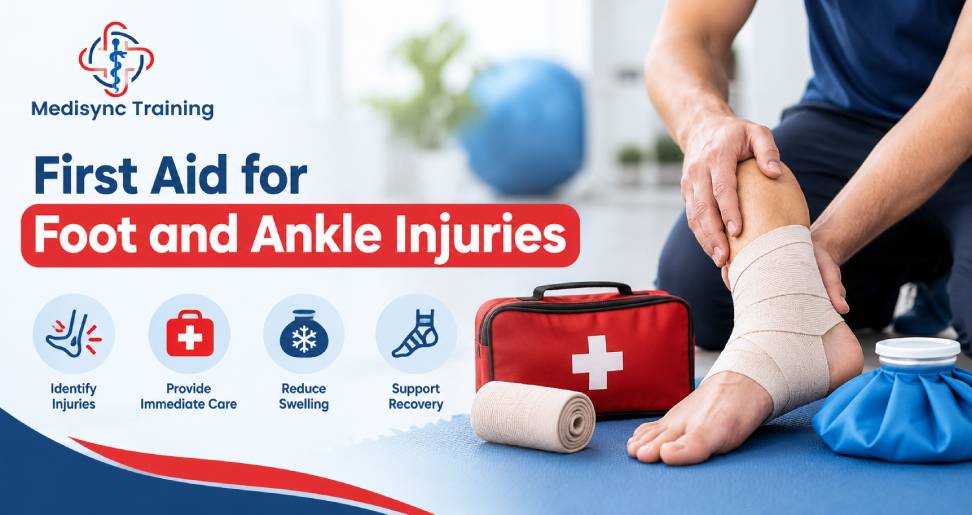
First Aid for Foot and Ankle Injuries: Essential Steps to Reduce Pain and Prevent Further Damage
October 30, 2026
Foot and ankle injuries can happen unexpectedly during everyday activities, sports, exercise, or workplace tasks. A simple misstep, fall, awkward landing, or sudden twist can cause pain, swelling, bruising, and difficulty walking. While some injuries are minor, others may involve damaged ligaments, fractured bones, or serious soft tissue injuries that require immediate medical attention.
Knowing how to provide first aid for foot and ankle injuries is important because the right response can help reduce discomfort, prevent additional damage, and support recovery. Whether someone experiences an ankle sprain, foot fracture, or muscle strain, understanding the basic first aid procedures can make a significant difference.
In this guide, we will explore common foot and ankle injuries, essential first aid techniques, warning signs that require medical attention, and practical ways to prevent future injuries.
1. Understanding Common Foot and Ankle Injuries
The feet and ankles support body weight and help maintain balance during movement. Because they are involved in almost every physical activity, they are particularly vulnerable to injuries.
Some common types include:
Ankle Sprains: An ankle sprain occurs when the ligaments supporting the ankle stretch or tear, usually because the foot twists or rolls unexpectedly. Symptoms include swelling, bruising, tenderness, and difficulty putting weight on the affected foot.
Foot Fractures: A fracture involves a break or crack in one or more foot bones. It may happen because of a fall, direct impact, sports injury, or excessive repetitive pressure. Severe pain, swelling, and difficulty walking are common symptoms.
Muscle and Tendon Strains: These injuries happen when muscles or tendons become overstretched or damaged. They can cause pain, tenderness, weakness, and restricted movement.
Heel Injuries: Sudden impact, repetitive running, or excessive pressure can cause heel pain and soft tissue damage. Some heel injuries may also involve fractures.
Achilles Tendon Injuries: The Achilles tendon connects the calf muscles to the heel bone. Sudden acceleration, jumping, or overstretching can cause tendon damage or rupture.
Recognising the type of injury helps determine the appropriate first aid response.
2. Follow the PRICE Method for Initial First Aid
For many minor soft tissue injuries, the PRICE approach can help manage initial symptoms. It stands for Protection, Rest, Ice, Compression, and Elevation.
Protection: Protect the injured foot or ankle from further harm. Stop the activity immediately and avoid movements that increase pain. If necessary, use appropriate support to prevent unnecessary movement.
Rest: Give the affected area time to recover. Avoid running, jumping, or walking unnecessarily. Continuing physical activity after an injury can make the damage worse.
Ice: Apply a cold pack wrapped in a towel to the injured area for approximately 15–20 minutes at a time. Repeat every few hours during the initial period if helpful. Never place ice directly against the skin because it can cause cold burns.
Compression: A suitable elastic bandage may help control swelling. Wrap it comfortably without applying excessive pressure. Loosen it immediately if the toes become numb, cold, pale, or discoloured.
Elevation: Raise the injured foot above heart level when possible. Supporting the leg with pillows can help reduce swelling.
These steps are useful for many minor injuries, but they do not replace professional assessment when a fracture, dislocation, or serious tendon injury is suspected.
3. First Aid for an Ankle Sprain
Ankle sprains are among the most common foot and ankle injuries. They frequently occur when someone loses balance, lands awkwardly, or steps onto an uneven surface.
If someone experiences an ankle sprain, follow these first aid steps:
-
Stop walking or participating in physical activity immediately.
-
Help the injured person sit or lie down comfortably.
-
Support the ankle in a comfortable position without forcing movement.
-
Apply a wrapped cold pack to reduce pain and swelling.
-
Use gentle compression if appropriate and there are no signs of circulation problems.
-
Elevate the affected leg.
-
Arrange medical assessment if pain, swelling, or difficulty walking is significant.
Avoid massaging the injured ankle or applying heat immediately after an acute injury, particularly when swelling is present.
A healthcare professional may recommend further assessment, rehabilitation exercises, or additional treatment depending on the severity of the sprain.
4. First Aid for Suspected Foot Fractures
A foot fracture can occur following a fall, heavy impact, sports accident, or twisting injury. Sometimes, the symptoms resemble those of a severe sprain, making professional assessment important.
If a fracture is suspected:
-
Stop the person from walking or putting weight on the injured foot.
-
Keep the foot as still and comfortable as possible.
-
Apply a wrapped cold pack carefully around the injured area.
-
Elevate the foot if doing so does not increase pain.
-
Do not attempt to straighten a deformed foot or reposition broken bones.
-
Seek urgent medical assessment.
If the injury involves an open wound with visible bone, cover it with a clean or sterile dressing without pushing anything back inside. Do not apply direct pressure over exposed bone.
An obvious deformity, severe pain, uncontrolled bleeding, or loss of sensation requires urgent medical attention.
5. Recognising Serious Foot and Ankle Injury Symptoms
Not every injury can be managed with basic first aid. Some symptoms indicate that immediate medical attention is necessary.
Watch for the following warning signs:
-
Severe or rapidly increasing pain.
-
Significant swelling or extensive bruising.
-
Visible deformity of the foot or ankle.
-
Inability to stand or take a few steps.
-
Numbness, tingling, or loss of sensation.
-
Toes becoming pale, blue, or unusually cold.
-
An open wound or suspected compound fracture.
-
A sudden popping sensation followed by severe pain or weakness.
If the person has severe bleeding, an obvious deformity, or signs of poor circulation, arrange emergency medical assistance.
It is important not to assume that someone has only a minor sprain because they can still move their toes or stand briefly.
6. What Should You Avoid After a Foot or Ankle Injury?
Incorrect first aid can sometimes worsen an injury or delay recovery. Knowing what not to do is just as important as understanding the correct procedures.
Avoid these common mistakes:
Do Not Force Movement: Never ask an injured person to walk repeatedly to check whether the foot is damaged. Unnecessary movement can increase pain and potentially worsen the injury.
Avoid Direct Ice Application: Ice should always be wrapped in a towel or suitable protective covering to prevent skin damage.
Do Not Massage a Fresh Injury: Vigorous massage can increase discomfort and may worsen swelling or bleeding in injured tissues.
Avoid Tight Bandages: Excessive compression can restrict circulation and cause additional complications.
Do Not Ignore Persistent Pain: Pain that continues or becomes worse should be assessed by a qualified healthcare professional.
Do Not Attempt to Reset a Dislocation: Never try to reposition a dislocated ankle or foot yourself. Keep it supported and seek emergency care.
7. When Should You Seek Medical Attention?
Medical assessment is important whenever an injury causes severe symptoms or does not improve as expected.
A healthcare professional may examine the injured area, assess movement and circulation, and recommend imaging such as an X-ray when a fracture is suspected.
Immediate emergency care is necessary for serious injuries involving open fractures, major deformity, uncontrolled bleeding, or impaired circulation.
Even when the injury initially appears minor, persistent swelling, pain, instability, or difficulty walking should not be ignored.
Early diagnosis can help prevent complications and ensure that the person receives appropriate treatment.
8. How Can You Prevent Foot and Ankle Injuries?
Although accidents cannot always be avoided, adopting healthy habits can reduce the risk of common injuries.
Consider these preventive measures:
-
Wear comfortable footwear with appropriate support and grip.
-
Warm up before participating in sports or exercise.
-
Perform regular stretching and strengthening exercises.
-
Avoid sudden increases in physical activity.
-
Be careful when walking on uneven or slippery surfaces.
-
Maintain good balance and lower-body strength.
-
Replace worn-out sports shoes when necessary.
-
Follow appropriate safety procedures at workplaces.
Athletes and individuals who regularly participate in physical activities should pay particular attention to ankle stability, flexibility, and muscle strength.
9. Why First Aid Training Is Important
Foot and ankle injuries can happen at home, workplaces, educational institutions, and sporting facilities. Having the knowledge to respond appropriately can help prevent further complications while professional medical assistance is arranged.
First aid training teaches individuals how to recognise injuries, assess potential risks, control bleeding, manage swelling, provide basic support, and identify situations requiring emergency medical care.
For employees, childcare professionals, teachers, sports instructors, and workplace safety representatives, these skills are particularly valuable.
Organisations can improve emergency preparedness by arranging recognised first aid education for their staff. Medisync Training provides first aid training opportunities designed to help individuals develop practical emergency response knowledge and essential safety skills.
Explore the Medisync Training First Aid Courses to learn more about available training options and build confidence in responding to unexpected injuries and emergencies.
Conclusion
Foot and ankle injuries can range from minor sprains to serious fractures and tendon damage. Understanding the correct first aid response is essential for reducing discomfort, preventing further injury, and recognising when professional medical assistance is required.
Following the PRICE approach, protecting the injured area, avoiding unnecessary movement, and identifying serious warning signs can make a meaningful difference during an emergency.
However, first aid is only the initial step towards recovery. Proper medical assessment, appropriate treatment, and rehabilitation may be necessary depending on the severity of the injury.
By learning essential first aid skills and adopting preventive safety habits, individuals and workplaces can become better prepared to manage unexpected foot and ankle injuries.
Popular Posts
-
Diabetic Emergency First Aid: Symptoms, Immediate Response and Essential Life-Saving Skills
November 20, 2026A diabetic emergency can happen suddenly and may become life-threatening if the right first aid...
-
Diabetic Emergency First Aid: What You Need to Know
November 18, 2026Diabetes is a common health condition that affects how the body regulates blood glucose (blood...
-
First Aid for Low Blood Sugar and Hypoglycaemia: Symptoms, Causes and Emergency Treatment
November 16, 2026Low blood sugar, medically known as hypoglycaemia, is a condition that occurs when the glucose...
-
Fainting vs Seizure: How to Tell the Difference
November 13, 2026Understanding the difference between fainting and a seizure is important because both conditions can cause...
-
First Aid for Fainting: What Should You Do?
November 11, 2026Fainting can happen suddenly and without much warning. A person may feel dizzy, weak, sweaty,...