Asthma First Aid Steps Australia: A Complete Guide to Responding Quickly and Safely
July 28, 2026
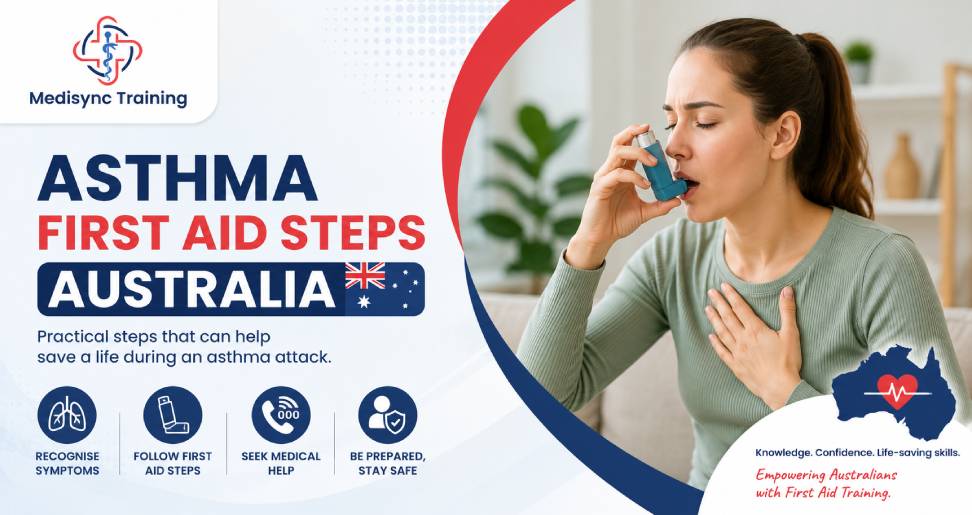
Asthma is one of Australia’s most common chronic respiratory conditions, affecting millions of adults and children every year. While many people successfully manage asthma with medication and regular medical care, asthma attacks can happen unexpectedly at home, school, work, or during outdoor activities. Knowing the correct asthma first aid steps Australia follows can make a significant difference and may even save a life.
Whether you’re a parent, teacher, caregiver, workplace first aider, or simply someone wanting to be prepared, understanding how to recognise and respond to an asthma emergency is essential. In this guide, we’ll explain Australia’s recommended asthma first aid approach, discuss what to do when an inhaler isn’t available, and answer common questions about asthma attacks in both adults and children.
What Is an Asthma Attack?
An asthma attack occurs when the airways become inflamed, tighten, and produce excess mucus, making it difficult to breathe. Symptoms may develop gradually or appear suddenly.
Common warning signs include:
- Wheezing
- Persistent coughing
- Chest tightness
- Difficulty speaking in full sentences
- Rapid breathing
- Shortness of breath
- Blue lips or fingernails in severe cases
Australia’s asthma guidelines recommend acting immediately when symptoms worsen instead of waiting for them to become severe.
Asthma First Aid Steps Australia Recommends
Australia follows nationally recognised asthma first aid procedures. Remember these simple steps:
1. Sit the Person Upright
Never allow the person to lie flat.
Keeping them upright helps open the airways and makes breathing easier. Encourage them to remain calm because panic can worsen breathing difficulties.
2. Reassure and Stay Calm
Speak slowly and calmly.
Stress increases airway tightening, so reassuring the person is an important part of asthma first aid.
3. Give the Reliever Medication
If available, assist the person in using their blue reliever inhaler with a spacer.
This is the recommended approach for how to treat asthma attack with inhaler safely and effectively.
Always follow the person’s Asthma Action Plan if they have one.
4. Monitor Their Breathing
Watch for improvements over several minutes.
If symptoms improve, continue monitoring until breathing returns to normal.
5. Call Triple Zero (000)
Call 000 immediately if:
- Symptoms become severe
- They cannot speak properly
- Their reliever inhaler is not helping
- They become exhausted or unconscious
- You are unsure whether it is asthma
Do not delay emergency treatment.
First Aid for Asthma Without Inhaler
One common question Australians ask is about first aid for asthma without inhaler.
Although a reliever inhaler is the preferred treatment, if one isn’t available:
- Sit the person upright.
- Keep them calm.
- Encourage slow breathing.
- Remove them from smoke or known asthma triggers.
- Call 000 immediately if breathing is difficult or worsening.
- If someone nearby has a suitable reliever inhaler and spacer available for emergency use, follow local emergency guidance while waiting for professional medical help.
Remember, home remedies should never replace emergency medical treatment during a serious asthma attack.
First Aid for Asthma Attack at Home
Many asthma attacks happen inside the home.
The correct first aid for asthma attack at home includes:
- Stay calm.
- Help the person sit comfortably.
- Use the prescribed reliever inhaler with a spacer.
- Remove possible triggers such as cigarette smoke or strong fragrances.
- Monitor breathing continuously.
- Call 000 if symptoms do not improve or worsen.
Families should always know where asthma medications are stored and ensure inhalers are within their expiry date.
First Aid for Asthma Attack for Kids
Children often experience asthma attacks at school, childcare, sporting events, or home.
When providing first aid for asthma attack for kids:
- Stay calm so the child remains calm.
- Sit the child upright.
- Help them use their reliever inhaler and spacer.
- Never force them to lie down.
- Contact emergency services if symptoms continue or become severe.
- Notify parents or guardians immediately.
Parents should also provide schools and childcare centres with an up-to-date written Asthma Action Plan.
How to Treat Asthma Attack with Inhaler
Knowing how to treat asthma attack with inhaler correctly improves medication delivery.
General best practices include:
- Shake the inhaler before use (if required for the specific device).
- Attach it to a spacer when available.
- Encourage slow, deep breaths after each puff.
- Follow the individual’s Asthma Action Plan or healthcare provider’s instructions.
- Continue monitoring until symptoms improve.
Incorrect inhaler technique is a common reason asthma medications become less effective.
Common Asthma Triggers in Australia
Many Australians experience asthma flare-ups because of environmental triggers.
Common triggers include:
- Pollen
- Bushfire smoke
- Dust mites
- Cold weather
- Exercise
- Respiratory infections
- Pet dander
- Air pollution
- Cigarette smoke
Knowing your personal triggers can reduce future asthma attacks.
When Should You Seek Emergency Help?
Always call 000 if:
- The person struggles to breathe.
- Their lips become blue.
- They collapse.
- They cannot complete a sentence.
- Their reliever medication is not working.
- You’re unsure whether it’s asthma.
It is always safer to seek emergency medical assistance early.
Preventing Future Asthma Emergencies
Good asthma management reduces the risk of severe attacks.
Helpful prevention strategies include:
- Follow your doctor’s treatment plan.
- Carry your reliever inhaler.
- Attend regular asthma reviews.
- Avoid known triggers.
- Keep vaccinations up to date.
- Ensure family members know asthma first aid.
- Maintain a current written Asthma Action Plan.
Learn Professional Asthma First Aid Skills
Knowing asthma first aid is valuable, but practical training builds confidence in real emergencies.
If you want to improve your emergency response skills, Medisync Training offers nationally recognised first aid programs across Australia. Their training covers essential emergency response skills suitable for workplaces, parents, educators, childcare professionals, and community members.
Helpful courses include:
- First Aid Training
- CPR Training
- Childcare First Aid Courses
- Medication Administration Training
Explore all available training programs at Medisync Training to build the confidence needed to respond effectively during medical emergencies.
Frequently Asked Questions
1. Can asthma attacks happen without warning?
Ans :- Yes. Some attacks develop slowly over several hours, while others become severe within minutes.
2. Should everyone with asthma have an Asthma Action Plan?
Ans :- Yes. Australian health authorities recommend that every person with asthma has a written Asthma Action Plan developed with their doctor.
3. Can children outgrow asthma?
Ans :- Some children experience fewer symptoms as they grow older, but asthma can continue into adulthood or return later in life.
4. Is CPR needed during an asthma attack?
Ans :- CPR is only required if the person becomes unconscious and is not breathing normally. Call 000 immediately and follow emergency operator instructions.
Final Thoughts
Understanding the correct asthma first aid steps Australia recommends can help protect your family, friends, colleagues, and community. Acting quickly, recognising symptoms early, and knowing when to seek emergency assistance can significantly improve outcomes during an asthma attack.
Whether you’re responding to an emergency at home, supporting first aid for asthma attack at home, helping with first aid for asthma attack for kids, learning how to treat asthma attack with inhaler, or understanding first aid for asthma without inhaler, the right knowledge and practical training are invaluable.
To strengthen your emergency response skills, consider enrolling in a professional first aid course through Medisync Training and be prepared to respond confidently when every second counts.
Popular Posts
-
First Aid for Severe Hand Injuries: Essential Steps to Prevent Further Damage
October 26, 2026Hand injuries can happen at home, in the workplace, during sports, or while using tools...
-
First Aid for Amputations: Emergency Response Guide
October 21, 2026An amputation is a serious medical emergency that occurs when a body part, such as...
-
First Aid for Neck Injuries After an Accident: What You Should Do
October 16, 2026Neck injuries can occur unexpectedly after road accidents, workplace incidents, sports injuries, or accidental falls....
-
First Aid for Back and Spinal Injuries: What You Should Do in an Emergency
October 15, 2026Back and spinal injuries can occur unexpectedly at home, in the workplace, during sports activities,...
-
First Aid for Joint Injuries: Essential Steps to Reduce Pain and Prevent Further Damage
October 14, 2026Joint injuries can happen unexpectedly during sports, exercise, workplace activities, household tasks, or everyday movement....