
Traumatic Cardiac Arrest Management: A Practical Guide for Faster Emergency Response in Australia
July 6, 2026
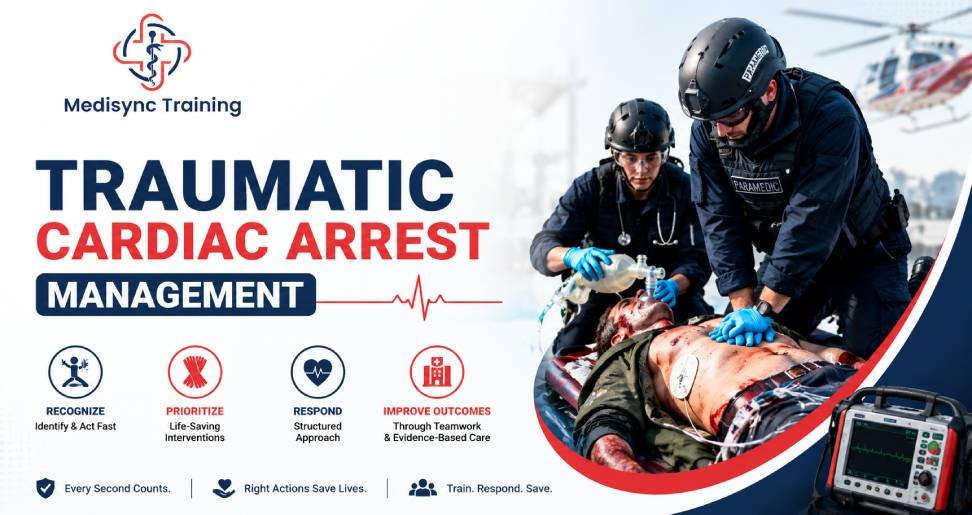
Traumatic cardiac arrest (TCA) is one of the most critical medical emergencies a person can experience. Unlike cardiac arrest caused by heart disease, traumatic cardiac arrest occurs due to severe injuries such as major road accidents, falls from height, crush injuries, or penetrating trauma. Although survival rates have traditionally been low, advances in emergency medicine and faster intervention have significantly improved patient outcomes when the correct management steps are followed.
For Australians, particularly those working in construction, mining, transport, healthcare, and community services, understanding traumatic cardiac arrest management can make a life-saving difference while waiting for emergency medical services.
What Is Traumatic Cardiac Arrest?
Traumatic cardiac arrest occurs when the heart stops pumping blood because of a severe physical injury rather than an underlying cardiac condition. Common causes include:
- Major motor vehicle collisions
- Falls from significant heights
- Severe blunt trauma
- Penetrating injuries such as stab wounds
- Massive blood loss
- Airway obstruction following trauma
- Tension pneumothorax (collapsed lung under pressure)
Unlike conventional cardiac arrest, simply performing chest compressions may not be enough. Emergency responders must identify and treat the reversible causes of the arrest as quickly as possible.
Why Early Management Matters
Every minute without effective circulation reduces the likelihood of survival. In traumatic cardiac arrest, the goal is not only to restore circulation but also to correct the underlying injury that caused the heart to stop.
Australian emergency services follow structured trauma management protocols that prioritise:
- Scene safety
- Airway management
- Bleeding control
- Oxygenation
- Rapid transport to a trauma centre
Prompt intervention by trained bystanders before paramedics arrive can significantly improve patient outcomes.
Key Steps in Traumatic Cardiac Arrest Management
1. Ensure Scene Safety
Before approaching the casualty, ensure the environment is safe. Road traffic, unstable structures, electrical hazards, or ongoing violence may place rescuers at risk.
Never become another casualty.
2. Call Triple Zero (000)
Immediately contact emergency services and provide:
- Exact location
- Nature of the incident
- Number of injured people
- Patient’s condition
- Any hazards present
Early notification allows paramedics and trauma teams to prepare appropriate resources.
3. Assess Airway and Breathing
Trauma patients frequently suffer airway obstruction due to:
- Blood
- Vomit
- Facial injuries
- Neck trauma
Open the airway carefully while protecting the cervical spine if spinal injury is suspected.
If the person is not breathing normally, begin appropriate resuscitation measures according to current Australian first aid guidelines.
4. Control Catastrophic Bleeding
Massive haemorrhage is one of the leading reversible causes of traumatic cardiac arrest.
Immediate bleeding control may involve:
- Direct pressure
- Pressure bandages
- Haemostatic dressings
- Tourniquets for severe limb bleeding
Rapid bleeding control helps preserve circulating blood volume until advanced medical care arrives.
5. Begin CPR When Appropriate
Although traumatic cardiac arrest differs from medical cardiac arrest, cardiopulmonary resuscitation still plays an important role once reversible causes are being addressed.
High-quality CPR includes:
- Chest compressions at the correct depth and rate
- Minimal interruptions
- Effective ventilation where trained
- Use of an Automated External Defibrillator (AED) if indicated
Learning these skills through accredited CPR Training In Perth helps individuals respond confidently during real-life emergencies. Nationally recognised CPR programs teach participants how to recognise cardiac arrest, perform effective compressions, and safely use an AED.
Reversible Causes of Traumatic Cardiac Arrest
Emergency clinicians focus on rapidly correcting reversible conditions often referred to as the “Hs and Ts.”
In trauma, the most common reversible causes include:
- Severe blood loss (hypovolaemia)
- Tension pneumothorax
- Cardiac tamponade
- Airway obstruction
- Hypoxia
Treating these conditions quickly offers the greatest chance of restoring circulation.
Differences Between Medical and Traumatic Cardiac Arrest
| Medical Cardiac Arrest | Traumatic Cardiac Arrest |
|---|---|
| Usually caused by heart disease | Caused by severe injury |
| CPR is the primary intervention | Treating injuries is equally critical |
| Defibrillation is often required | Defibrillation is less commonly indicated |
| Focus on restoring heart rhythm | Focus on reversing trauma-related causes |
Understanding these differences helps first responders prioritise the correct actions.
Who Should Learn Traumatic Cardiac Arrest Management?
Although advanced trauma care is performed by healthcare professionals, basic knowledge benefits many Australians, especially those working in higher-risk environments.
Training is particularly valuable for:
- Construction workers
- Mining personnel
- Security officers
- Teachers
- Childcare educators
- Sports coaches
- Community volunteers
- Workplace first aid officers
Completing a nationally recognised First Aid Course in Perth equips participants with practical skills to manage emergencies until professional help arrives. These courses typically include CPR, trauma assessment, bleeding control, choking management, and AED use.
The Importance of Regular First Aid Training
Emergency guidelines continue to evolve as medical research advances. Regular refresher training ensures that your knowledge remains current and aligns with Australian standards.
Hands-on practical sessions also improve confidence, allowing participants to react more effectively under pressure.
Whether responding to a workplace accident, sporting injury, or road collision, trained individuals often become the crucial link between the incident and the arrival of emergency services.
Why Choose Medisync Training?
For individuals and organisations across Perth seeking nationally recognised first aid education, Medisync Training offers practical, hands-on learning designed around real-world emergencies. Their courses include HLTAID009 (Provide Cardiopulmonary Resuscitation), HLTAID011 (Provide First Aid), HLTAID012 (Provide First Aid in an Education and Care Setting), and medication training, with experienced instructors and scenario-based practical assessments. Training is suitable for workplaces, healthcare professionals, educators, carers, and community members who want to build genuine confidence in emergency response.
Final Thoughts
Traumatic cardiac arrest remains one of the most challenging medical emergencies, but immediate recognition, rapid bleeding control, effective airway management, and high-quality CPR can improve survival outcomes. While advanced trauma care is delivered by paramedics and hospital teams, trained bystanders often provide the critical first response that gives patients their best chance.
Investing in accredited CPR and first aid training is more than meeting workplace requirements—it is a commitment to protecting your family, colleagues, and community. By developing these essential lifesaving skills through a trusted provider such as Medisync Training, Australians can be better prepared to respond confidently when every second counts.
Popular Posts
-
First Aid for Severe Hand Injuries: Essential Steps to Prevent Further Damage
October 26, 2026Hand injuries can happen at home, in the workplace, during sports, or while using tools...
-
First Aid for Amputations: Emergency Response Guide
October 21, 2026An amputation is a serious medical emergency that occurs when a body part, such as...
-
First Aid for Neck Injuries After an Accident: What You Should Do
October 16, 2026Neck injuries can occur unexpectedly after road accidents, workplace incidents, sports injuries, or accidental falls....
-
First Aid for Back and Spinal Injuries: What You Should Do in an Emergency
October 15, 2026Back and spinal injuries can occur unexpectedly at home, in the workplace, during sports activities,...
-
First Aid for Joint Injuries: Essential Steps to Reduce Pain and Prevent Further Damage
October 14, 2026Joint injuries can happen unexpectedly during sports, exercise, workplace activities, household tasks, or everyday movement....