
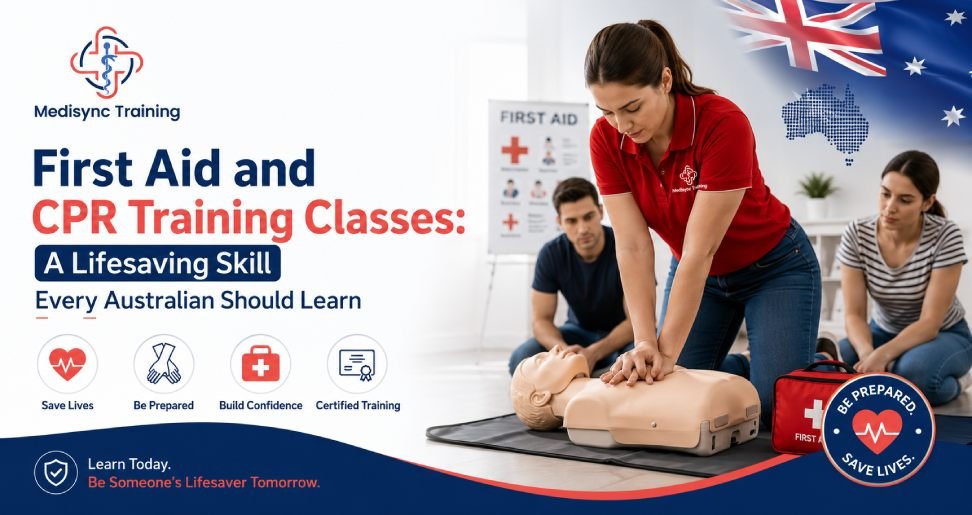
First Aid and CPR Training Classes: A Lifesaving Skill Every Australian Should Learn
June 26, 2026
Emergencies can happen anywhere—at home, in the workplace, on the road, or during a weekend outing. In those crucial first few minutes before paramedics arrive, the actions of a trained bystander can make the difference between life and death. That’s why first aid and CPR training classes have become an essential investment for individuals, families, and businesses across Australia.
Whether you’re looking to meet workplace compliance requirements or simply want the confidence to help someone in an emergency, completing accredited first aid and CPR training equips you with practical, lifesaving skills that can be used when they matter most.
Why First Aid and CPR Training Matters
Every year, thousands of Australians experience medical emergencies such as cardiac arrest, choking, severe bleeding, burns, allergic reactions, and fractures. According to Australian first aid guidelines, immediate assistance before emergency services arrive significantly improves survival outcomes, especially in cardiac arrest cases where early CPR and defibrillation are critical.
By enrolling in first aid and CPR training classes, you’ll learn how to:
- Perform CPR on adults, children, and infants.
- Use an Automated External Defibrillator (AED).
- Respond to choking emergencies.
- Control severe bleeding and treat wounds.
- Manage fractures, burns, and sprains.
- Recognise signs of stroke and heart attack.
- Assist with asthma and anaphylaxis emergencies.
- Keep a casualty stable until professional medical help arrives.
These practical skills not only help save lives but also build confidence during high-pressure situations.
Who Should Take First Aid and CPR Training?
One of the biggest misconceptions is that first aid training is only for healthcare professionals. In reality, these courses are suitable for everyone.
Ideal participants include:
- Parents and grandparents
- Teachers and childcare educators
- Workplace employees
- Sports coaches
- Hospitality staff
- Aged care and disability support workers
- Construction workers
- Fitness professionals
- Community volunteers
Many Australian workplaces also require nationally recognised first aid qualifications to meet workplace health and safety obligations.
What You’ll Learn During a Course
Modern first aid training focuses on realistic, hands-on scenarios rather than memorising theory alone.
Most accredited courses include practical learning covering:
CPR Techniques
Participants learn how to deliver high-quality chest compressions, provide rescue breaths when appropriate, and safely use an AED.
Emergency Response
Understanding how to assess danger, ensure scene safety, contact emergency services (000), and prioritise treatment.
Common Medical Emergencies
Courses teach participants how to recognise and respond to:
- Cardiac arrest
- Heart attacks
- Strokes
- Seizures
- Diabetic emergencies
- Allergic reactions
Injury Management
You’ll also gain practical skills for treating:
- Cuts and bleeding
- Burns
- Broken bones
- Head injuries
- Snake bites
- Sprains and strains
Many nationally recognised Australian first aid courses combine CPR training with broader emergency response education, making them suitable for both workplace and personal use.
Choosing the Right Training Provider
Not all training providers deliver the same learning experience.
When selecting first aid and CPR training classes, consider providers that offer:
- Nationally recognised certification
- Experienced trainers
- Hands-on practical sessions
- Small class sizes
- Flexible course schedules
- Blended online and face-to-face learning
- Workplace group bookings
A quality provider doesn’t simply help you pass an assessment—they ensure you leave with the confidence to act during a real emergency.
First Aid Training Melbourne
Demand for first aid training Melbourne continues to grow as more businesses, schools, childcare centres, and community organisations prioritise workplace safety and emergency preparedness.
Whether you’re renewing an existing qualification or completing your first certification, Melbourne offers numerous opportunities to complete nationally recognised training.
For professionals working in education, healthcare, hospitality, construction, or corporate environments, choosing a provider that offers practical, scenario-based learning helps ensure the training translates into real-world confidence.
First Aid and CPR Training Melbourne
Many learners specifically search for first aid and CPR training Melbourne because they require both CPR certification and broader first aid qualifications in a single course.
Combined training is particularly valuable because participants learn how to:
- Respond immediately during cardiac arrest.
- Use CPR correctly until emergency services arrive.
- Treat other common workplace and community injuries.
- Meet employer compliance requirements.
The combination of CPR and first aid creates a more complete emergency response skill set that can be applied across countless situations.
First Aid Training Perth
For residents and businesses in Western Australia, first aid training Perth remains an essential investment in workplace safety and community wellbeing.
Whether you’re an individual seeking personal development or an employer organising staff training, choosing a provider with experienced instructors and flexible scheduling makes the learning process far more effective.
Many Perth organisations now prefer blended learning models that combine online theory with practical face-to-face assessments, allowing participants to complete training efficiently while still gaining valuable hands-on experience.
Why Medisync Training Stands Out
If you’re looking for high-quality first aid and CPR training classes in Western Australia, Medisync Training has established a strong reputation for delivering engaging, nationally recognised courses.
Rather than focusing solely on theory, Medisync Training places significant emphasis on practical learning through realistic emergency scenarios. This approach helps participants build confidence while developing the skills needed to respond effectively under pressure.
Their courses are ideal for:
- Individuals
- Workplaces
- Healthcare professionals
- Childcare educators
- Disability support workers
- Aged care staff
- Community organisations
Medisync Training also offers flexible course options, including blended learning with online theory and face-to-face practical sessions. Courses include nationally recognised units such as HLTAID009 (Provide Cardiopulmonary Resuscitation), HLTAID011 (Provide First Aid), and HLTAID012 (Provide First Aid in an Education and Care Setting).
This practical, learner-focused approach ensures participants leave not only with certification but also with genuine confidence in responding during emergencies.
The Long-Term Benefits of First Aid Training
Completing a first aid course offers benefits well beyond obtaining a certificate.
You’ll gain:
- Greater confidence in emergencies
- Valuable workplace qualifications
- Skills to protect your family
- Improved employability
- Knowledge that could save someone’s life
Employers also benefit from having trained staff who can respond quickly while waiting for emergency medical services.
In many situations, the first responder isn’t a healthcare professional—it’s a colleague, friend, family member, or passer-by. Having the right training empowers ordinary Australians to make an extraordinary difference.
Final Thoughts
Learning first aid isn’t simply another qualification—it’s a practical life skill that can help protect the people around you.
Whether you’re searching for first aid training Melbourne, first aid training Perth, or comprehensive first aid and CPR training Melbourne, choosing an experienced provider is key to receiving quality education that prepares you for real emergencies.
For learners in Western Australia, Medisync Training offers nationally recognised, hands-on courses designed to build both competence and confidence. With experienced trainers, flexible learning options, and practical scenario-based instruction, they provide an excellent pathway for anyone wanting to gain essential lifesaving skills.
The next emergency may happen when you least expect it. The right training today could help you save a life tomorrow.
Popular Posts
-
First Aid for Severe Hand Injuries: Essential Steps to Prevent Further Damage
October 26, 2026Hand injuries can happen at home, in the workplace, during sports, or while using tools...
-
First Aid for Amputations: Emergency Response Guide
October 21, 2026An amputation is a serious medical emergency that occurs when a body part, such as...
-
First Aid for Neck Injuries After an Accident: What You Should Do
October 16, 2026Neck injuries can occur unexpectedly after road accidents, workplace incidents, sports injuries, or accidental falls....
-
First Aid for Back and Spinal Injuries: What You Should Do in an Emergency
October 15, 2026Back and spinal injuries can occur unexpectedly at home, in the workplace, during sports activities,...
-
First Aid for Joint Injuries: Essential Steps to Reduce Pain and Prevent Further Damage
October 14, 2026Joint injuries can happen unexpectedly during sports, exercise, workplace activities, household tasks, or everyday movement....