
Asthma Triggers You Didn’t Know Could Be Dangerous
May 6, 2026
Asthma isn’t just about breathing difficulty—it’s a condition where your airways become sensitive and react strongly to certain triggers. When exposed, the airways narrow due to muscle tightening, inflammation, and excess mucus, making it harder to breathe.
While most people know about common triggers like dust or pollution, many hidden triggers can catch you off guard—and sometimes, they’re more dangerous.
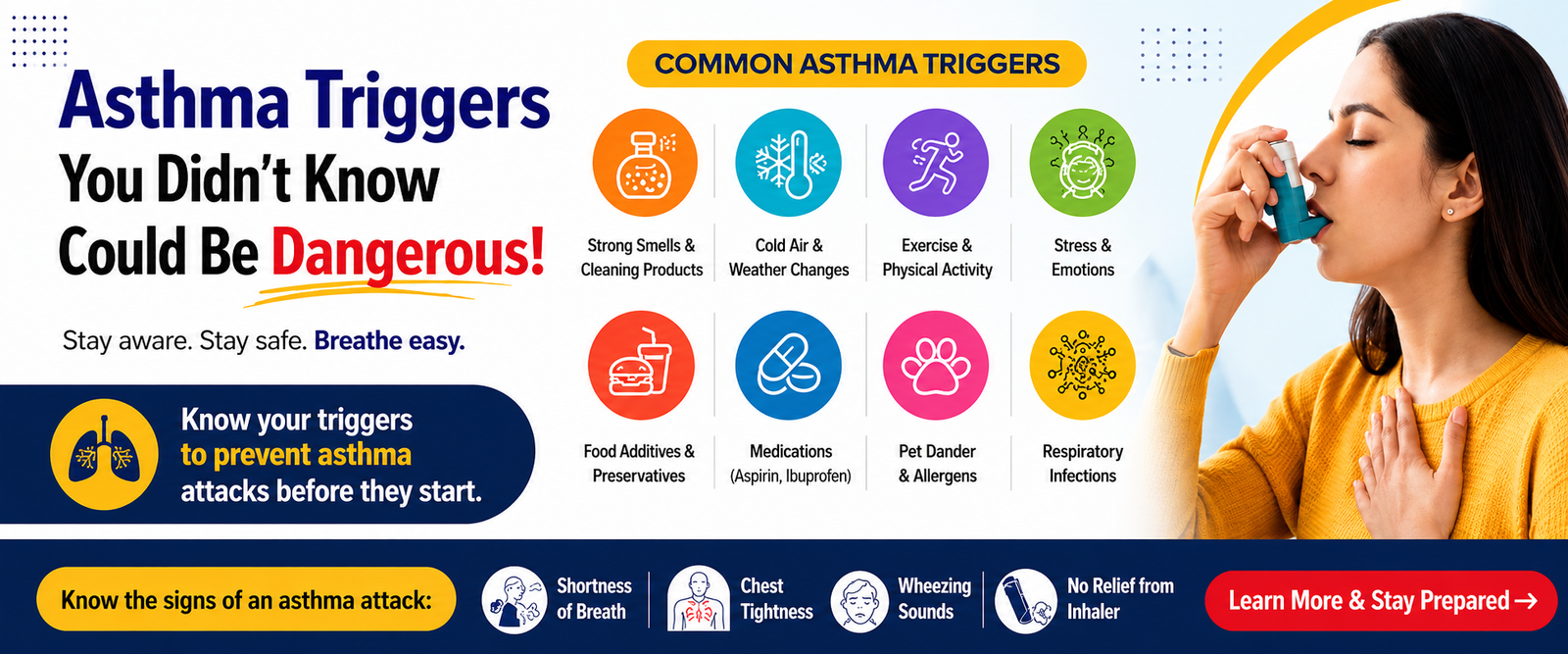
- Strong Smells & Cleaning Products
That fresh-smelling room might not be so safe after all. Perfumes, room fresheners, and even household cleaning sprays can irritate the airways.
Why it’s dangerous:
These chemicals can cause sudden airway tightening, especially in enclosed spaces.
Tip:
Switch to mild or fragrance-free products whenever possible.
- Cold Air & Sudden Weather Changes
Stepping out into cold air or moving between AC and heat quickly can trigger asthma symptoms.
Why it’s dangerous:
Cold air can dry and irritate airways, leading to coughing and breathlessness.
Tip:
Cover your nose and mouth with a scarf in cold weather.
- Exercise (Yes, Really!)
Exercise is healthy—but for some people, it can trigger asthma (exercise-induced asthma).
Why it’s dangerous:
Rapid breathing during workouts can irritate sensitive airways.
Tip:
Warm up properly and keep your inhaler nearby.
- Strong Emotions & Stress
Believe it or not, emotional stress, crying, or even intense laughter can trigger symptoms.
Why it’s dangerous:
Changes in breathing patterns can tighten the airways.
Tip:
Practice breathing exercises and stress management.
- Food Additives & Preservatives
Certain processed foods contain sulfites and additives that can trigger asthma.
Why it’s dangerous:
These substances can cause unexpected reactions, especially in sensitive individuals.
Tip:
Check labels and limit processed food intake.
- Common Medications
Some medications like aspirin or ibuprofen can worsen asthma symptoms in certain people.
Why it’s dangerous:
They may trigger airway inflammation in sensitive individuals.
Tip:
Always consult a doctor before taking new medications.
- Pet Dander (Even If You Love Them!)
Tiny skin flakes from pets can trigger asthma—even if the pet looks clean.
Why it’s dangerous:
These particles stay in the air and are easily inhaled.
Tip:
Keep pets out of sleeping areas and clean regularly.
- Respiratory Infections
Colds, flu, or viral infections are one of the most common—but underestimated—triggers.
Why it’s dangerous:
They can quickly worsen asthma and lead to severe attacks.
Tip:
Maintain hygiene and take vaccinations when recommended.
When to Take It Seriously
An asthma attack can escalate quickly. Watch for warning signs like:
- Severe shortness of breath
- Inability to speak properly
- Chest tightness
- No relief from inhaler
These symptoms indicate a medical emergency and require immediate attention.
Final Thoughts
Asthma triggers are everywhere—and not always obvious. The key to managing asthma is awareness and prevention.
By identifying your personal triggers and avoiding them, you can significantly reduce the risk of sudden attacks and live a healthier, more comfortable life
Popular Posts
-
Childcare First Aid Course Requirements in Australia: Everything You Need to Know
July 22, 2026Working in the childcare and early education sector comes with significant responsibilities. Whether you are...
-
First Aid Certificate Course Midland WA: Everything You Need to Know Before You Enrol
July 17, 2026Accidents and medical emergencies can happen anywhere—at home, in the workplace, at school, or even...
-
Paediatric Resuscitation Guidelines for Healthcare Workers: An Essential Guide for Australian Clinical Practice
July 8, 2026Paediatric emergencies are among the most challenging situations healthcare workers encounter. Unlike adult patients, infants...
-
Traumatic Cardiac Arrest Management: A Practical Guide for Faster Emergency Response in Australia
July 6, 2026Traumatic cardiac arrest (TCA) is one of the most critical medical emergencies a person can...
-
How to Use an AED in an Emergency: A Step-by-Step Guide for Australians
July 1, 2026Every minute counts during a cardiac emergency. When someone suffers a sudden cardiac arrest (SCA),...