

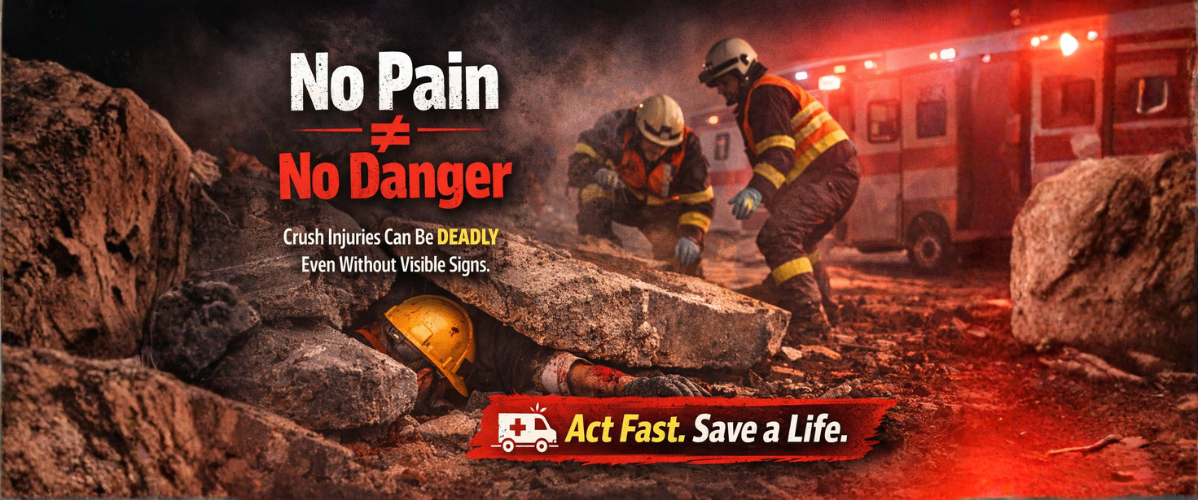
Hidden Danger: Why Crush Injuries Can Be Deadly Even Without Pain
April 21, 2026
Crush injuries are often associated with dramatic accidents—collapsed buildings, vehicle entrapments, or industrial mishaps. But what makes them especially dangerous is something far less obvious: they may not always cause immediate pain or visible injury.
This hidden nature can delay treatment—and in many cases, that delay can be life-threatening.
What Is a Crush Injury?
A crush injury occurs when a part of the body is subjected to significant pressure, typically between two heavy objects. This pressure can damage muscles, tissues, blood vessels, and even bones.
Common causes include:
- Road traffic accidents
- Falling debris
- Industrial or construction site incidents
- Prolonged immobility (e.g., unconscious person lying in one position)
In some cases, a person’s own body weight can cause a crush injury if they remain immobile for long periods.
The Silent Threat: No Pain Doesn’t Mean No Injury
One of the most dangerous aspects of crush injuries is that the victim may not feel pain immediately. This can happen because:
- Nerve damage reduces pain sensation
- Adrenaline masks discomfort during trauma
- Internal damage occurs without visible wounds
As a result, a person may underestimate the severity of their condition and delay seeking help.
What Is Crush Syndrome?
Crush syndrome is a serious medical condition that can develop after a crush injury—especially when large muscle groups (like the legs) are involved.
It occurs when damaged muscles release harmful substances into the bloodstream, including toxins that can:
- Damage the kidneys
- Cause heart rhythm problems
- Lead to life-threatening complications
Why Time Matters
The risk of developing crush syndrome increases with the duration of compression.
The longer a body part is trapped:
- The greater the muscle damage
- The higher the toxin release after pressure is removed
This is why quick and safe removal of the crushing force is critical.
Signs You Should Never Ignore
Even if there’s no pain, watch for:
- Swelling or tightness in a limb
- Weakness or inability to move
- Pale or cold skin
- Dark-colored urine (a late sign)
- Signs of shock (dizziness, rapid pulse, confusion)
Important: A person may show no external injury at all, yet still be at serious risk.
First Aid: What You Should Do
If you suspect a crush injury:
Act Immediately
- Ensure the scene is safe
- Call emergency services
Remove the Pressure (If Safe)
- Release the crushing force as soon as possible
- Do not delay rescue
Control Bleeding
- Apply direct pressure to wounds
- Use a tourniquet only if there is severe, life-threatening bleeding
Monitor the Person
- Check breathing and responsiveness
- Reassure and keep them calm
Prevent Hypothermia
- Keep the person warm using blankets or clothing
Always Seek Medical Help
Even if the person feels “fine,” every crush injury requires hospital evaluation.
Internal damage and crush syndrome may develop hours later, making early medical care essential.
Final Thoughts
Crush injuries are deceptive. The absence of pain does not mean the absence of danger.
A person may walk away from an incident feeling okay—only to develop severe complications later.
When in doubt, treat it as an emergency. Act fast. Get medical help. Save a life.
Popular Posts
-
First Aid for Severe Hand Injuries: Essential Steps to Prevent Further Damage
October 26, 2026Hand injuries can happen at home, in the workplace, during sports, or while using tools...
-
First Aid for Amputations: Emergency Response Guide
October 21, 2026An amputation is a serious medical emergency that occurs when a body part, such as...
-
First Aid for Neck Injuries After an Accident: What You Should Do
October 16, 2026Neck injuries can occur unexpectedly after road accidents, workplace incidents, sports injuries, or accidental falls....
-
First Aid for Back and Spinal Injuries: What You Should Do in an Emergency
October 15, 2026Back and spinal injuries can occur unexpectedly at home, in the workplace, during sports activities,...
-
First Aid for Joint Injuries: Essential Steps to Reduce Pain and Prevent Further Damage
October 14, 2026Joint injuries can happen unexpectedly during sports, exercise, workplace activities, household tasks, or everyday movement....