
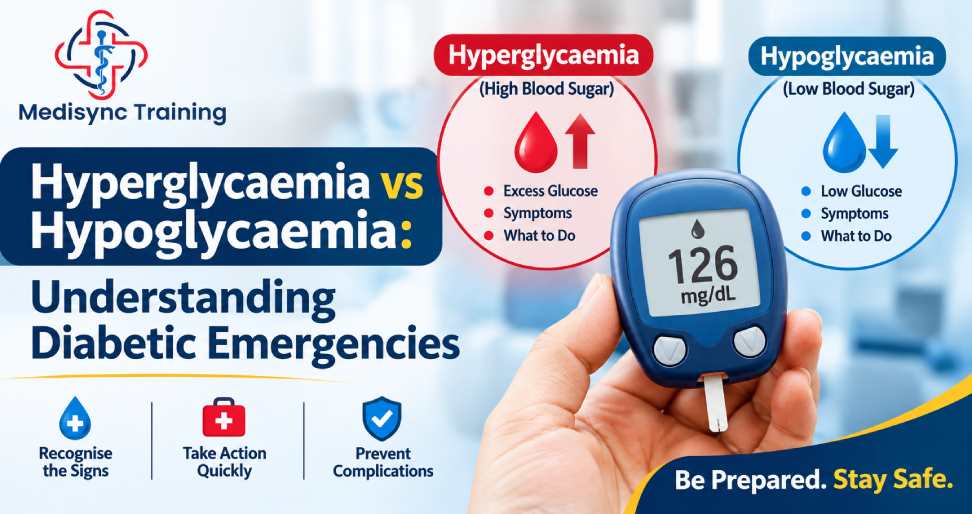
Hyperglycaemia vs Hypoglycaemia: Understanding Diabetic Emergencies
November 23, 2026
Diabetes is a long-term health condition that affects how the body regulates blood glucose (sugar). People living with diabetes may experience sudden changes in blood sugar levels, which can sometimes develop into medical emergencies. Two of the most common complications are hyperglycaemia (high blood sugar) and hypoglycaemia (low blood sugar). Although both conditions are associated with diabetes, their causes, warning signs and first aid responses are very different.
Understanding the difference between hyperglycaemia and hypoglycaemia is essential for individuals, caregivers, healthcare professionals and workplace first aiders. Recognising symptoms early and responding appropriately can help prevent serious complications and potentially save lives.
In this guide, we will explore the differences between these two diabetic emergencies, their symptoms, common causes, first aid management and the importance of diabetes emergency awareness.
1. What Is Hyperglycaemia?
Hyperglycaemia occurs when the blood glucose level becomes higher than the normal or recommended range. It commonly affects people with diabetes when their bodies cannot produce enough insulin or cannot use insulin effectively.
Insulin is a hormone that helps glucose move from the bloodstream into the body’s cells to provide energy. When insulin is insufficient or ineffective, glucose builds up in the blood.
A blood glucose reading above 15 mmol/L is commonly considered high, although individual targets and clinical circumstances can vary.
Common causes of hyperglycaemia include:
-
Missing prescribed insulin or diabetes medication.
-
Consuming more carbohydrates than planned.
-
Experiencing physical or emotional stress.
-
Developing an infection or illness.
-
Reduced physical activity.
-
Certain medications, including corticosteroids.
Hyperglycaemia may develop gradually, making it important to recognise early warning signs before the condition becomes severe.
2. What Is Hypoglycaemia?
Hypoglycaemia is a condition in which blood glucose levels fall below 4 mmol/L. It is commonly known as a hypo and requires immediate attention.
Glucose provides energy to the brain and other organs. When blood sugar drops too low, the brain may not receive enough energy to function properly. Without prompt treatment, severe hypoglycaemia can result in seizures, unconsciousness or other life-threatening complications.
People who use insulin or certain glucose-lowering medications are particularly vulnerable to hypoglycaemia.
Common causes of hypoglycaemia include:
-
Skipping meals or eating less than usual.
-
Taking too much insulin or diabetes medication.
-
Performing unexpected or strenuous physical activity.
-
Drinking alcohol without eating enough food.
-
Delaying meals after taking diabetes medication.
-
Experiencing vomiting or diarrhoea.
Unlike hyperglycaemia, hypoglycaemia can develop quickly and may require immediate first aid intervention.
3. Hyperglycaemia vs Hypoglycaemia: Key Differences
Although both conditions affect blood glucose levels, understanding their differences helps people recognise which type of diabetic emergency may be occurring.
| Comparison | Hyperglycaemia | Hypoglycaemia |
|---|---|---|
| Blood glucose | Usually above 15 mmol/L | Below 4 mmol/L |
| Main condition | High blood sugar | Low blood sugar |
| Development | Often gradual | Often rapid |
| Common symptom | Excessive thirst | Sweating and shaking |
| Energy levels | Tiredness and lethargy | Weakness and dizziness |
| Behaviour | Irritability | Confusion or unusual behaviour |
| Serious complication | Diabetic ketoacidosis (DKA) | Seizures or unconsciousness |
Both conditions require appropriate attention. However, hypoglycaemia is generally more time-critical because blood glucose can fall rapidly and affect brain function.
4. Warning Signs and Symptoms of Hyperglycaemia
Recognising the symptoms of high blood sugar can help prevent the condition from progressing into a serious emergency.
Common warning signs include:
-
Increased thirst and dry mouth.
-
Frequent urination.
-
Blurred vision.
-
Persistent tiredness or weakness.
-
Headaches.
-
Difficulty concentrating.
-
Unexplained weight loss.
-
Dehydration.
One of the most serious complications associated with hyperglycaemia is diabetic ketoacidosis (DKA). This occurs when the body produces excessive ketones because it cannot use glucose effectively for energy.
Warning signs of DKA include nausea, vomiting, abdominal pain, fruity-smelling breath, dehydration and deep or rapid breathing.
DKA is a medical emergency and requires immediate hospital treatment. Anyone experiencing these symptoms should receive urgent medical assistance by calling Triple Zero (000) in Australia.
5. Warning Signs and Symptoms of Hypoglycaemia
Hypoglycaemia can affect both physical and mental functioning. Its symptoms may appear suddenly, so people around someone with diabetes should understand what to look for.
Common symptoms include:
-
Excessive sweating.
-
Shaking or trembling.
-
Sudden hunger.
-
Dizziness or light-headedness.
-
Headaches.
-
Pale skin.
-
Irritability or mood changes.
-
Tingling around the lips.
-
Difficulty concentrating.
If hypoglycaemia becomes severe, the person may develop slurred speech, unusual behaviour, confusion, seizures or unconsciousness.
In such situations, immediate emergency assistance is essential.
6. First Aid Management for Diabetic Emergencies
Providing the correct first aid response can make a significant difference during a diabetic emergency. First aiders should remain calm, assess the person’s condition and follow appropriate emergency procedures.
First Aid for Hypoglycaemia
If the person is conscious, responsive and able to swallow safely, follow these steps:
-
Help the person sit down comfortably and reassure them.
-
Check their blood glucose level if a testing device is available.
-
If their blood glucose is below 4 mmol/L, provide approximately 15 grams of fast-acting carbohydrates, such as glucose tablets, fruit juice or regular soft drink.
-
Wait 10–15 minutes and check their blood glucose again.
-
If the level remains below 4 mmol/L, repeat the treatment.
-
Once their blood glucose improves, provide a snack containing longer-acting carbohydrates if appropriate.
Important: If the person becomes unconscious, drowsy or unable to swallow safely, never give them food, drinks or glucose gel by mouth. Place them in the recovery position if appropriate, call Triple Zero (000) and monitor their breathing. Administer glucagon only if available and you are trained to do so.
First Aid for Hyperglycaemia
The management of high blood sugar depends on the person’s diabetes management plan and the severity of their symptoms.
First aiders should:
-
Help the person sit or rest comfortably.
-
Check their blood glucose level if possible.
-
Encourage them to drink water if they are conscious and able to swallow.
-
Encourage them to follow their prescribed diabetes management plan.
-
Avoid giving additional insulin or changing medication doses unless specifically directed under an appropriate management plan.
-
Seek medical assistance if symptoms persist or worsen.
If the person develops vomiting, abdominal pain, breathing difficulties, severe dehydration or confusion, call Triple Zero (000).
For both conditions, an unconscious person who is not breathing normally requires immediate CPR and AED support according to Australian first aid guidelines.
7. How Can Diabetic Emergencies Be Prevented?
Although diabetic emergencies cannot always be avoided, certain precautions can reduce their likelihood.
Some important preventive measures include:
-
Monitoring blood glucose levels regularly.
-
Following prescribed medication schedules.
-
Maintaining balanced and consistent meals.
-
Staying physically active according to medical advice.
-
Carrying glucose tablets or other suitable hypo treatments.
-
Avoiding excessive alcohol consumption.
-
Recognising personal warning signs.
-
Maintaining regular appointments with healthcare professionals.
Family members, colleagues, teachers and caregivers should also understand the individual’s diabetes management plan and know when to seek emergency assistance.
8. Why First Aid Training Is Important for Managing Diabetic Emergencies
Diabetic emergencies can occur at home, in workplaces, educational institutions and public environments. People nearby may be the first to recognise the symptoms and provide assistance before professional medical help arrives.
Proper first aid knowledge helps individuals distinguish between high and low blood sugar symptoms, understand the appropriate response and avoid potentially dangerous mistakes.
Medisync Training supports individuals, workplaces and community organisations through professional first aid education and nationally recognised training opportunities in Australia.
Through its First Aid Certificate training, Medisync Training helps participants develop essential emergency response knowledge and practical skills. Its training options also include CPR and first aid for education and care settings, helping workers and caregivers build confidence in responding to unexpected medical situations.
Investing in quality first aid training can improve workplace preparedness, strengthen community safety and help people respond more confidently when emergencies occur.
Conclusion
Hyperglycaemia and hypoglycaemia are two different diabetic emergencies that require different responses. While hyperglycaemia involves dangerously elevated blood glucose levels, hypoglycaemia occurs when blood sugar drops below 4 mmol/L. Both conditions can lead to serious complications if their symptoms are ignored.
Understanding their causes, recognising early warning signs and knowing the correct first aid procedures are essential for protecting people living with diabetes. With appropriate awareness, preparation and professional first aid training from organisations such as Medisync Training, individuals and workplaces can become better equipped to respond to diabetic emergencies
Popular Posts
-
Hyperglycaemia vs Hypoglycaemia: Understanding Diabetic Emergencies
November 23, 2026Diabetes is a long-term health condition that affects how the body regulates blood glucose (sugar)....
-
Diabetic Emergency First Aid: Symptoms, Immediate Response and Essential Life-Saving Skills
November 20, 2026A diabetic emergency can happen suddenly and may become life-threatening if the right first aid...
-
Diabetic Emergency First Aid: What You Need to Know
November 18, 2026Diabetes is a common health condition that affects how the body regulates blood glucose (blood...
-
First Aid for Low Blood Sugar and Hypoglycaemia: Symptoms, Causes and Emergency Treatment
November 16, 2026Low blood sugar, medically known as hypoglycaemia, is a condition that occurs when the glucose...
-
Fainting vs Seizure: How to Tell the Difference
November 13, 2026Understanding the difference between fainting and a seizure is important because both conditions can cause...