Diabetic Emergency First Aid: Symptoms, Immediate Response and Essential Life-Saving Skills
November 20, 2026
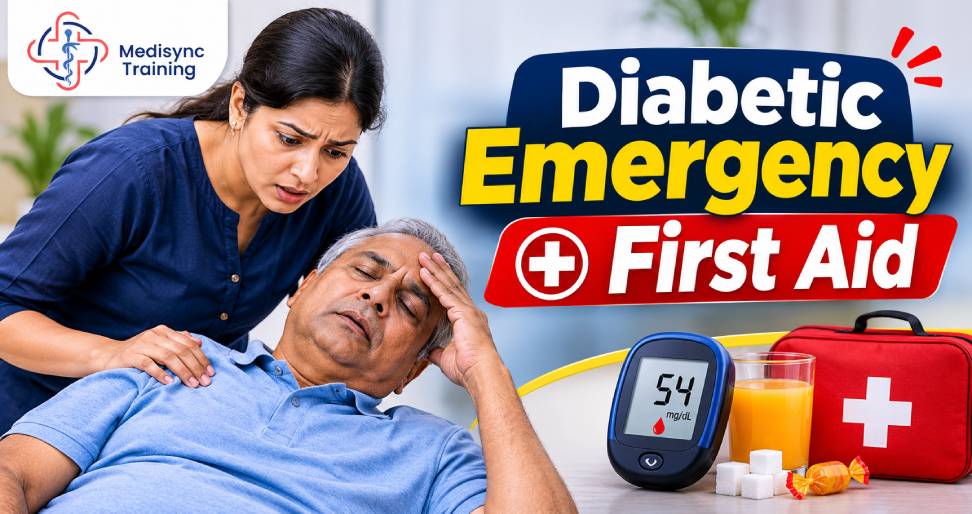
A diabetic emergency can happen suddenly and may become life-threatening if the right first aid is not provided on time. Whether at home, in the workplace, at school, or in a public place, knowing how to respond to a diabetic emergency can help protect someone’s life.
Diabetes affects how the body regulates blood glucose (blood sugar). Sometimes, blood sugar levels become dangerously low or extremely high, requiring immediate attention. Understanding diabetic emergency first aid, recognising warning signs, and knowing when to seek medical assistance are essential skills for everyone.
With proper first aid knowledge and practical training, individuals can become more confident in handling unexpected medical situations. Medisync Training helps promote awareness of essential emergency response skills through first-aid learning and training opportunities.
What Is a Diabetic Emergency?
A diabetic emergency occurs when a person’s blood glucose level becomes dangerously low or high. These situations can affect normal body functions and may lead to serious complications if left untreated.
There are two major types of diabetic emergencies:
- Hypoglycaemia (Low Blood Sugar): This happens when blood glucose levels fall below the normal range. It may occur due to excessive insulin, missed meals, physical activity, or certain diabetes medications.
- Hyperglycaemia (High Blood Sugar): This occurs when blood glucose levels become too high, sometimes because of insufficient insulin, illness, missed medication, or other factors.
Both conditions require attention, but the first-aid response can be different.
Common Signs and Symptoms of a Diabetic Emergency
Recognising the symptoms early is one of the most important steps in providing effective diabetic emergency first aid.
Symptoms of Low Blood Sugar (Hypoglycaemia)
Common warning signs include:
- Excessive sweating and cold, clammy skin
- Shaking or trembling
- Sudden hunger
- Dizziness or weakness
- Headache
- Confusion or unusual behaviour
- Difficulty concentrating
- Blurred vision
- Rapid heartbeat
In severe cases, hypoglycaemia may cause seizures or unconsciousness.
Symptoms of High Blood Sugar (Hyperglycaemia)
High blood sugar may develop more gradually. Warning signs include:
- Excessive thirst
- Frequent urination
- Tiredness and weakness
- Blurred vision
- Dry mouth and dehydration
- Nausea or vomiting
Severe hyperglycaemia can lead to diabetic ketoacidosis (DKA), a medical emergency. Symptoms may include abdominal pain, fruity-smelling breath, rapid or deep breathing, vomiting, and confusion.
Diabetic Emergency First Aid: Step-by-Step Guide
Providing the correct first aid can make an important difference while waiting for professional medical assistance.
1. Check the Person’s Condition
Approach the person calmly and check whether they are conscious and responding normally. Ask if they have diabetes and whether they are experiencing low or high blood sugar.
Look for medical identification, glucose tablets, or diabetes-related medication if available.
2. Help Someone Experiencing Low Blood Sugar
If the person is conscious, alert, and able to swallow safely:
- Help them sit down and rest.
- Offer fast-acting sugar, such as glucose tablets, glucose gel, or fruit juice.
- Follow their individual diabetes emergency plan if available.
- Recheck blood glucose after approximately 15 minutes, if a testing device is available.
- Repeat fast-acting carbohydrate treatment if their glucose remains low, following their care plan.
Once the person improves, they may need a longer-lasting carbohydrate snack or meal.
Important: Never give food, water, or sugary drinks to someone who is unconscious, having a seizure, or unable to swallow safely.
3. Respond to Severe Hypoglycaemia
If the person becomes unconscious or experiences a seizure:
- Call emergency medical services immediately (112 in India).
- Do not give anything by mouth.
- Check their breathing.
- If they are breathing normally, place them in the recovery position when appropriate.
- If trained and authorised, administer prescribed glucagon if available.
- Monitor their breathing and responsiveness until medical help arrives.
4. Respond to High Blood Sugar
If someone shows signs of severe hyperglycaemia:
- Seek urgent medical assistance if serious symptoms are present.
- Encourage the person to follow their prescribed diabetes management plan.
- Do not administer additional insulin or change medication doses unless directed by their healthcare professional.
- Monitor their condition while waiting for medical assistance.
If they experience vomiting, abdominal pain, fruity-smelling breath, rapid breathing, or confusion, treat the situation as a medical emergency.
What Should You Avoid During a Diabetic Emergency?
Incorrect first aid can make an emergency more dangerous. Remember these important precautions:
- Never force food or drinks into an unconscious person’s mouth.
- Never assume that every diabetic emergency is caused by low blood sugar.
- Do not give insulin without appropriate medical instructions.
- Do not leave the affected person alone.
- Never ignore seizures, breathing difficulties, or unconsciousness.
The safest approach is to recognise the symptoms, provide appropriate basic first aid, and seek professional medical help when necessary.
Why Is First Aid Training Important for Diabetic Emergencies?
Knowing the theory of first aid is useful, but practical knowledge is equally important. During an emergency, people may panic or become confused about what to do.
First aid training helps individuals develop essential skills, including:
- Recognising medical emergency warning signs.
- Understanding the difference between hypoglycaemia and hyperglycaemia.
- Providing appropriate immediate assistance.
- Learning recovery position techniques.
- Understanding when emergency medical services are required.
- Developing confidence in responding to unexpected situations.
These skills can be valuable for healthcare workers, caregivers, teachers, workplace employees, students, and members of the general public.
Learn Essential First Aid Skills with Medisync Training
Are you looking to develop practical first aid knowledge and improve your ability to respond to medical emergencies?
Medisync Training can be a valuable learning destination for individuals interested in developing essential emergency response knowledge and first aid skills.
Understanding situations such as diabetic emergencies, fainting, breathing difficulties, and other sudden medical conditions can help individuals become better prepared to respond responsibly.
Through appropriate first aid learning and practical training, participants can work towards developing the knowledge and confidence needed to assist others during unexpected emergencies.
Whether you are a healthcare professional, student, caregiver, or working professional, learning first aid is an important step towards creating safer homes, workplaces, and communities.
Take the next step towards emergency preparedness. Explore Medisync Training and enquire about available first aid training programmes.
Frequently Asked Questions (FAQs) :-
1. What is the first thing to do during a diabetic emergency?
Ans :- Check whether the person is conscious and responsive. Identify possible symptoms, check blood glucose if possible, and provide appropriate first aid. Call emergency services if the person is seriously unwell.
2. What should you give someone with low blood sugar?
Ans :- If the person is conscious and can swallow safely, offer fast-acting carbohydrates such as glucose tablets, glucose gel, or fruit juice.
3. Can a diabetic emergency cause unconsciousness?
Ans :- Yes. Severe hypoglycaemia and certain complications of severe hyperglycaemia can cause unconsciousness and require immediate medical attention.
4. Why should I learn diabetic emergency first aid?
Ans :- Learning diabetic emergency first aid helps you recognise warning signs, understand appropriate immediate responses, and know when to call for professional medical assistance.
5. Where can I learn first aid training?
Ans :- You can explore available first aid learning and training opportunities through Medisync Training to develop essential emergency response knowledge and practical skills.
Conclusion
Diabetic emergencies can happen unexpectedly, and early recognition can help prevent serious complications. Understanding the symptoms of low and high blood sugar, providing appropriate first aid, and knowing when to seek emergency medical assistance are essential life-saving skills.
Do not wait for an emergency to learn how to respond. Explore Medisync Training to learn more about first aid training opportunities and take a positive step towards becoming better prepared to help others.
Popular Posts
-
Diabetic Emergency First Aid: Symptoms, Immediate Response and Essential Life-Saving Skills
November 20, 2026A diabetic emergency can happen suddenly and may become life-threatening if the right first aid...
-
Diabetic Emergency First Aid: What You Need to Know
November 18, 2026Diabetes is a common health condition that affects how the body regulates blood glucose (blood...
-
First Aid for Low Blood Sugar and Hypoglycaemia: Symptoms, Causes and Emergency Treatment
November 16, 2026Low blood sugar, medically known as hypoglycaemia, is a condition that occurs when the glucose...
-
Fainting vs Seizure: How to Tell the Difference
November 13, 2026Understanding the difference between fainting and a seizure is important because both conditions can cause...
-
First Aid for Fainting: What Should You Do?
November 11, 2026Fainting can happen suddenly and without much warning. A person may feel dizzy, weak, sweaty,...