First Aid for Low Blood Sugar and Hypoglycaemia: Symptoms, Causes and Emergency Treatment
November 16, 2026
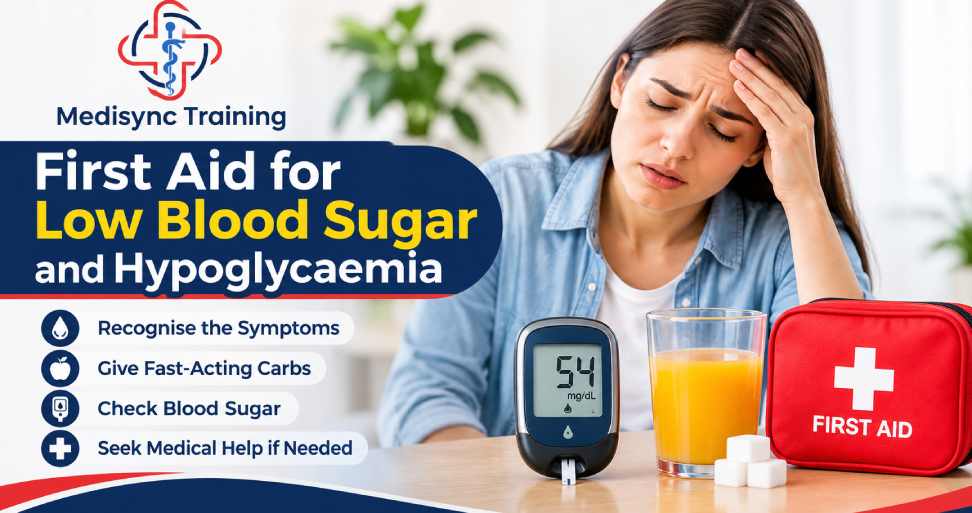
Low blood sugar, medically known as hypoglycaemia, is a condition that occurs when the glucose level in the blood drops below the normal range. Glucose is the body’s primary source of energy, especially for the brain. When blood sugar becomes too low, the body may struggle to function properly, causing symptoms such as sweating, shaking, dizziness, confusion and weakness. In severe cases, hypoglycaemia can lead to seizures or unconsciousness.
Knowing how to provide first aid for low blood sugar is essential because prompt treatment can prevent serious complications. Whether someone has diabetes or experiences a sudden drop in blood glucose for another reason, recognising the warning signs and responding correctly can make a significant difference.
This guide explains the common causes, symptoms, first aid steps and preventive measures for managing hypoglycaemia.
1. What Is Hypoglycaemia?
Hypoglycaemia occurs when blood glucose levels fall below 4 mmol/L (approximately 70 mg/dL). It is commonly experienced by people with diabetes who take insulin or certain blood sugar-lowering medications.
Glucose comes primarily from the carbohydrates we eat. After digestion, it enters the bloodstream and provides energy to the body’s cells. Insulin helps move glucose from the blood into cells. When there is too much insulin compared with the available glucose, blood sugar levels can fall dangerously low.
Mild hypoglycaemia can often be treated quickly by consuming fast-acting carbohydrates. However, severe hypoglycaemia requires immediate assistance, particularly if the person cannot swallow safely or loses consciousness.
2. Common Causes of Low Blood Sugar
Several factors can contribute to a sudden drop in blood glucose. Understanding these causes helps individuals recognise potential risks and take preventive action.
-
Skipping meals: Missing meals or eating less than usual can reduce the amount of glucose available in the bloodstream.
-
Excessive medication: Taking more insulin or diabetes medication than prescribed can cause blood sugar to fall.
-
Physical activity: Unexpected or prolonged exercise can use more glucose than the body has available.
-
Alcohol consumption: Drinking alcohol, particularly without eating, can interfere with the liver’s ability to release glucose.
-
Delayed meals: Taking diabetes medication and then delaying food intake may increase the risk of hypoglycaemia.
-
Certain medical conditions: Liver disease, kidney problems and some hormonal disorders can occasionally contribute to low blood glucose.
Identifying the underlying cause is important for preventing repeated episodes.
3. Recognising the Symptoms of Hypoglycaemia
The symptoms of low blood sugar can develop quickly and may become more serious if treatment is delayed. Early recognition allows people nearby to provide appropriate first aid.
Early warning signs include:
-
Sudden sweating or clammy skin.
-
Shaking or trembling hands.
-
Feeling unusually hungry.
-
Dizziness or light-headedness.
-
Headaches.
-
Rapid heartbeat.
-
Anxiety, irritability or unusual behaviour.
-
Weakness and tiredness.
Severe symptoms may include:
-
Difficulty speaking or concentrating.
-
Significant confusion or disorientation.
-
Blurred vision.
-
Seizures or convulsions.
-
Loss of consciousness.
Severe hypoglycaemia is a medical emergency. A person experiencing these symptoms needs immediate assistance.
4. First Aid for Low Blood Sugar: Step-by-Step Treatment
Providing immediate first aid can help restore blood glucose levels and prevent the condition from becoming severe. The correct response depends on whether the person is conscious and able to swallow.
Step 1: Check the Person’s Condition
Approach the individual calmly and ask how they are feeling. Look for signs such as sweating, trembling, dizziness or confusion. If the person has diabetes, ask whether they suspect a hypoglycaemic episode.
If a glucose meter is available, check their blood sugar level. However, do not delay treatment when symptoms strongly suggest hypoglycaemia.
Step 2: Give Fast-Acting Sugar
If the person is fully conscious and can swallow safely, provide approximately 15–20 grams of fast-acting carbohydrates.
Suitable options include:
-
Glucose tablets according to the recommended dose.
-
A small glass of fruit juice.
-
Regular, non-diet soft drinks.
-
Sugar dissolved in water.
-
Glucose gel, if the person can swallow safely.
Glucose tablets are a convenient option because they provide a measured amount of sugar that the body can absorb quickly.
Step 3: Follow the 15-Minute Rule
After giving fast-acting carbohydrates, wait approximately 15 minutes and check the person’s blood glucose again if possible.
If their glucose remains below 70 mg/dL (3.9 mmol/L), or their symptoms continue, provide another appropriate portion of fast-acting sugar.
Repeat the process until blood glucose returns to the person’s target range and symptoms improve. This approach is commonly known as the 15-15 rule.
CDC+1
Step 4: Provide a Longer-Lasting Snack
Once the person’s condition improves, offer a snack containing carbohydrates and protein, such as:
-
A sandwich.
-
Wholegrain crackers with cheese.
-
Biscuits with milk.
-
A balanced meal if it is due.
This helps maintain blood glucose levels and reduces the possibility of another sudden drop.
Step 5: Monitor Their Recovery
Stay with the person until they feel better and can function normally. If symptoms persist, worsen or do not improve within approximately 10–15 minutes, seek emergency medical assistance.
5. First Aid for Severe Hypoglycaemia
Severe hypoglycaemia requires a different approach because the affected person may be unable to swallow safely.
If someone becomes unconscious, experiences a seizure or cannot follow simple instructions, take the following actions:
-
Call emergency services: Seek immediate medical assistance. In India, dial 112 for emergency support.
-
Check responsiveness and breathing: Monitor the person’s condition while waiting for professional help.
-
Place them in the recovery position: If they are breathing normally but remain unconscious, carefully position them on their side to help maintain an open airway.
-
Use glucagon if available: If the person has a prescribed glucagon emergency kit, administer it if you are trained or know how to use the device.
-
Continue monitoring: Stay with the person and observe their breathing and responsiveness until medical professionals arrive.
Never give food, water, sweets or glucose gel by mouth to someone who is unconscious, having a seizure or unable to swallow safely. This can cause choking or aspiration. Do not put anything inside their mouth during a seizure.
cpr.heart.org+2
If the person is not breathing normally, follow emergency dispatcher instructions and begin CPR if you are trained to do so.
6. What Should You Avoid During a Hypoglycaemic Episode?
Although quick action is important, incorrect first aid can make the situation worse. Keep these precautions in mind:
-
Do not force food or liquids into an unconscious person’s mouth.
-
Do not leave the affected individual alone.
-
Do not allow someone experiencing dizziness or confusion to drive.
-
Do not give diet drinks or sugar-free beverages to treat low blood sugar.
-
Do not delay emergency assistance when severe symptoms occur.
-
Do not assume that confusion or unusual behaviour is caused by alcohol or tiredness.
Always prioritise the person’s safety and seek professional medical support when necessary.
7. How Can Low Blood Sugar Be Prevented?
Preventing hypoglycaemia is particularly important for people who manage diabetes with insulin or certain glucose-lowering medications.
Here are some practical ways to reduce the risk:
Eat meals regularly: Avoid skipping meals, particularly when taking diabetes medication. Maintain a consistent eating schedule.
Monitor blood glucose: Regularly check blood sugar levels as recommended by your healthcare professional. Continuous glucose monitoring may also help identify sudden changes.
Follow medication instructions: Take insulin and other prescribed medications according to your healthcare provider’s instructions. Never change doses without professional advice.
Plan physical activities: Exercise can lower blood glucose levels. Monitor your glucose and follow your healthcare team’s advice about food and medication adjustments.
Carry emergency sugar: Keep glucose tablets, sweets or another fast-acting carbohydrate source readily available.
Be careful with alcohol: Alcohol can increase the risk of delayed hypoglycaemia, particularly when consumed without food.
Inform family and friends: Make sure people close to you understand the symptoms of hypoglycaemia and know how to respond during an emergency.
These preventive measures can help reduce the frequency of episodes and improve everyday diabetes management.
NHS+1
8. When Should You Seek Medical Attention?
Medical attention is important when hypoglycaemia occurs frequently or becomes difficult to manage.
Consult a healthcare professional if:
-
You experience repeated episodes of low blood sugar.
-
Symptoms occur without a known reason.
-
You experience hypoglycaemia during sleep.
-
You have difficulty recognising early warning signs.
-
Blood glucose levels remain low despite initial treatment.
-
You have experienced severe hypoglycaemia or loss of consciousness.
People without diabetes who experience repeated symptoms of low blood sugar should also undergo medical evaluation to identify the underlying cause.
9. Why Is First Aid Training Important?
Medical emergencies can happen anywhere, including workplaces, schools, homes and public places. Understanding how to recognise hypoglycaemia and provide immediate assistance can help prevent serious complications.
Professional first aid training teaches participants how to assess an emergency, recognise warning signs, provide appropriate assistance and understand when emergency medical services are required.
Through practical training, individuals can develop the confidence to respond calmly and effectively to medical emergencies. Learning about conditions such as hypoglycaemia, choking, bleeding, burns and unconsciousness also improves overall emergency preparedness.
Organisations can benefit from providing workplace first aid training to employees, helping create safer environments and improving emergency response capabilities.
Conclusion
Hypoglycaemia is a potentially serious condition that requires quick recognition and appropriate first aid. Symptoms such as sweating, shaking, dizziness and confusion should never be ignored, particularly in individuals with diabetes.
Providing fast-acting sugar to someone who is fully conscious and able to swallow can help restore blood glucose levels. However, severe cases involving seizures or unconsciousness require immediate emergency assistance. Remember that food and drinks must never be given to someone who cannot swallow safely.
Understanding these first aid procedures, recognising warning signs and learning preventive measures can help individuals respond confidently when someone experiences low blood sugar. Proper first aid knowledge can make a meaningful difference in protecting lives.
Learn Essential First Aid Skills with Medisync Training
Looking to improve your emergency response skills? Medisync Training provides professional first aid training in Perth, Australia. Develop practical knowledge and confidence to respond to medical emergencies through quality training.
Explore Medisync Training and learn more about available training courses.
Popular Posts
-
Diabetic Emergency First Aid: Symptoms, Immediate Response and Essential Life-Saving Skills
November 20, 2026A diabetic emergency can happen suddenly and may become life-threatening if the right first aid...
-
Diabetic Emergency First Aid: What You Need to Know
November 18, 2026Diabetes is a common health condition that affects how the body regulates blood glucose (blood...
-
First Aid for Low Blood Sugar and Hypoglycaemia: Symptoms, Causes and Emergency Treatment
November 16, 2026Low blood sugar, medically known as hypoglycaemia, is a condition that occurs when the glucose...
-
Fainting vs Seizure: How to Tell the Difference
November 13, 2026Understanding the difference between fainting and a seizure is important because both conditions can cause...
-
First Aid for Fainting: What Should You Do?
November 11, 2026Fainting can happen suddenly and without much warning. A person may feel dizzy, weak, sweaty,...