
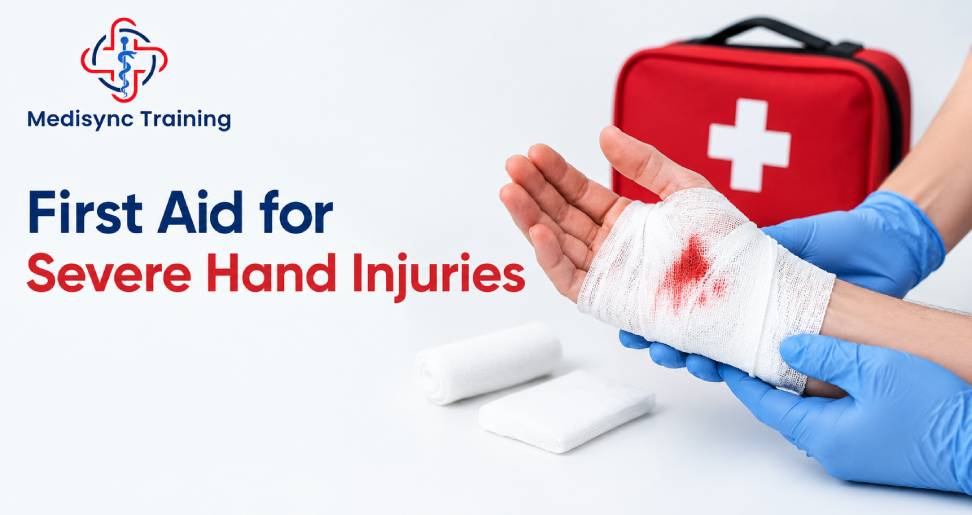
First Aid for Severe Hand Injuries: Essential Steps to Prevent Further Damage
October 26, 2026
Hand injuries can happen at home, in the workplace, during sports, or while using tools and machinery. Although minor cuts and bruises often heal with basic care, severe hand injuries require immediate attention. Heavy bleeding, deep cuts, crushed fingers, burns, and amputations can damage nerves, blood vessels, tendons, and bones. Knowing the correct first aid steps can help reduce complications while waiting for professional medical assistance.
Understanding first aid for severe hand injuries is particularly important for employees, parents, caregivers, and anyone working in environments where accidents may occur. Proper first aid training helps people recognise emergencies, respond calmly, and provide appropriate assistance until medical professionals take over.
What Are Severe Hand Injuries?
Severe hand injuries involve damage that may affect the normal function of the hand or fingers. Depending on the cause and severity, these injuries can result in significant blood loss, permanent movement restrictions, nerve damage, or infection.
Common types of severe hand injuries include:
- Deep cuts and lacerations: Wounds that may damage tendons, nerves, or blood vessels.
- Crush injuries: Damage caused when the hand becomes trapped between heavy objects or machinery.
- Fractures and dislocations: Broken bones or joints displaced from their normal position.
- Severe burns: Injuries caused by heat, chemicals, or electricity.
- Amputations: Partial or complete loss of a finger, thumb, or another part of the hand.
- Puncture wounds: Deep wounds caused by sharp objects that may damage underlying structures.
Recognising these injuries early is essential because some serious damage may not be immediately visible.
Recognising the Signs of a Serious Hand Injury
Not every hand injury appears dangerous at first. However, certain symptoms indicate that urgent medical assessment is necessary.
Watch for the following warning signs:
- Heavy or persistent bleeding.
- Deep wounds with visible tissue, tendons, or bone.
- Severe pain, swelling, or bruising.
- Fingers that appear bent, shortened, or deformed.
- Numbness, tingling, or loss of sensation.
- Difficulty moving the fingers or thumb.
- Pale, blue, or unusually cold fingers.
- A partial or complete amputation.
- Burns involving deep tissue or large areas of the hand.
Call emergency services when the injury is life-threatening, bleeding cannot be controlled, or there is a suspected amputation or major crush injury. In Australia, call 000 for an ambulance.
First Aid for Severe Hand Injuries: Step-by-Step Instructions
Providing first aid promptly can reduce further damage. However, first aid should never delay emergency medical treatment.
1. Make the Scene Safe
Before helping the injured person, check that the surrounding area is safe. Turn off dangerous machinery if this can be done safely, avoid electrical hazards, and keep away from moving equipment.
Wash your hands if possible and wear disposable gloves when available. If gloves are not accessible, use a clean barrier to avoid direct contact with blood.
If the person is unconscious, has difficulty breathing, or shows signs of shock, prioritise emergency assistance and follow the emergency operator’s instructions.
2. Control Severe Bleeding
Heavy bleeding is one of the most urgent complications of a severe hand injury.
Follow these steps:
- Place sterile gauze or a clean cloth directly over the wound.
- Apply firm, continuous pressure to the bleeding area.
- Maintain pressure without repeatedly lifting the dressing to inspect the wound.
- If blood passes through the dressing, add another layer and continue applying pressure.
- Call emergency services if bleeding is severe or does not stop.
If an object is embedded in the hand, do not remove it. Apply pressure around the object rather than directly onto it, and stabilise it while waiting for medical help.
For life-threatening bleeding that cannot be controlled with direct pressure, use an appropriate commercial tourniquet if available and you are trained to apply one, following local first aid guidance. Record the application time and do not loosen or remove it unless directed by a medical professional.
3. Protect Deep Cuts and Open Wounds
Deep wounds can damage structures beneath the skin, even when the external opening looks small.
Once bleeding is controlled, cover the wound with a sterile, non-stick dressing. Avoid applying antiseptic chemicals, powders, or household remedies inside deep wounds.
Do not attempt to stitch the wound, push exposed tissue back into place, or remove deeply embedded debris. Arrange urgent medical assessment, particularly when the injury affects movement or sensation.
Medical professionals may need to assess tendon, nerve, and blood vessel damage, clean the wound, and determine whether additional treatment is necessary.
4. Respond to Crush Injuries and Suspected Fractures
Crush injuries may cause extensive internal damage, swelling, fractures, and impaired circulation. The severity may not be obvious immediately.
Keep the injured hand as still as possible. Support it in the position found using soft padding, provided this does not increase pain or interfere with circulation. Remove rings, watches, and other jewellery early if they can be removed easily before swelling increases.
Do not force a deformed finger or joint back into position. Avoid tight bandages, unnecessary movement, or attempts to straighten broken bones.
Seek urgent medical care for suspected fractures, significant crush injuries, or any change in finger colour, temperature, sensation, or movement.
5. Provide First Aid for Hand Burns
Burns can result from hot liquids, flames, heated surfaces, chemicals, or electricity.
For a thermal burn, cool the affected area under cool running water for 20 minutes, where practical. Remove jewellery and loose clothing near the burn, but do not pull away anything stuck to the skin.
Do not apply ice, butter, toothpaste, or greasy creams. Cover the burn loosely with a sterile, non-stick dressing or clean material.
Chemical burns require immediate attention to the product’s safety instructions and emergency guidance. Brush off dry chemicals before irrigation when appropriate, and flush affected skin with plenty of water unless the substance’s specific safety instructions advise otherwise. Protect yourself from exposure.
Electrical burns require urgent medical assessment because internal injuries and abnormal heart rhythms may occur even when the skin damage appears limited.
6. Manage a Partial or Complete Amputation
An amputated finger or part of the hand is a medical emergency.
First, call emergency services and control bleeding from the remaining hand with direct pressure, avoiding pressure on any embedded objects.
If a body part has been completely severed:
- Wrap it in sterile gauze or a clean, slightly moist cloth.
- Place it inside a sealed, waterproof bag.
- Put the sealed bag in a second container with ice and water, if available.
- Keep the amputated part cool without allowing it to touch ice or become directly submerged in water.
- Take it to the hospital with the injured person, following emergency service instructions.
Never scrub the amputated part or attempt to reattach it yourself. Prompt specialist treatment may improve the possibility of successful reattachment.
What Should You Avoid When Treating Severe Hand Injuries?
Incorrect first aid can make an injury worse. Avoid these common mistakes:
- Removing embedded objects from deep wounds.
- Applying excessive pressure to exposed bones or protruding objects.
- Using ice directly on burns or severely injured tissue.
- Tightening dressings enough to restrict blood circulation.
- Moving or straightening suspected fractures.
- Delaying emergency care because the bleeding appears to have stopped.
- Giving food or drink to someone who may require emergency surgery.
If the injured person becomes pale, clammy, confused, weak, or dizzy, suspect shock. Call emergency services, help them lie down if safe and appropriate, keep them warm, and monitor their breathing. Do not elevate an injured limb if doing so worsens pain or bleeding.
Why First Aid Training Matters in the Workplace
Workplaces involving construction, manufacturing, hospitality, maintenance, and manual handling can expose employees to hand injuries. However, accidents can happen in any workplace, including offices, kitchens, and childcare settings.
Employers can improve emergency preparedness by ensuring that suitable first aid supplies are available, workers know how to report injuries, and designated first aiders receive appropriate training.
Medisync Training supports individuals and workplaces through first aid education designed to build practical emergency response skills. Its training services can help learners develop a better understanding of emergency procedures, bleeding control, injury assessment, and the importance of seeking professional medical assistance.
Those looking to strengthen their workplace safety knowledge can explore Medisync Training’s First Aid Certificate and first aid training courses to identify suitable learning options. Organisations can also consider relevant workplace first aid training to help staff respond more confidently when an emergency occurs.
Practical training is especially valuable because real emergencies can be stressful. Learning how to assess hazards, apply direct pressure, protect injured limbs, and communicate with emergency services can help people respond more effectively.
Conclusion
Severe hand injuries require quick, careful action. Controlling bleeding, protecting wounds, limiting unnecessary movement, cooling thermal burns, and responding appropriately to amputations can help reduce further harm while professional treatment is arranged.
The most important principle is to recognise when an injury exceeds basic first aid and requires urgent medical attention. Never attempt complicated treatment or delay emergency assistance.
By learning the correct procedures and investing in suitable first aid education through providers such as Medisync Training, individuals and organisations can improve their preparedness for workplace and everyday emergencies. The right knowledge, combined with prompt professional care, can make a meaningful difference in protecting hand function and supporting recovery.
Popular Posts
-
First Aid for Severe Hand Injuries: Essential Steps to Prevent Further Damage
October 26, 2026Hand injuries can happen at home, in the workplace, during sports, or while using tools...
-
First Aid for Amputations: Emergency Response Guide
October 21, 2026An amputation is a serious medical emergency that occurs when a body part, such as...
-
First Aid for Neck Injuries After an Accident: What You Should Do
October 16, 2026Neck injuries can occur unexpectedly after road accidents, workplace incidents, sports injuries, or accidental falls....
-
First Aid for Back and Spinal Injuries: What You Should Do in an Emergency
October 15, 2026Back and spinal injuries can occur unexpectedly at home, in the workplace, during sports activities,...
-
First Aid for Joint Injuries: Essential Steps to Reduce Pain and Prevent Further Damage
October 14, 2026Joint injuries can happen unexpectedly during sports, exercise, workplace activities, household tasks, or everyday movement....