
First Aid for Neck Injuries After an Accident: What You Should Do
October 16, 2026
Neck injuries can occur unexpectedly after road accidents, workplace incidents, sports injuries, or accidental falls. Although some injuries may initially appear minor, damage to the neck can affect muscles, ligaments, vertebrae, and the spinal cord. Without appropriate care, unnecessary movement may worsen the injury and lead to serious complications.
Knowing the correct first aid for neck injuries after an accident can help protect an injured person while professional medical assistance is on the way. The most important priorities are recognising warning signs, calling emergency services when necessary, and avoiding actions that could increase the risk of further damage.
Medisync Training supports first aid education and emergency preparedness through its training services, helping individuals develop practical knowledge for responding to medical emergencies.
What Causes Neck Injuries After an Accident?
The neck supports the head and protects important nerves that connect the brain with the rest of the body. Sudden force, twisting, or impact can damage these structures.
Common causes of neck injuries include:
- Road traffic accidents: A sudden impact can force the head backwards and forwards, causing whiplash or more serious spinal injuries.
- Falls: Falling from a height, slipping on a hard surface, or landing awkwardly can injure the neck.
- Workplace accidents: Falling objects, equipment-related incidents, and other physical accidents may cause neck trauma.
- Sports injuries: Collisions, diving into shallow water, and direct impacts can damage the cervical spine.
- Physical impacts: A blow to the head or neck can injure muscles, bones, nerves, or the spinal cord.
Whiplash is a common accident-related neck injury, but it is not always possible to distinguish a soft-tissue injury from a serious spinal injury without medical assessment.
Signs and Symptoms of a Neck Injury
Recognising possible symptoms can help bystanders understand when urgent assistance is needed. Signs of a neck injury may include:
- Neck pain, tenderness, or stiffness.
- Difficulty moving the head comfortably.
- Pain spreading into the shoulders or arms.
- Tingling or numbness in the hands, fingers, arms, or legs.
- Weakness or loss of movement in the limbs.
- Headache, dizziness, or confusion.
- Loss of consciousness following an impact.
- Difficulty breathing or changes in bladder or bowel control.
Important: Neck pain following a traumatic accident requires prompt medical assessment. If a serious neck or spinal injury is suspected, call Triple Zero (000) in Australia and request an ambulance. Do not wait for additional symptoms to appear.
First Aid for Neck Injuries After an Accident
Taking the correct steps during the first few minutes can reduce unnecessary movement and help protect the injured person until emergency professionals arrive.
1. Check the Surroundings for Danger
Before approaching the injured person, check whether the area is safe. Look for moving traffic, fire, exposed electrical wires, unstable structures, or other hazards.
Do not put yourself or others at unnecessary risk. If the accident involves a vehicle, make sure you can approach the scene safely.
2. Call Triple Zero (000)
If a neck or spinal injury is suspected, contact emergency services immediately. Explain what happened, describe the person’s condition, and provide the exact location.
Follow the emergency operator’s instructions. Tell them if the injured person is unconscious, experiencing breathing difficulties, or unable to move or feel their limbs.
3. Avoid Moving the Injured Person
One of the most important first aid precautions is to avoid unnecessary movement.
Do not ask the person to stand, walk, sit up, or turn their head to check whether their neck is working normally. Keep them in the position in which they were found unless there is immediate danger.
Unnecessary movement can worsen an underlying spinal injury. If the person is conscious, calmly explain that they should remain still until help arrives.
4. Support the Head and Neck Carefully
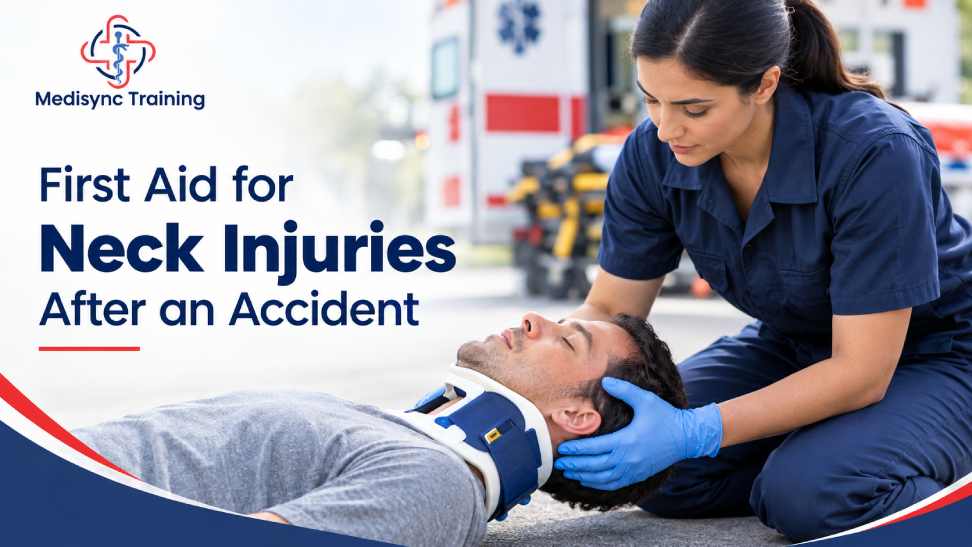
If you can do so safely, gently support the person’s head with your hands on either side, helping maintain a comfortable, neutral alignment with the neck and body.
Do not force the head into position, pull the neck, or attempt to straighten a visible deformity. Avoid applying a neck brace or improvised device unless you have the appropriate training and are following professional guidance.
Reassure the person and keep them as comfortable and still as possible.
5. Monitor Breathing and Consciousness
Stay with the injured person and watch for changes in their breathing, responsiveness, or overall condition.
If they are unconscious, check their breathing and follow the emergency operator’s instructions. If they are not breathing normally, begin CPR and use an automated external defibrillator (AED) if available, following your training and the operator’s guidance.
An open airway and adequate breathing take priority. If an airway intervention or movement is necessary, follow professional instructions and minimise neck movement as much as possible.
6. Manage Other Visible Injuries
If the person has bleeding or other injuries, provide appropriate first aid without unnecessarily moving their head, neck, or spine.
Apply direct pressure to an external bleeding wound when safe to do so, avoiding pressure directly over a suspected spinal injury or embedded object. Keep the person warm and offer calm reassurance.
Do not give food, drinks, or medication while awaiting emergency assessment.
What Should You Avoid When Treating a Neck Injury?
Well-intentioned actions can sometimes make an injury worse. Avoid the following:
- Do not massage the neck: Pressure or manipulation may aggravate an undiagnosed injury.
- Do not stretch the neck: Never force the head to turn, tilt, or bend.
- Do not attempt spinal realignment: Leave assessment and treatment of suspected spinal damage to qualified professionals.
- Do not remove a helmet unnecessarily: After a motorcycle or cycling accident, leave the helmet in place unless it obstructs breathing or CPR. Follow emergency instructions.
- Do not assume the injury is minor: A person may initially feel relatively well despite a significant injury.
These precautions are particularly important after high-impact accidents, falls from heights, and injuries involving the head or back.
When Is Medical Attention Necessary?
Medical attention is essential after a traumatic accident involving neck pain. Emergency assistance is especially important when there is severe pain, numbness, tingling, weakness, loss of movement, confusion, unconsciousness, or breathing difficulty.
Some injuries, including whiplash, may cause symptoms several hours or even days after an accident. Feeling better immediately after an incident does not reliably rule out an injury.
A healthcare professional can assess the person’s symptoms, determine whether imaging or further investigation is required, and recommend appropriate treatment.
Recovery depends on the type and severity of the injury. Rehabilitation or physiotherapy may be recommended for suitable injuries after serious damage has been excluded and a clinician has advised that treatment is appropriate.
How First Aid Training Helps You Respond Confidently
Accidents can happen at home, in the workplace, on the road, or in public spaces. Practical first aid knowledge helps people recognise emergencies, communicate effectively with emergency services, and avoid common mistakes while waiting for professional assistance.
Medisync Training provides training services designed to develop first aid knowledge and emergency response skills. Individuals and organisations can explore relevant options through its First Aid Training Services and identify suitable training for their needs.
Completing appropriate first aid training can help participants understand emergency response procedures, practise essential skills, and become better prepared to assist others safely. Employers may also consider relevant training to strengthen workplace emergency preparedness.
However, first aid training does not replace emergency medical care. Suspected neck and spinal injuries require cautious handling and prompt professional assessment.
Conclusion
Providing first aid for neck injuries after an accident requires calm decision-making, careful observation, and a strong focus on preventing further harm. Check the scene for danger, call Triple Zero (000) when a spinal injury is suspected, keep the injured person still, and monitor their breathing and consciousness.
Avoid unnecessary movement, neck manipulation, or attempts to diagnose the injury yourself. Even when symptoms appear mild, prompt medical assessment is important after traumatic neck injuries.
By improving emergency preparedness and learning appropriate first aid techniques, individuals can respond more effectively when accidents occur. Medisync Training can be a useful starting point for exploring relevant training services and building the knowledge needed to respond responsibly in an emergency.
Medical disclaimer: This article provides general educational information and is not a substitute for professional medical advice, emergency instructions, or accredited first aid training. In an Australian emergency, call Triple Zero (000).
Popular Posts
-
First Aid for Amputations: Emergency Response Guide
October 21, 2026An amputation is a serious medical emergency that occurs when a body part, such as...
-
First Aid for Neck Injuries After an Accident: What You Should Do
October 16, 2026Neck injuries can occur unexpectedly after road accidents, workplace incidents, sports injuries, or accidental falls....
-
First Aid for Back and Spinal Injuries: What You Should Do in an Emergency
October 15, 2026Back and spinal injuries can occur unexpectedly at home, in the workplace, during sports activities,...
-
First Aid for Joint Injuries: Essential Steps to Reduce Pain and Prevent Further Damage
October 14, 2026Joint injuries can happen unexpectedly during sports, exercise, workplace activities, household tasks, or everyday movement....
-
First Aid for Dislocations: What to Do and What to Avoid
October 13, 2026A dislocation occurs when a bone is forced out of its normal position within a...