
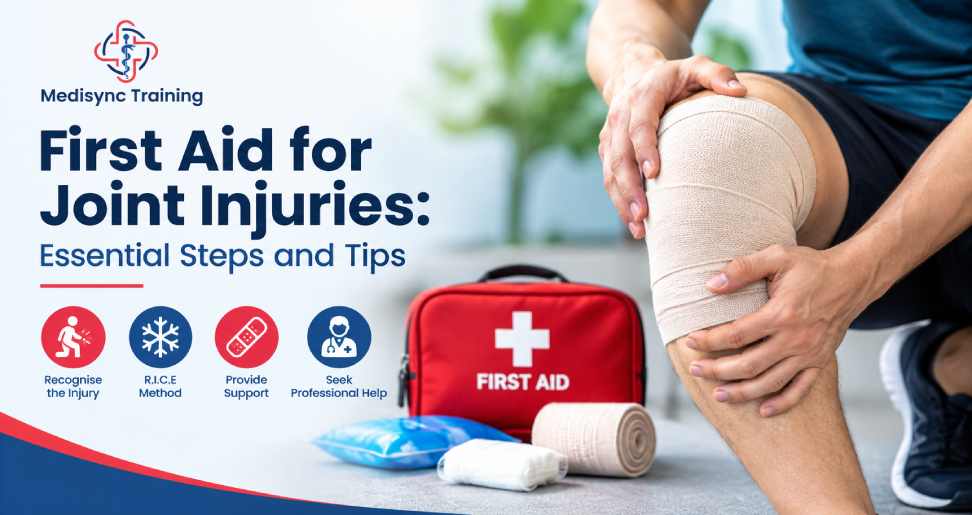
First Aid for Joint Injuries: Essential Steps to Reduce Pain and Prevent Further Damage
October 14, 2026
Joint injuries can happen unexpectedly during sports, exercise, workplace activities, household tasks, or everyday movement. A simple fall, sudden twist, or direct impact can damage the ligaments, tendons, cartilage, or bones surrounding a joint. Knowing how to provide first aid for joint injuries can help reduce discomfort, limit further damage, and ensure the injured person receives appropriate medical attention.
From a twisted ankle to a painful shoulder or a dislocated knee, recognising the warning signs and responding correctly is essential. This guide explains common joint injuries, immediate first-aid steps, mistakes to avoid, and when professional medical care is necessary.
What Are Joint Injuries?
Joints are the areas where two or more bones meet, allowing the body to bend, rotate, and move. The knees, shoulders, elbows, wrists, hips, and ankles are particularly vulnerable to injury.
Common types of joint injuries include:
- Sprains: Stretching or tearing of ligaments that connect bones.
- Dislocations: When bones move out of their normal position within a joint.
- Fractures near joints: Breaks in bones around or within a joint.
- Cartilage injuries: Damage to the protective tissue that cushions the joint.
- Soft tissue injuries: Damage to the tendons, muscles, or surrounding structures.
These injuries can have similar symptoms, making it difficult to determine their severity without a medical examination. If a fracture or dislocation is suspected, treat the injury as serious and seek medical help.
Common Signs and Symptoms of Joint Injuries
Identifying the symptoms early helps determine whether immediate medical attention is required.
Look for the following warning signs:
- Pain or tenderness around the affected joint.
- Swelling that develops after an injury.
- Bruising or skin discolouration.
- Difficulty moving or bending the joint.
- Reduced strength or inability to bear weight.
- An unusual joint shape or visible deformity.
- A popping sensation or sound at the time of injury.
Severe pain, an obvious deformity, an open wound, numbness, or a cold, pale, or blue hand or foot may indicate a serious injury. These symptoms require urgent medical assessment.
First Aid for Joint Injuries: Step-by-Step Instructions
Taking the correct action immediately after an injury can prevent additional damage. Follow these essential steps while arranging medical care when needed.
1. Stop the Activity and Keep the Person Safe
Ask the injured person to stop exercising, walking, or performing the activity that caused the injury. Help them sit or lie down in a comfortable position.
Avoid unnecessary movement, particularly if the injury involves the hip, knee, ankle, shoulder, or elbow. Do not ask the person to test the joint repeatedly to determine how badly it is injured.
2. Rest and Support the Injured Joint
Keep the affected area still and support it in the position that causes the least discomfort. Cushions, folded towels, or soft padding can provide temporary support.
If a dislocation or fracture is suspected, do not attempt to straighten the limb or force the joint into its normal position. Allow trained medical professionals to manage the injury.
3. Apply a Cold Pack
A cold pack can help reduce pain and swelling associated with many minor joint injuries.
Wrap an ice pack or a bag of frozen vegetables in a clean towel before applying it to the affected area. Apply it for approximately 15–20 minutes, then remove it. Never place ice directly against the skin.
Stop cooling if the skin becomes excessively numb, painful, or unusually discoloured. Do not apply cold packs over open wounds.
4. Use Compression Carefully
For a minor sprain, an elastic compression bandage may help control swelling. Wrap it comfortably without applying excessive pressure.
Check the fingers or toes beyond the bandage for changes in colour, temperature, sensation, or movement. Loosen the bandage if numbness, tingling, increased pain, or colour changes occur.
Avoid compressing a visibly deformed joint or a suspected fracture unless directed by an appropriately trained professional.
5. Elevate the Injured Area When Appropriate
If comfortable and there is no suspected fracture, dislocation, or other injury that makes movement unsafe, support the injured limb on pillows to help reduce swelling.
Never force an injured limb into an elevated position if doing so increases pain. Keep serious injuries supported in the position found while waiting for medical assistance.
First Aid for Different Types of Joint Injuries
Although the basic principles of first aid are similar, some injuries require particular care.
Ankle and Knee Injuries
Ankle sprains commonly occur when the foot twists unexpectedly. Knee injuries may result from falls, sudden changes in direction, or direct impact.
Stop weight-bearing if walking causes significant pain. Support the affected area, apply a wrapped cold pack, and seek medical assessment if the person cannot bear weight, has substantial swelling, or experiences severe pain or instability.
Shoulder and Elbow Injuries
Falls and sports accidents can injure the shoulder or elbow. A dislocation may cause severe pain, swelling, and an abnormal appearance.
Support the arm in its most comfortable position using suitable padding or a sling if this can be done without forcing movement. Do not attempt to relocate the joint. Arrange urgent medical care.
Wrist and Finger Injuries
Wrist and finger injuries can occur when someone falls onto an outstretched hand or sustains a direct blow.
Remove rings or watches early if they can be removed easily before swelling increases. Support the injured area and avoid pulling, twisting, or straightening a visibly deformed finger. Seek medical assessment when movement is restricted, pain is severe, or a fracture is suspected.
What Should You Avoid After a Joint Injury?
Incorrect first aid can worsen an injury. Remember these important precautions:
- Do not force movement: Avoid repeatedly bending or rotating the affected joint.
- Do not attempt to relocate a dislocation: This may damage nearby nerves, blood vessels, or tissues.
- Avoid direct ice application: Always wrap cold packs in a towel.
- Avoid massage and heat initially: These may aggravate swelling in an acute sprain.
- Do not ignore severe symptoms: Significant pain, deformity, numbness, or loss of circulation needs urgent assessment.
- Do not delay medical attention: A serious injury can initially resemble a minor sprain.
For life-threatening symptoms, an open fracture, suspected hip injury, or loss of circulation, contact emergency services immediately.
When Should You Seek Medical Help?
Seek urgent medical assessment if the joint appears deformed, pain is severe, swelling develops rapidly, movement is impossible, or the person cannot bear weight. An open wound over an injured joint, new numbness, or a pale, cold, or blue extremity also requires urgent attention.
Call an ambulance for serious injuries, suspected major fractures or dislocations, or signs of impaired circulation. In Australia, call Triple Zero (000).
Even when symptoms seem mild, obtain medical advice if pain or swelling worsens, movement remains limited, or recovery does not progress as expected. A healthcare professional can determine whether imaging, further treatment, or rehabilitation is needed.
Why First Aid Training Matters
Knowing how to respond to joint injuries is valuable at home, in schools, at sporting events, and in workplaces. First aid training helps people recognise warning signs, provide appropriate support, avoid harmful interventions, and respond confidently during emergencies.
Medisync Training supports individuals and organisations seeking practical first-aid knowledge for everyday emergencies. Explore our First Aid Training Services to learn more about available training options and develop the skills needed to respond safely when injuries occur.
Conclusion
Providing appropriate first aid for joint injuries begins with stopping the activity, supporting the injured area, applying a wrapped cold pack when suitable, and recognising when professional medical care is necessary. Avoid forcing movement or attempting to correct a dislocation yourself.
Understanding these essential steps can help reduce the risk of further injury while ensuring that the affected person receives timely assessment and treatment. With appropriate first-aid knowledge and training, individuals can respond more confidently to joint injuries at home, work, or during physical activities.
Disclaimer: This article provides general educational information and does not replace professional medical advice, diagnosis, or practical first-aid training.
Popular Posts
-
First Aid for Amputations: Emergency Response Guide
October 21, 2026An amputation is a serious medical emergency that occurs when a body part, such as...
-
First Aid for Neck Injuries After an Accident: What You Should Do
October 16, 2026Neck injuries can occur unexpectedly after road accidents, workplace incidents, sports injuries, or accidental falls....
-
First Aid for Back and Spinal Injuries: What You Should Do in an Emergency
October 15, 2026Back and spinal injuries can occur unexpectedly at home, in the workplace, during sports activities,...
-
First Aid for Joint Injuries: Essential Steps to Reduce Pain and Prevent Further Damage
October 14, 2026Joint injuries can happen unexpectedly during sports, exercise, workplace activities, household tasks, or everyday movement....
-
First Aid for Dislocations: What to Do and What to Avoid
October 13, 2026A dislocation occurs when a bone is forced out of its normal position within a...