
First Aid for Soft Tissue Injuries: Essential Steps for Safe and Effective Care
October 7, 2026
Soft tissue injuries are common in workplaces, homes, sports activities, and everyday situations. A sudden fall, awkward movement, collision, or impact can damage muscles, ligaments, tendons, or other soft tissues. Injuries such as sprains, strains, bruises, and minor tears may cause pain, swelling, tenderness, and restricted movement.
Knowing how to provide appropriate first aid for soft tissue injuries can help reduce discomfort, prevent the injury from becoming worse, and support the person until professional medical care is available when necessary. For people responsible for workplace safety or looking to improve their emergency response skills, appropriate first aid training provides practical knowledge that can make a significant difference.
What Are Soft Tissue Injuries?
Soft tissues connect, support, and protect different structures of the body. They include muscles, tendons, ligaments, and other connective tissues. A soft tissue injury can occur when these structures are overstretched, compressed, twisted, or struck.
Common examples include:
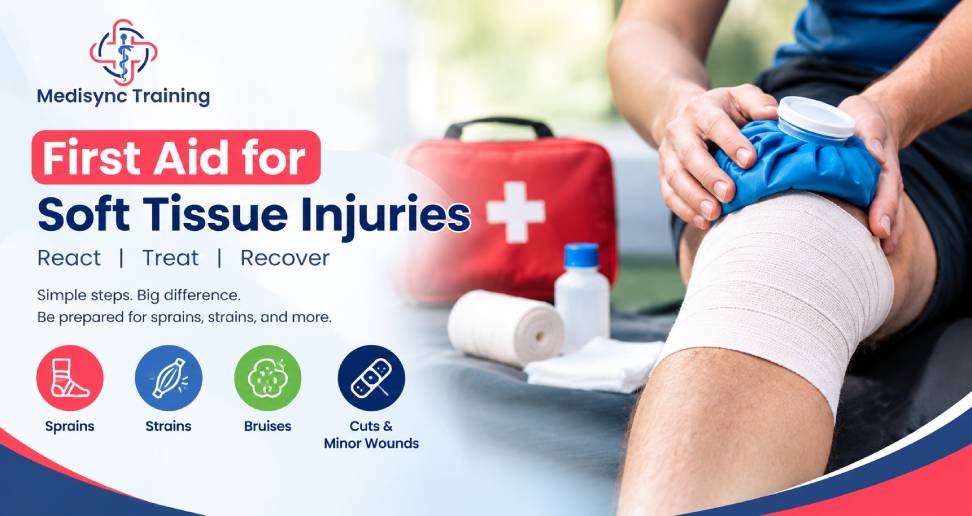
- Sprains: Injuries involving ligaments, often caused by twisting or sudden force.
- Strains: Injuries affecting muscles or tendons due to overstretching or excessive force.
- Bruises: Damage to small blood vessels beneath the skin, usually following an impact.
- Minor muscle or tendon tears: Partial damage caused by sudden or excessive loading.
- Soft tissue swelling: Fluid and inflammation that develop around an injured area.
The severity can vary considerably. While many minor injuries improve with appropriate care, severe pain, significant swelling, deformity, inability to use the affected body part, or other concerning symptoms may require medical assessment.
Recognising the Signs of a Soft Tissue Injury
Before providing first aid, assess the situation and look for common signs. These may include pain or tenderness around the affected area, swelling, bruising, stiffness, weakness, and difficulty moving the injured body part.
A person may also report that the injury occurred following a sudden twist, fall, collision, or overstretching movement.
If there is severe pain, obvious deformity, heavy bleeding, loss of sensation, unusual colour or temperature in the affected limb, or inability to bear weight or use the affected body part, seek appropriate medical assistance rather than relying solely on basic first aid.
First Aid for Soft Tissue Injuries
The initial response should focus on protecting the injured area, controlling symptoms, and avoiding activities that could cause further damage.
1. Stop the Activity
Encourage the injured person to stop whatever activity caused the injury. Continuing to exercise, work, or place unnecessary pressure on the affected area may increase tissue damage.
Help the person move to a safe location if necessary. Avoid forcing the injured body part to move through pain.
2. Protect the Injured Area
Protecting the affected area can help prevent additional injury. Depending on the location and severity, this may involve keeping the area supported and avoiding unnecessary movement.
For example, someone with an ankle injury should avoid putting unnecessary weight on the ankle until it can be assessed appropriately.
3. Apply a Cold Pack
A cold pack wrapped in a cloth can be applied to an injured area for short periods to help reduce pain and swelling. Never place ice directly against bare skin because this can cause skin injury.
Cold application should be comfortable rather than excessively cold. Allow the skin to return to its normal temperature between applications.
4. Provide Gentle Support
A suitable elastic or compression bandage may provide support and help manage swelling. However, it should not be wrapped so tightly that it restricts circulation.
Check the area below the bandage for signs such as increasing numbness, tingling, unusual paleness, or changes in temperature. If these occur, loosen or remove the bandage and seek appropriate advice.
5. Elevate When Appropriate
If practical, raising an injured limb above the level of the heart while resting may help reduce swelling. This can be particularly useful for some injuries involving the arms or legs.
Elevation should be comfortable and should not place additional strain on the injured area.
Avoid Making the Injury Worse
First aid is not only about what you should do—it is also about knowing what to avoid.
Do not aggressively massage a freshly injured area if doing so increases pain or swelling. Avoid forcing movement or repeatedly testing the injured joint. People should also be cautious about returning immediately to strenuous exercise or physical work simply because the pain temporarily decreases.
The correct response can depend on the type and severity of the injury. This is why structured First Aid Certificate training can be valuable for employees, carers, parents, and others who may need to respond during an emergency.
When Should Medical Help Be Sought?
Not every soft tissue injury requires emergency medical attention, but certain symptoms should not be ignored.
Seek professional medical assessment when:
- Pain is severe or continues to worsen.
- There is significant or rapidly increasing swelling.
- The injured area appears deformed.
- The person cannot move or use the affected body part normally.
- The person cannot put weight on an injured leg.
- There is persistent numbness or tingling.
- The skin becomes unusually pale, blue, or cold.
- There is suspected fracture or dislocation.
- The injury resulted from significant trauma.
- Symptoms do not improve as expected.
If the person has a potentially serious injury or appears unwell, follow local emergency procedures and seek urgent medical assistance.
Why First Aid Training Matters
A workplace or community first aider may encounter soft tissue injuries without warning. Having practical knowledge allows them to respond calmly, assess the situation, protect the injured person, and recognise when additional medical assistance is needed.
Professional training can also cover a much broader range of emergencies. For example, CPR Training can prepare participants to respond to life-threatening situations involving cardiac arrest, while Medication Training can support people whose roles involve appropriate medication-related responsibilities.
For organisations in Western Australia, choosing training that reflects workplace requirements and practical emergency scenarios can help build a stronger safety culture.
Learn First Aid with Medisync Training
Medisync Training provides first aid and workplace training designed to help participants develop practical skills for responding to emergencies. Rather than relying solely on theoretical information, appropriate training helps learners understand how to assess situations and take sensible first-aid actions.
Whether you are an individual seeking workplace qualifications or an organisation looking to improve employee preparedness, Medisync Training can be a useful option for developing essential emergency response capabilities.
Having trained people available can provide valuable support when an accident happens. However, first aid should never replace professional medical care when an injury is serious or symptoms indicate a potentially significant problem.
Conclusion
Soft tissue injuries such as sprains, strains, and bruises can happen unexpectedly. A calm and appropriate first-aid response can help protect the injured area, manage discomfort, and reduce the risk of additional harm.
The key steps include stopping the activity, protecting the injured area, using a wrapped cold pack when appropriate, providing gentle support, and elevating the affected limb when practical. Just as importantly, first aiders should recognise warning signs that require professional medical attention.
For anyone responsible for workplace or community safety, first aid training provides valuable preparation for handling both minor injuries and more serious emergencies. With practical training from providers such as Medisync Training, individuals and organisations can become better prepared to respond confidently when first aid is needed.
Popular Posts
-
First Aid for Amputations: Emergency Response Guide
October 21, 2026An amputation is a serious medical emergency that occurs when a body part, such as...
-
First Aid for Neck Injuries After an Accident: What You Should Do
October 16, 2026Neck injuries can occur unexpectedly after road accidents, workplace incidents, sports injuries, or accidental falls....
-
First Aid for Back and Spinal Injuries: What You Should Do in an Emergency
October 15, 2026Back and spinal injuries can occur unexpectedly at home, in the workplace, during sports activities,...
-
First Aid for Joint Injuries: Essential Steps to Reduce Pain and Prevent Further Damage
October 14, 2026Joint injuries can happen unexpectedly during sports, exercise, workplace activities, household tasks, or everyday movement....
-
First Aid for Dislocations: What to Do and What to Avoid
October 13, 2026A dislocation occurs when a bone is forced out of its normal position within a...