
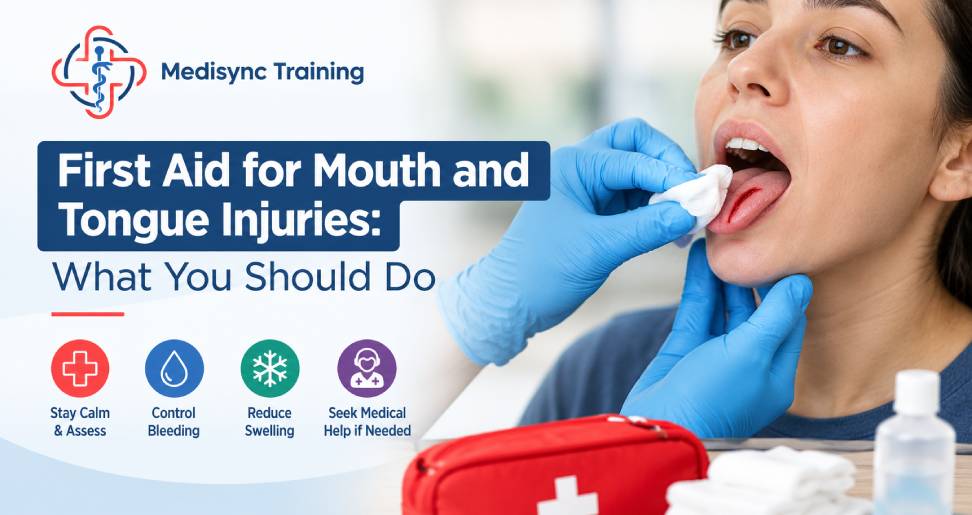
First Aid for Mouth and Tongue Injuries: What You Should Do
October 5, 2026
Mouth and tongue injuries can happen unexpectedly during sports, falls, accidents, biting incidents, or everyday activities. A cut to the tongue, bleeding gums, a bitten cheek, or an injury to the lips may look alarming because the mouth contains many blood vessels. Fortunately, many minor injuries can be managed with appropriate first aid.
Knowing what to do in the first few minutes can help control bleeding, reduce swelling, prevent further injury, and determine whether professional medical attention is necessary. For individuals, parents, childcare workers, employees, and workplace first aiders, practical first aid knowledge is an important part of emergency preparedness. Medisync Training provides first aid training designed to help people respond confidently and appropriately when unexpected injuries occur.
Common Causes of Mouth and Tongue Injuries
Mouth and tongue injuries can occur in several ways. Common causes include accidentally biting the tongue or inside of the cheek, falling, collisions during sports, contact with sharp or broken objects, dental injuries, and accidents involving the face.
Children may experience mouth injuries while playing, learning to walk, participating in sports, or eating. Adults can also sustain injuries from falls, workplace incidents, or recreational activities.
Common injuries include:
- Cuts or lacerations to the tongue
- Tongue bites
- Cuts to the lips or inside of the cheeks
- Bleeding gums following an injury
- Swelling of the tongue or lips
- Injuries associated with damaged or knocked-out teeth
The severity can range from a small wound that stops bleeding quickly to a deeper injury requiring urgent medical assessment.
First Aid for a Mouth or Tongue Injury
The first priority is to remain calm and assess the situation. If the injured person is conscious and able to respond, explain what you are doing and encourage them to stay still.
1. Check for Immediate Danger
Before providing first aid, make sure the area is safe. If the injury occurred during a fall, sporting activity, or workplace incident, remove the person from ongoing danger if it is safe to do so.
Check that the person is responsive and breathing normally. Pay particular attention to significant swelling, heavy bleeding, difficulty breathing, or signs of a more serious facial injury.
2. Control the Bleeding
Minor mouth and tongue wounds can bleed considerably. Have the person sit upright and lean slightly forward rather than swallowing blood.
If appropriate, place clean gauze or a clean cloth over the wound and apply gentle, firm pressure. Ask the person to bite down gently on the gauze if the injury is in an accessible area and they can safely do so.
Maintain pressure without repeatedly lifting the dressing to check the wound. Removing it too frequently can disturb the clot that is beginning to form.
For people learning practical emergency response, First Aid Training can provide useful instruction on assessing bleeding and applying appropriate first aid techniques.
3. Use a Cold Compress for Swelling
Cold can help reduce swelling and discomfort after a minor injury. A cold pack wrapped in a clean cloth can be applied externally to the cheek or lip for short periods.
Do not place ice directly against the skin or allow it to remain in one location for too long. If the person has difficulty using a cold pack safely, focus on keeping them comfortable while monitoring their condition.
4. Rinse the Mouth When Appropriate
Once significant bleeding has been controlled, gently rinsing the mouth with clean water can help remove blood or visible debris.
Avoid vigorous rinsing immediately after an injury because it may restart bleeding. Do not attempt to scrub, probe, or repeatedly touch the wound.
If there is an object embedded deeply in the mouth or tongue, do not attempt to remove it yourself. Seek appropriate medical assistance.
5. Check for Dental Injuries
A mouth injury may involve more than soft tissue. Check whether teeth are loose, cracked, displaced, or completely knocked out.
A significant dental injury should receive prompt assessment by a dental professional. A knocked-out permanent tooth is particularly time-sensitive, so appropriate urgent dental care should be sought rather than relying solely on first aid at home.
When Should You Seek Medical Help?
Not every mouth or tongue injury requires emergency treatment. However, some symptoms indicate that professional assessment is necessary.
Seek urgent medical attention if:
- Bleeding is severe or does not stop with continuous pressure.
- The wound is deep, large, or has widely separated edges.
- There is significant swelling of the tongue, mouth, or throat.
- The person has difficulty breathing or swallowing.
- A tooth has been knocked out, badly damaged, or displaced.
- There is a suspected jaw or facial fracture.
- The injury was caused by a significant blow to the head or face.
- The person becomes unusually drowsy, confused, or unresponsive.
- There are signs of a serious allergic reaction or airway obstruction.
- An embedded object cannot be safely removed.
Difficulty breathing should always be treated as an emergency. If the tongue or surrounding tissues become severely swollen and interfere with the airway, call emergency services immediately and follow appropriate emergency-response guidance.
What Not to Do
Knowing what not to do is just as important as knowing what to do.
Do not use dirty materials to apply pressure to a wound. Avoid putting harsh chemicals or non-medical substances onto an open mouth injury. Do not pull out deeply embedded objects, and do not aggressively rinse or manipulate a wound that is actively bleeding.
Do not ignore persistent bleeding simply because mouth injuries can look worse than they are. If bleeding cannot be controlled or the injury appears serious, professional medical evaluation is appropriate.
People who regularly care for children or work in environments where injuries can occur may benefit from Childcare First Aid Course training or workplace-focused first aid education. Medisync Training offers practical learning opportunities that can help participants develop the knowledge needed to respond appropriately to common emergencies.
Preventing Mouth and Tongue Injuries
Although accidents cannot always be prevented, several practical measures can reduce the risk of oral injuries.
Children should be supervised appropriately during activities that involve a risk of falling or collision. Sports participants should use suitable protective equipment, including mouthguards where recommended.
Workplaces should maintain suitable emergency procedures and ensure that designated first aiders understand how to respond to injuries. Keeping an accessible first aid kit and ensuring employees know how to summon emergency assistance can also improve preparedness.
Parents, educators, childcare professionals, and workplace first aiders can strengthen their skills through structured First Aid Certificate training. Regular refresher education is also useful because first aid knowledge can become less familiar when it is not practiced.
Why First Aid Training Matters
A mouth or tongue injury can appear frightening because blood is often visible, particularly when the tongue or lips are involved. A calm and systematic response can make the situation easier to manage.
The most important principles are to assess the person, control bleeding with appropriate pressure, manage swelling, monitor for airway problems, and recognise when professional care is required. First aid should not replace medical or dental treatment when an injury is severe.
Medisync Training supports individuals and organisations seeking practical first aid education. Its training approach can help learners build confidence in responding to emergencies and understanding appropriate first aid procedures.
Conclusion
First aid for mouth and tongue injuries begins with a calm assessment and attention to the person’s airway, breathing, and level of responsiveness. Minor bleeding can often be managed using clean materials and gentle pressure, while cold compresses may help with swelling. Dental injuries and persistent or severe bleeding require professional attention.
Learning through a recognised First Aid Certificate Course can help people respond more confidently when injuries occur at home, in childcare environments, during sports, or at work. With appropriate preparation and training from providers such as Medisync Training, individuals can be better equipped to recognise emergencies and take sensible first steps while professional help is arranged.
Popular Posts
-
First Aid for Amputations: Emergency Response Guide
October 21, 2026An amputation is a serious medical emergency that occurs when a body part, such as...
-
First Aid for Neck Injuries After an Accident: What You Should Do
October 16, 2026Neck injuries can occur unexpectedly after road accidents, workplace incidents, sports injuries, or accidental falls....
-
First Aid for Back and Spinal Injuries: What You Should Do in an Emergency
October 15, 2026Back and spinal injuries can occur unexpectedly at home, in the workplace, during sports activities,...
-
First Aid for Joint Injuries: Essential Steps to Reduce Pain and Prevent Further Damage
October 14, 2026Joint injuries can happen unexpectedly during sports, exercise, workplace activities, household tasks, or everyday movement....
-
First Aid for Dislocations: What to Do and What to Avoid
October 13, 2026A dislocation occurs when a bone is forced out of its normal position within a...