

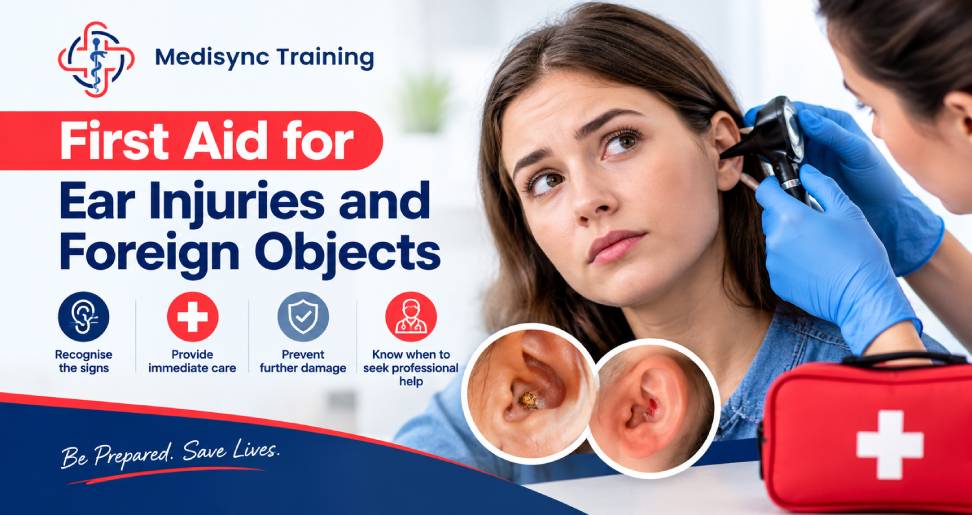
First Aid for Ear Injuries and Foreign Objects
October 2, 2026
Ear injuries can happen unexpectedly at home, at work, during sports, or while travelling. A minor scratch, insect, small object, or impact to the ear may cause pain and discomfort. In some cases, however, an ear injury can damage the ear canal or eardrum and requires prompt medical attention.
Knowing the correct first aid for ear injuries and foreign objects can help prevent further damage while waiting for professional medical care. It is equally important to understand what not to do, as attempting to remove an object incorrectly can make an injury worse.
Common Causes of Ear Injuries
The ear is a sensitive structure, and injuries can occur in several ways. Common causes include:
- Inserting cotton buds, hairpins, or other objects into the ear
- Foreign objects becoming lodged in the ear canal
- Insects entering the ear
- Falls or accidental impacts
- Sports-related injuries
- Cuts or abrasions around the outer ear
- Burns or exposure to chemicals
- Sudden loud noises or explosions
- Pressure-related injuries during flying or diving
Children are particularly likely to place small objects into their ears, while adults may accidentally injure the ear while cleaning it.
Recognising an Ear Injury
Symptoms can vary depending on the type and severity of the injury. Common signs include:
- Ear pain or tenderness
- Bleeding from the ear
- Reduced or muffled hearing
- Ringing or buzzing sounds
- Swelling or redness
- Dizziness or loss of balance
- Fluid or discharge from the ear
- A visible foreign object
- Feeling that something is stuck inside the ear
Severe pain, significant bleeding, sudden hearing loss, dizziness, or fluid coming from the ear after a head injury should be treated as warning signs requiring urgent medical assessment.
First Aid for Minor Ear Injuries
If the outer part of the ear has a minor cut or abrasion, begin by helping the person remain calm. Wash your hands before providing first aid.
If there is minor bleeding from the outer ear, place a clean sterile dressing or gauze gently over the affected area. Apply light pressure if appropriate. Avoid pushing anything into the ear canal.
For a superficial wound around the outside of the ear, the area can be gently cleaned with clean water. Do not use harsh chemicals or attempt to clean deep inside the ear.
If swelling occurs after a minor impact, a cold pack wrapped in a clean cloth may be applied to the outside of the ear for short periods. Do not place ice directly against the skin.
What to Do When a Foreign Object Is in the Ear
A foreign object in the ear should be handled carefully. The first step is to remain calm and avoid unnecessary manipulation.
If the object is clearly visible and is loosely positioned at the entrance of the ear, it may sometimes be removed carefully without inserting anything deeper into the ear. However, if the object is lodged inside the ear canal, do not attempt to dig it out.
Avoid using:
- Cotton buds
- Tweezers deep inside the ear
- Hairpins or clips
- Matches
- Pens or other pointed objects
- Water irrigation unless advised by a healthcare professional
Pushing an object further into the ear can damage the delicate skin of the ear canal or the eardrum.
What If an Insect Enters the Ear?
An insect in the ear can be frightening, particularly for children. Encourage the person to stay still and avoid inserting fingers or objects into the ear.
If the insect is visible at the opening and can be removed without entering the ear canal, it may be possible to do so gently. If it cannot be removed easily, seek medical assistance.
Do not insert sharp objects into the ear to try to kill or remove the insect. This can cause additional injury.
Ear Bleeding: What Should You Do?
Bleeding from the outer ear after a minor cut can often be managed with gentle pressure using clean gauze or a dressing.
However, bleeding or clear fluid coming from the ear after a significant blow to the head can indicate a potentially serious injury. In such circumstances, do not attempt to plug the ear or insert gauze deep inside the canal.
Keep the person still and seek emergency medical assistance.
When to Seek Medical Attention
Professional medical evaluation is particularly important when:
- A foreign object cannot be removed easily
- The object is sharp or has penetrated the ear
- There is significant bleeding
- The person experiences sudden hearing loss
- Severe or persistent pain develops
- There is dizziness or loss of balance
- Fluid or blood comes from the ear after a head injury
- The eardrum may have been damaged
- The injury involves a chemical or burn
- A child has an object lodged deeply inside the ear
When in doubt, it is safer to have the ear assessed by a healthcare professional rather than attempting further removal at home.
What Not to Do for Ear Injuries
One of the most important parts of first aid is knowing what to avoid. Never insert objects into an injured ear simply to check how deep the injury is.
Do not attempt to forcefully remove an embedded object. Avoid pouring substances into an injured ear unless specifically instructed by a healthcare professional.
Do not ignore hearing changes, persistent pain, bleeding, or dizziness after an injury. These symptoms may indicate damage that cannot be identified by looking at the outer ear.
Learn Practical First Aid Skills with Medisync Training
Knowing first aid procedures can make a significant difference when an accident occurs. However, reading about first aid is different from developing practical skills and knowing how to respond appropriately under pressure.
Medisync Training provides professional training designed to help participants develop practical knowledge and confidence in responding to a range of first aid situations. Through structured learning, participants can better understand how to assess an emergency, provide appropriate initial assistance, and recognise when professional medical help is required.
Those looking to strengthen their emergency response knowledge can explore First Aid Training Courses from Medisync Training to develop practical skills relevant to workplace and everyday situations.
Training can cover important areas of emergency response, including injury assessment, managing bleeding, responding to medical emergencies, and understanding when escalation is necessary.
Final Thoughts
Ear injuries and foreign objects should always be handled carefully because the ear contains delicate structures that can be easily damaged. Simple first aid measures can help protect the injured person while professional assistance is arranged, but unnecessary attempts to remove deeply lodged objects can increase the risk of complications.
The key principles are to remain calm, avoid inserting objects into the ear, protect the injured area, and seek professional medical assistance when symptoms are severe or the injury cannot be safely managed.
Building practical first aid knowledge through professional training can help people respond more confidently when unexpected emergencies occur. Medisync Training can help learners develop essential first aid knowledge and practical emergency-response skills for a range of situations.
Popular Posts
-
First Aid for Amputations: Emergency Response Guide
October 21, 2026An amputation is a serious medical emergency that occurs when a body part, such as...
-
First Aid for Neck Injuries After an Accident: What You Should Do
October 16, 2026Neck injuries can occur unexpectedly after road accidents, workplace incidents, sports injuries, or accidental falls....
-
First Aid for Back and Spinal Injuries: What You Should Do in an Emergency
October 15, 2026Back and spinal injuries can occur unexpectedly at home, in the workplace, during sports activities,...
-
First Aid for Joint Injuries: Essential Steps to Reduce Pain and Prevent Further Damage
October 14, 2026Joint injuries can happen unexpectedly during sports, exercise, workplace activities, household tasks, or everyday movement....
-
First Aid for Dislocations: What to Do and What to Avoid
October 13, 2026A dislocation occurs when a bone is forced out of its normal position within a...