
How Medication Training Supports Patient Safety and Emergency Response in Healthcare
March 5, 2026
Medication administration is one of the most important responsibilities in healthcare. Every day, healthcare professionals, support workers, and caregivers assist patients who rely on medications for treatment, recovery, and long-term health management. Without proper training, even small mistakes in medication handling can lead to serious health risks.
Medication training plays a vital role in ensuring patient safety and improving emergency response in healthcare settings. Through structured education and practical training, healthcare workers learn how to administer medications correctly, recognise potential complications, and respond effectively in urgent situations.
Understanding Medication Training in Healthcare
Medication training is a structured learning program that teaches healthcare professionals how to safely handle, administer, and monitor medications. The training focuses on medication safety, dosage accuracy, documentation, and legal responsibilities.
In healthcare environments such as hospitals, aged care facilities, and disability support services, medication management is a critical task. Proper training equips staff with the knowledge required to administer medication correctly and monitor patients for any adverse reactions.
According to healthcare training resources, medication management training helps staff safely handle and monitor medications while significantly reducing the risk of harmful errors.
Programs like the HLTHPS006 – Assist Clients with Medication course help learners develop practical skills to assist clients with medication administration in community, aged care, and healthcare settings.
The Link Between Medication Training and Patient Safety
Patient safety is the top priority in healthcare. Incorrect medication dosage, wrong patient identification, or poor documentation can lead to severe complications. Medication training ensures that healthcare workers follow safe procedures when administering medicines.
Medication errors are a significant concern in healthcare systems. Studies suggest that medication-related mistakes contribute to a percentage of hospital admissions in Australia, highlighting the need for proper training and compliance with medication safety standards.
Through medication training, healthcare workers learn to:
- Verify patient identity before administering medication
- Understand correct dosages and timing
- Recognise side effects and allergic reactions
- Maintain accurate medication records
- Follow infection control procedures
These practices significantly reduce the chances of medication-related incidents.
Fundamental Rights of Medication Administration
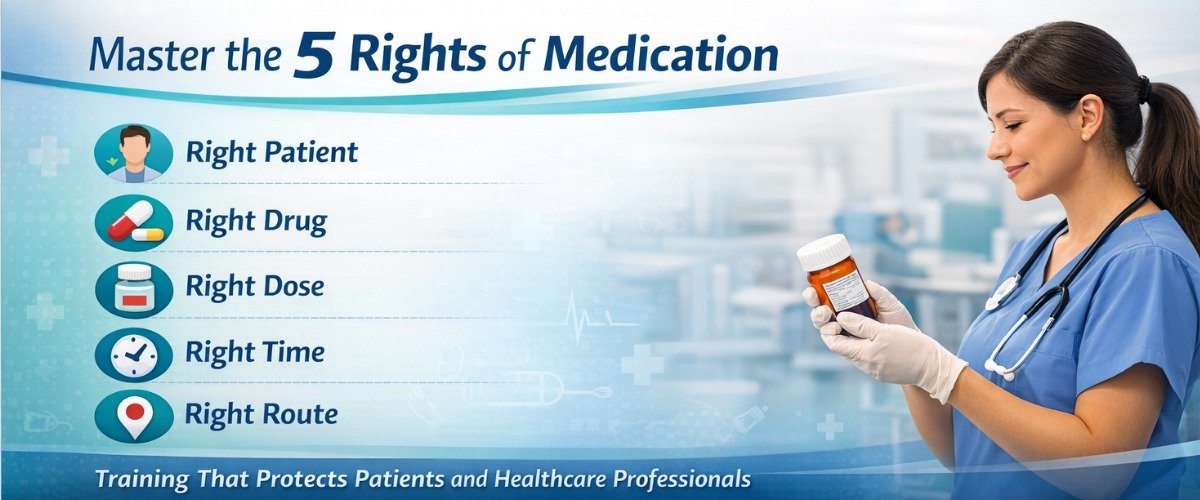
One of the most important principles taught in medication training is the Fundamental Rights of Medication Administration. These guidelines ensure that medications are delivered safely and accurately.
The core rights include:
- Right Patient – Confirm the patient’s identity before giving medication.
2. Right Medication – Ensure the medication matches the prescription.
3. Right Dose – Verify that the correct dosage is given.
4. Right Time – Administer medication at the scheduled time.
5. Right Route – Use the correct method, such as oral, topical, or injection.
6. Right Documentation – Record medication administration accurately.
Following these principles helps prevent medication errors and improves overall patient safety.
How Medication Training Improves Emergency Response
Healthcare professionals often face situations where quick action is required. Medication training helps staff respond confidently when complications or emergencies arise.
For example, patients may experience adverse reactions, medication overdoses, or sudden health changes. Training prepares healthcare workers to recognise these symptoms early and take appropriate action.
Many healthcare training programs also include first aid education. Topics such as Types of Fractures & First Aid to Treat A Broken Bone and 6 Essential Tips for Sports Head Injury First Aid provide essential knowledge for managing injuries while waiting for medical assistance.
This combined knowledge allows healthcare workers to:
- Identify medical emergencies quickly
- Provide immediate first aid care
- Stabilise patients until professional medical help arrives
- Communicate effectively with healthcare teams
By integrating medication safety and emergency response training, healthcare providers can deliver better patient care.
Practical Skills Gained Through Medication Training
Medication training programs focus on both theoretical knowledge and hands-on practice. Participants develop practical skills that are essential for safe patient care.
Some of the key skills include:
- Safe medication preparation and storage
- Identifying different types of medications
- Understanding medication charts and prescriptions
- Monitoring patients for side effects
- Managing medication documentation
- Communicating with healthcare professionals about patient care
Training programs often include real-world scenarios to ensure learners are prepared for practical situations in healthcare environments.
Why Healthcare Workers Need Medication Training
Medication training is essential for many healthcare roles, including:
- Aged care workers
- Disability support workers
- Community care staff
- Healthcare assistants
- Support workers in residential care
These professionals often assist patients who require daily medication. Proper training ensures they can perform their duties safely and confidently.
Training also helps organisations maintain compliance with healthcare regulations and safety standards.
Choosing the Right Medication Training Provider
Selecting a reliable training provider is important for gaining the correct knowledge and practical experience. High-quality training programs should include:
- Nationally recognised certification
- Practical, hands-on training
- Scenario-based learning
- Experienced trainers
- Flexible course schedules
Training providers like Medisync Training offer nationally recognised first aid and medication courses designed to help individuals respond effectively in healthcare and emergencies.
These courses combine theoretical learning with practical scenarios, helping participants build confidence and competence in medication administration and emergency care.
Medication training is a crucial part of modern healthcare. It ensures that healthcare workers understand how to safely administer medications while maintaining the highest standards of patient care.
By learning the Fundamental Rights of Medication Administration, understanding emergency response techniques, and gaining hands-on experience, healthcare professionals can significantly reduce medication errors and improve patient safety.
In addition, integrating knowledge from topics such as Types of Fractures & First Aid to Treat A Broken Bone and 6 Essential Tips for Sports Head Injury First Aid prepares healthcare workers to respond effectively to unexpected emergencies.
Ultimately, investing in proper medication training helps create safer healthcare environments, protects patients, and empowers healthcare professionals with the skills needed to act quickly when it matters most.
Popular Posts
-
Childcare First Aid Course Requirements in Australia: Everything You Need to Know
July 22, 2026Working in the childcare and early education sector comes with significant responsibilities. Whether you are...
-
First Aid Certificate Course Midland WA: Everything You Need to Know Before You Enrol
July 17, 2026Accidents and medical emergencies can happen anywhere—at home, in the workplace, at school, or even...
-
Paediatric Resuscitation Guidelines for Healthcare Workers: An Essential Guide for Australian Clinical Practice
July 8, 2026Paediatric emergencies are among the most challenging situations healthcare workers encounter. Unlike adult patients, infants...
-
Traumatic Cardiac Arrest Management: A Practical Guide for Faster Emergency Response in Australia
July 6, 2026Traumatic cardiac arrest (TCA) is one of the most critical medical emergencies a person can...
-
How to Use an AED in an Emergency: A Step-by-Step Guide for Australians
July 1, 2026Every minute counts during a cardiac emergency. When someone suffers a sudden cardiac arrest (SCA),...