

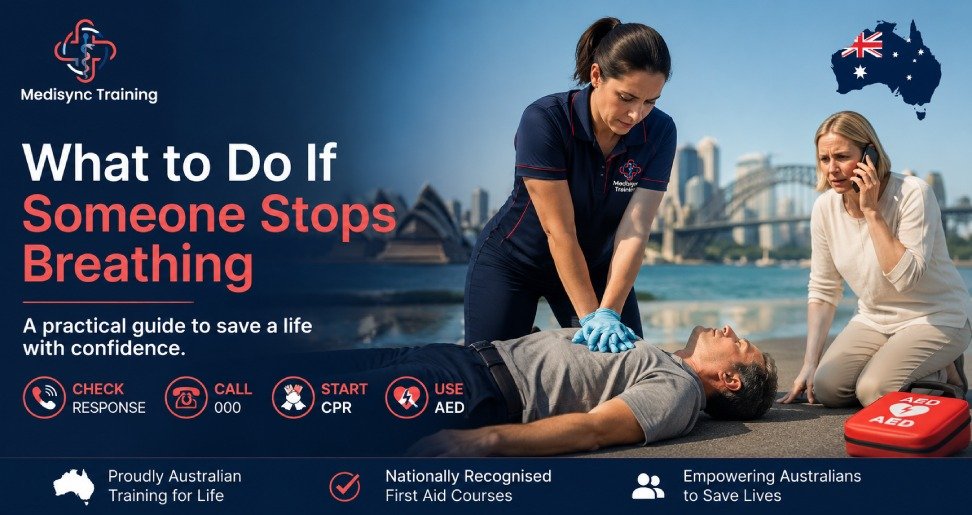
What to Do If Someone Stops Breathing: A Lifesaving Guide Every Australian Should Know
May 25, 2026
When someone suddenly stops breathing, every second matters. Whether it happens at home, at work, on the beach, or during a sporting event, knowing what to do can mean the difference between life and death. In Australia, thousands of cardiac arrests and breathing emergencies happen each year, and immediate action from bystanders dramatically improves survival rates.
Many Australians panic in these situations because they are unsure of the correct first aid steps. Questions like what to do if someone is unconscious and not breathing or what causes someone to be unresponsive but breathing are common — and understanding the answers can help you respond confidently during an emergency.
This guide, inspired by Australian resuscitation best practices and first aid principles, explains exactly how to respond if someone stops breathing and why proper CPR and first aid training through companies like Medisync Training can prepare you to save a life.
What to Do If Someone Stops Breathing
If a person suddenly stops breathing, follow these steps immediately:
1. Check for Danger
Before helping, make sure the area is safe for both you and the casualty. Look for hazards such as traffic, electricity, fire, water, or falling objects.
2. Check for Response
Try to wake the person by gently shaking their shoulders and speaking loudly:
“Can you hear me?”
If there is no response, they are considered unconscious.
What to Do If Someone Is Unconscious and Not Breathing
If the person is unconscious and not breathing normally:
Call Triple Zero (000)
Immediately call 000 for emergency assistance. If possible, put your phone on speaker so you can continue helping while speaking with the operator.
Start CPR Immediately
Cardiopulmonary resuscitation (CPR) keeps oxygen flowing to the brain and vital organs until paramedics arrive.
For adults:
- Place the heel of your hand in the centre of the chest
- Put your other hand on top
- Push hard and fast
- Aim for 100–120 compressions per minute
- Compress the chest about one-third of its depth
Use a compression-to-breath ratio of:
30 chest compressions : 2 rescue breaths
Continue CPR until:
- The person starts breathing
- Emergency services take over
- You become physically unable to continue
Australian resuscitation guidelines emphasise early CPR and defibrillation because immediate action significantly improves survival outcomes.
Use an AED If Available
An Automated External Defibrillator (AED) can restart the heart during cardiac arrest.
AEDs are commonly found in:
- Shopping centres
- Airports
- Schools
- Sporting venues
- Community centres
Turn the AED on and follow the voice prompts. Modern AEDs are designed for public use and will guide you step-by-step.
What to Do If Someone Is Unresponsive but Breathing
Sometimes a person may be unconscious but still breathing normally. This situation still requires urgent attention.
Place Them in the Recovery Position
If the person is unresponsive but breathing:
- Roll them onto their side
- Tilt their head slightly back
- Ensure their airway remains open
- Monitor breathing continuously
This position helps prevent choking and keeps the airway clear.
Call 000
Even if the person is breathing, unconsciousness may indicate a serious medical emergency such as:
- Stroke
- Head injury
- Drug overdose
- Seizure
- Diabetic emergency
- Heart condition
Never assume the person will “sleep it off.”
What Causes Someone to Be Unresponsive but Breathing?
There are several medical and environmental reasons why someone may become unresponsive while still breathing.
Common causes include:
Cardiac Problems
Heart-related emergencies can reduce oxygen supply to the brain.
Stroke
A stroke may cause sudden collapse, confusion, or unconsciousness.
Drug or Alcohol Overdose
Overdoses can slow brain function and breathing.
Seizures
After a seizure, a person may remain unconscious for several minutes.
Head Injuries
Concussions or traumatic injuries may cause temporary unresponsiveness.
Low Blood Sugar
Diabetics experiencing hypoglycaemia may lose consciousness.
Drowning Incidents
Near-drowning events are particularly important in Australia due to our beach and pool culture.
Understanding what causes someone to be unresponsive but breathing helps rescuers recognise the seriousness of the situation and seek medical help quickly.
What to Do If Someone Has No Pulse but Is Breathing
Many people ask: what to do if someone has no pulse but is breathing?
In real emergencies, it can be difficult for untrained people to accurately check for a pulse. Australian first aid guidance focuses more on responsiveness and normal breathing rather than pulse checks for everyday rescuers.
If someone:
- Is unconscious
- Is not breathing normally
- Shows no signs of life
Start CPR immediately.
If the person appears to be breathing but you cannot detect a pulse, call 000 urgently and follow emergency operator instructions. Delaying CPR while trying to confirm a pulse may waste valuable time.
Signs Someone May Stop Breathing
Recognising early warning signs can help prevent cardiac arrest or respiratory collapse.
Watch for:
- Gasping breaths
- Blue lips or skin
- Sudden collapse
- Severe chest pain
- Confusion
- Choking
- No response to voice or touch
Abnormal gasping is not normal breathing and may indicate cardiac arrest.
Why CPR Training Matters in Australia
Australia has strong community awareness around CPR and first aid, but many people still feel unprepared during emergencies.
Professional training gives you:
- Hands-on CPR practice
- Confidence during emergencies
- Knowledge of AED use
- Updated Australian first aid guidelines
- Workplace compliance skills
That’s why many Australians choose trusted providers like Medisync Training for nationally recognised CPR and first aid courses.
Their training programs help individuals, workplaces, parents, carers, and community groups learn how to respond effectively during life-threatening situations.
Common Mistakes People Make During Emergencies
Waiting Too Long to Act
Delays reduce survival chances significantly.
Fear of Doing CPR Incorrectly
Doing something is almost always better than doing nothing.
Not Calling 000 Immediately
Emergency services should be contacted as early as possible.
Ignoring Abnormal Breathing
Gasping or irregular breathing can still indicate cardiac arrest.
Forgetting the Recovery Position
Unconscious breathing casualties should never be left flat on their back unless CPR is required.
Final Thoughts
Knowing what to do if someone stops breathing is one of the most valuable life skills any Australian can have. Emergencies can happen anywhere — at home, on the road, at the beach, or in the workplace — and quick action saves lives.
Whether you are learning what to do if someone is unconscious and not breathing, what to do if someone is unresponsive but breathing, or understanding what causes someone to be unresponsive but breathing, proper knowledge prepares you to stay calm and act decisively.
The best way to build confidence is through accredited CPR and first aid training. Providers like Medisync Training help Australians gain the practical skills needed to respond during critical moments when every second counts.
Popular Posts
-
Warning Signs of Heart Attack: An Essential Action Plan
September 7, 2026A heart attack can happen suddenly, and recognising the warning signs early can make a...
-
How Proper Medication Training Reduces Risks for Vulnerable Adults
September 2, 2026Vulnerable adults may rely on careers and support workers to help them manage their medicines...
-
Burns First Aid Treatment Steps Australia: What to Do When a Burn Happens
August 12, 2026Burn injuries can happen unexpectedly at home, at work, in childcare settings, or while cooking....
-
Common CPR Mistakes That Reduce Survival Rates
July 3, 2026When someone suffers a sudden cardiac arrest, every second counts. Immediate, high-quality CPR can significantly...
-
How to Calm Someone Having a Panic Attack: A Practical Guide for Australians
June 5, 2026Panic attacks can happen unexpectedly and often leave both the person experiencing them and those...