
Common Workplace Accidents That Can Cause Crush Injuries
May 12, 2026
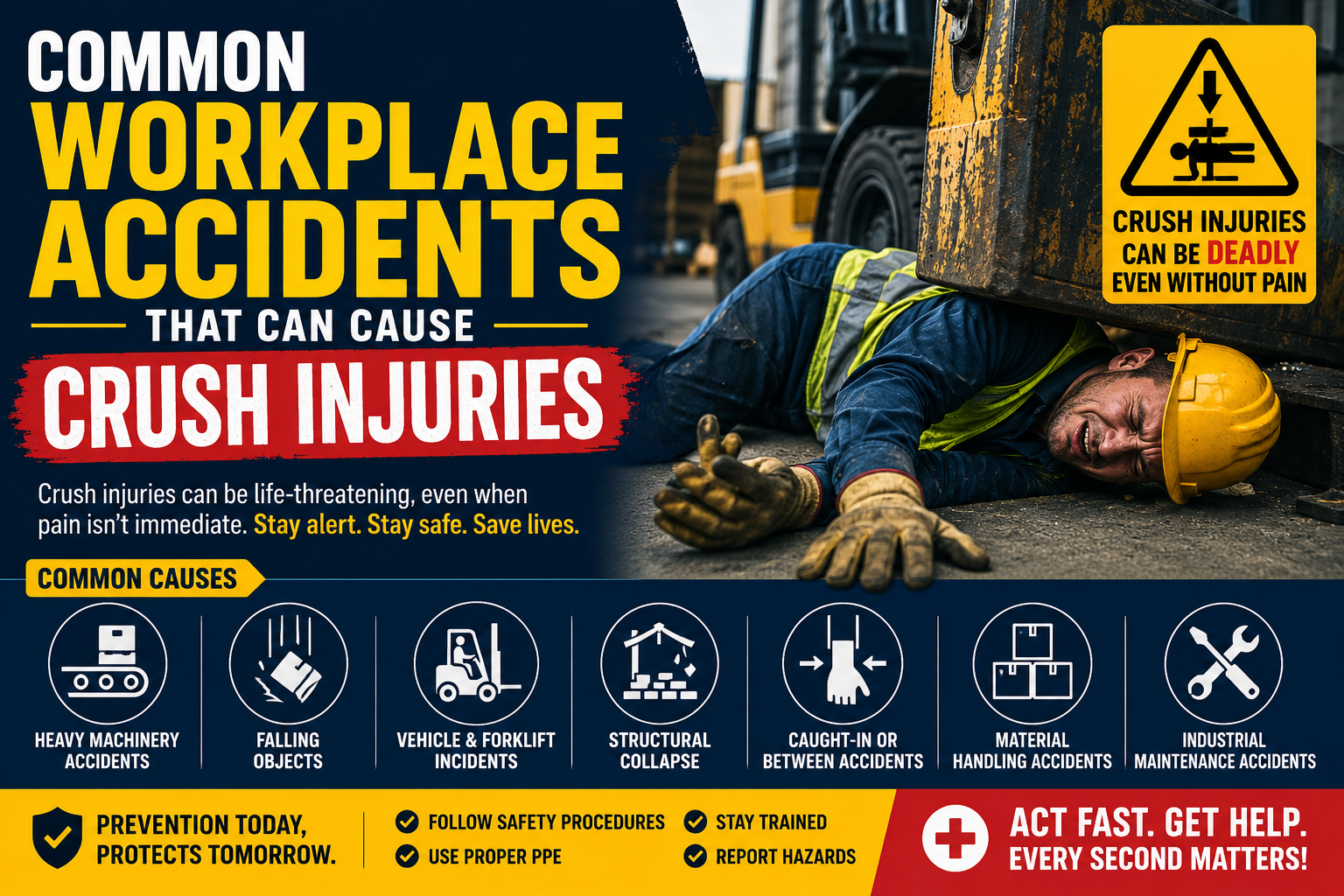
Crush injuries are among the most serious workplace accidents, especially in industries involving heavy machinery, construction equipment, warehouses, and industrial operations. These injuries occur when a body part—or the entire body—is caught, compressed, or squeezed between heavy objects.
While some crush injuries cause immediate visible trauma, others may appear minor at first but later develop into life-threatening complications such as internal bleeding, nerve damage, or crush syndrome.
Understanding the most common workplace situations that lead to crush injuries can help employers and workers reduce risks and improve safety awareness.
What Is a Crush Injury?
A crush injury happens when intense pressure is applied to the body, damaging muscles, tissues, blood vessels, nerves, or bones. Depending on the severity, the injury can range from bruising to permanent disability or fatal complications.
Commonly affected body parts include:
- Hands and fingers
- Feet and legs
- Chest and abdomen
- Arms and shoulders
Common Workplace Accidents That Cause Crush Injuries
1. Heavy Machinery Accidents
Industrial machines with moving parts are one of the leading causes of workplace crush injuries.
Examples include:
- Conveyor belts
- Hydraulic presses
- Forklifts
- Compacting machines
- Manufacturing equipment
Workers may become trapped due to:
- Loose clothing
- Lack of machine guards
- Improper operation
- Maintenance work performed without lockout procedures
2. Falling Objects
In warehouses, construction sites, and factories, heavy materials can fall from shelves, cranes, or elevated platforms.
Common falling hazards include:
- Steel beams
- Construction materials
- Storage boxes
- Pallets
- Tools and equipment
Even a relatively small falling object can cause severe crushing damage if it strikes the head, hands, feet, or chest.
3. Vehicle and Forklift Incidents
Workers may suffer crush injuries when pinned between:
- Forklifts and walls
- Trucks and loading docks
- Reversing vehicles and structures
- Heavy equipment and fixed objects
These accidents often occur in busy industrial environments with poor visibility or inadequate traffic management.
4. Structural Collapse
Construction workers are particularly vulnerable to:
- Trench collapses
- Wall failures
- Scaffolding collapse
- Roof cave-ins
A collapsing structure can trap workers under debris, causing severe muscle compression and increasing the risk of crush syndrome.
5. Caught-In or Between Accidents
These incidents occur when a worker becomes caught:
- Between moving machinery parts
- Between heavy objects
- Inside industrial rollers or gears
- Between doors or loading equipment
Caught-in/between accidents are among the “Fatal Four” hazards in the construction industry.
6. Material Handling Accidents
Improper lifting or movement of heavy materials can lead to crushing injuries.
Examples include:
- Dropped loads
- Shifting cargo
- Collapsing stacks
- Improper rigging during lifting operations
Workers handling pipes, concrete blocks, steel plates, or machinery components are at particularly high risk.
7. Industrial Maintenance Accidents
Maintenance workers may be injured when machinery unexpectedly restarts during repair or cleaning.
This often happens due to:
- Failure to follow Lockout/Tagout (LOTO) procedures
- Poor communication
- Electrical or hydraulic energy release
Unexpected machine movement can trap or crush hands, arms, or the entire body.
Why Crush Injuries Are So Dangerous
Crush injuries can be deceptive. In some cases:
- Pain may be delayed
- External wounds may appear minor
- Internal muscle damage may already be severe
Serious complications can include:
- Internal bleeding
- Nerve damage
- Compartment syndrome
- Kidney failure
- Crush syndrome
Without immediate medical attention, these conditions can become life-threatening.
Warning Signs After a Workplace Crush Injury
Seek emergency medical care if a person experiences:
- Swelling or tightness
- Numbness or loss of sensation
- Difficulty moving a limb
- Pale or cold skin
- Severe bruising
- Weakness
- Dark-colored urine
- Dizziness or confusion
How Workplaces Can Prevent Crush Injuries
Proper Safety Training
Workers should receive regular training on:
- Machinery operation
- Hazard awareness
- Emergency procedures
Machine Guarding
All dangerous machine parts should have protective guards installed and maintained.
Lockout/Tagout Procedures
Energy sources must be disconnected before servicing equipment.
Safe Material Storage
Heavy materials should be stacked securely to prevent collapse.
Traffic Management
Separate pedestrian and vehicle pathways help reduce forklift accidents.
Personal Protective Equipment (PPE)
Workers should use:
- Safety boots
- Helmets
- Gloves
- High-visibility clothing
Final Thoughts
Crush injuries are some of the most dangerous workplace accidents because the damage is often more severe than it initially appears.
Whether caused by machinery, falling objects, vehicles, or structural collapse, every crush injury should be treated as a medical emergency.
Fast action, proper workplace safety measures, and immediate medical evaluation can save lives and prevent long-term complications.
Popular Posts
-
Childcare First Aid Course Requirements in Australia: Everything You Need to Know
July 22, 2026Working in the childcare and early education sector comes with significant responsibilities. Whether you are...
-
First Aid Certificate Course Midland WA: Everything You Need to Know Before You Enrol
July 17, 2026Accidents and medical emergencies can happen anywhere—at home, in the workplace, at school, or even...
-
Paediatric Resuscitation Guidelines for Healthcare Workers: An Essential Guide for Australian Clinical Practice
July 8, 2026Paediatric emergencies are among the most challenging situations healthcare workers encounter. Unlike adult patients, infants...
-
Traumatic Cardiac Arrest Management: A Practical Guide for Faster Emergency Response in Australia
July 6, 2026Traumatic cardiac arrest (TCA) is one of the most critical medical emergencies a person can...
-
How to Use an AED in an Emergency: A Step-by-Step Guide for Australians
July 1, 2026Every minute counts during a cardiac emergency. When someone suffers a sudden cardiac arrest (SCA),...