
First Aid for Burns: What To Do and What Not To Do
April 6, 2026
Burn injuries can happen anywhere — in the kitchen, at work, during outdoor activities, or even from hot water at home. While some burns are minor, others can be serious and require immediate medical attention. Knowing first aid for burns can reduce pain, prevent infection, and protect the skin from further damage. Most importantly, the first few minutes after a burn are critical.
This guide will help you understand what to do and what not to do when someone suffers a burn injury.
Understanding Different Types of Burns
Before giving first aid, it helps to know the basic types of burns:
- First-degree burns – Affect only the outer layer of skin (redness, mild pain).
- Second-degree burns – Cause blisters, swelling, and more intense pain.
- Third-degree burns – Severe burns that damage deeper tissues and may look white, charred, or leathery.
First aid is mainly used for minor burns, while severe burns need emergency medical care immediately.
What To Do Immediately After a Burn
Acting quickly can make a big difference in how serious the burn becomes.
1. Remove the Source of Heat
The first step is to stop the burning process.
Move the person away from fire, hot liquid, steam, electricity, or chemicals.
If clothing is on fire:
- Stop
- Drop
- Roll
This helps put out flames quickly.
2. Cool the Burn
Cooling the burn is the most important first aid step.
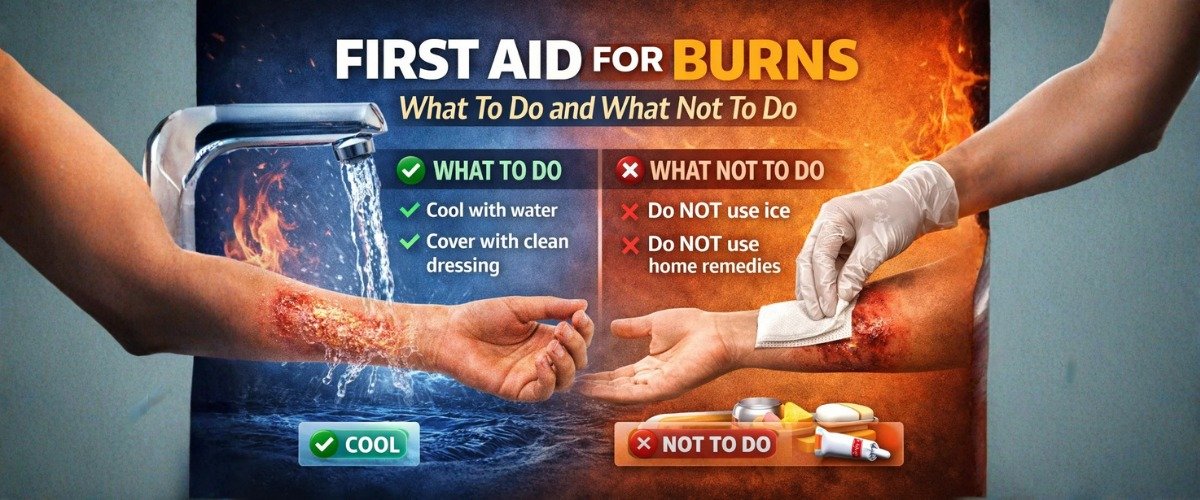
- Run the burn under cool running water for 20 minutes
- Do not use ice
- Do not use very cold water
- Cooling reduces pain, swelling, and skin damage
This step alone can significantly reduce the severity of the burn.
3. Remove Tight Items
If possible, remove:
- Rings
- Watches
- Tight clothing
- Belts
Burned skin can swell quickly, and tight items may cut off circulation.
Important: Do not remove clothing that is stuck to the burn.
4. Cover the Burn
After cooling:
- Cover the burn with a clean, non-stick dressing or a clean cloth
- This helps prevent infection
- Keeps air away, which reduces pain
Avoid fluffy cotton or materials that may stick to the wound.
5. Seek Medical Help If Needed
Go to a doctor or hospital if:
- The burn is larger than a palm
- The burn is on the face, hands, feet, or genitals
- The burn is deep or charred
- The person is a child or an elderly person
- The burn is caused by electricity or chemicals
What NOT To Do for Burns
Many people still follow old myths when treating burns. These can actually make the burn worse.
Do NOT:
- Do not apply ice
- Do not apply toothpaste
- Do not apply butter
- Do not apply oil or cream immediately
- Do not pop blisters
- Do not touch the burn with dirty hands
- Do not remove stuck clothing
- Do not use cotton directly on the burn
These mistakes can cause infection, skin damage, and slower healing.
Quick Burn First Aid Steps (Easy to Remember)
You can remember burn first aid with this simple method:
Cool – Remove – Cover – Seek Help
- Cool the burn under running water
- Remove tight items
- Cover with a clean dressing
- Seek medical help if serious
Why Burn First Aid Is Important
Proper first aid for burns can:
- Reduce pain
- Prevent infection
- Reduce scarring
- Protect skin tissue
- Speed up healing
- Prevent the burn from getting worse
Incorrect treatment, on the other hand, can cause permanent skin damage or infection.
Burn injuries are common, but the way you respond in the first few minutes can make a huge difference. The most important thing to remember is to cool the burn with running water for 20 minutes, cover it, and seek medical help if necessary.
Everyone should learn basic burn first aid because accidents can happen at any time — at home, at work, at school, or outdoors. Knowing what to do can help you protect yourself, your family, and others in an emergency.
Because sometimes, simple first aid can make a life-changing difference.
Popular Posts
-
Childcare First Aid Course Requirements in Australia: Everything You Need to Know
July 22, 2026Working in the childcare and early education sector comes with significant responsibilities. Whether you are...
-
First Aid Certificate Course Midland WA: Everything You Need to Know Before You Enrol
July 17, 2026Accidents and medical emergencies can happen anywhere—at home, in the workplace, at school, or even...
-
Paediatric Resuscitation Guidelines for Healthcare Workers: An Essential Guide for Australian Clinical Practice
July 8, 2026Paediatric emergencies are among the most challenging situations healthcare workers encounter. Unlike adult patients, infants...
-
Traumatic Cardiac Arrest Management: A Practical Guide for Faster Emergency Response in Australia
July 6, 2026Traumatic cardiac arrest (TCA) is one of the most critical medical emergencies a person can...
-
How to Use an AED in an Emergency: A Step-by-Step Guide for Australians
July 1, 2026Every minute counts during a cardiac emergency. When someone suffers a sudden cardiac arrest (SCA),...