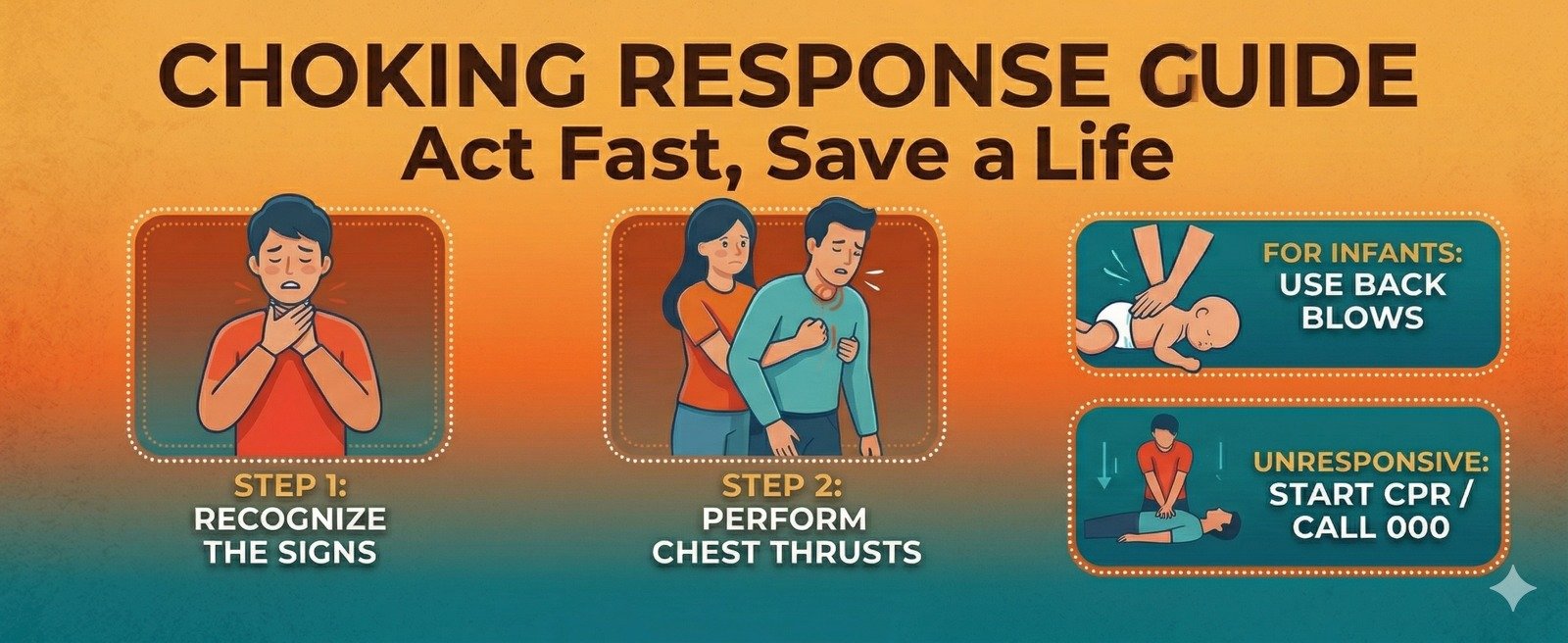
Choking is a sudden and frightening emergency that can happen to anyone—at home, in a restaurant, at work, or even on the street. It occurs when an object blocks the airway, preventing a person from breathing properly. In such situations, every second matters. Knowing how to respond quickly and correctly can mean the difference between life and death.
This guide will help you understand the signs of choking and the immediate actions you should take to save a life.
Recognizing the Signs of Choking
The first step in helping someone who is choking is recognizing the symptoms. A person who is choking may not be able to speak or call for help. Instead, they may show physical signs such as:
- Clutching their throat (universal choking sign)
- Difficulty breathing or noisy breathing
- Inability to talk or cough effectively
- Panic or distress
- Bluish lips or face (in severe cases)
If the person is coughing forcefully, encourage them to keep coughing. This means their airway is only partially blocked. However, if they cannot cough, speak, or breathe, immediate action is required.
Step 1: Act Quickly and Stay Calm
In an emergency, panic can make the situation worse. Stay calm and act quickly. Ask the person if they are choking. If they nod or cannot respond, you need to step in immediately.
Step 2: Perform Back Blows
Stand behind the person and support their chest with one hand. Lean them slightly forward so the object can come out of their mouth rather than going deeper into the airway.
Using the heel of your hand, deliver firm back blows between the shoulder blades—up to five times. These blows create pressure that can help dislodge the object.
Step 3: Perform Chest Thrusts
If back blows do not work, move on to chest thrusts.
- Stand behind the person
- Wrap your arms around their waist
- Make a fist and place it just above the navel
- Grab your fist with your other hand
- Deliver quick, inward and upward thrusts
Repeat until the object is expelled or the person starts breathing again.
Special Care for Infants
Choking response for infants (under 1 year) is different and requires extra care.
- Place the baby face down along your forearm
- Support their head and neck
- Deliver gentle but firm back blows between the shoulder blades
If the Person Becomes Unresponsive
If the person collapses or becomes unconscious:
- Gently lower them to the ground
- Call emergency services immediately
- Begin CPR (Cardiopulmonary Resuscitation)
CPR helps maintain blood flow and oxygen until professional help arrives.
Prevention is Always Better
While knowing how to respond is crucial, prevention can reduce the risk of choking:
- Cut food into small pieces
- Chew food properly and avoid talking while eating
- Keep small objects away from children
- Be cautious with hard foods like nuts or candies
Why Awareness Matters
Many choking incidents happen in everyday situations and can affect people of all ages. Unfortunately, a lack of awareness often leads to delayed response, which can be fatal.
By learning these simple steps, you are not just protecting your loved ones—you are becoming someone who can save a life in a critical moment.
Choking emergencies are unpredictable, but your response doesn’t have to be. Acting fast, staying calm, and knowing the right techniques can make all the difference.
Remember:
Recognize the signs → Act quickly → Perform the right steps → Save a life
Because in emergencies, even a few seconds can be life-changing.